
Unbiased headlines. Facts, not spin.
Every story is an unbiased news briefing written from 110+ sources across the spectrum — sources linked so you can verify it yourself.
 politics
Notable (5/10)
June 12, 2026 at 03:09 AM
politics
Notable (5/10)
June 12, 2026 at 03:09 AM
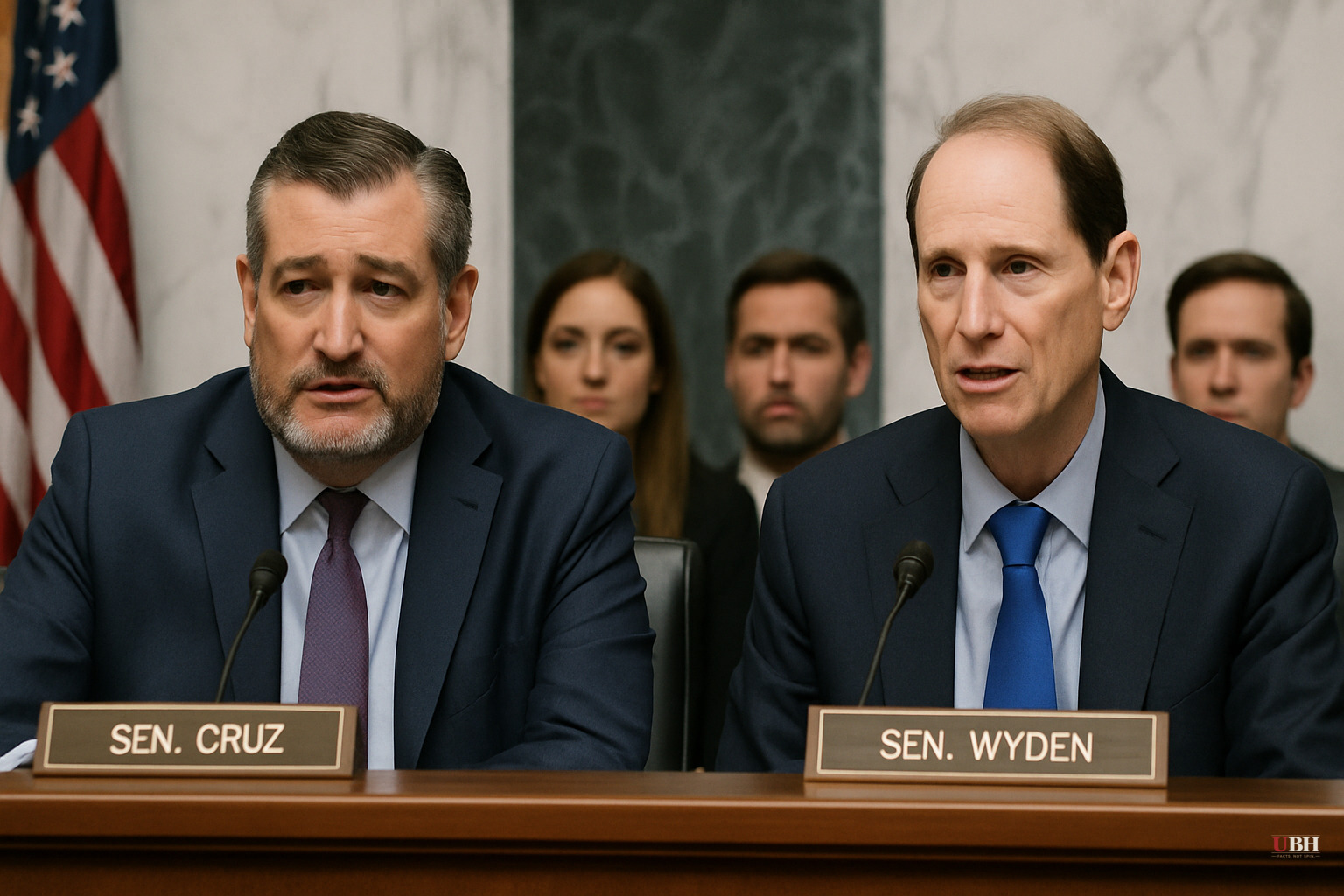
Cruz and Wyden Introduce Bipartisan Bill Letting Americans Sue the Government for Pressuring Companies to Censor Speech
What the Bill Does
Senators Ted Cruz (R–Texas) and Ron Wyden (D–Ore.) introduced the JAWBONE Act — Justice Against Weaponized Bureaucratic Overreach to Networked Expression — on June 11, 2026, according to a release from the Senate Commerce Committee.
The bill creates a legal cause of action against any government agency or employee who engages in "jawboning": pressuring private companies to censor constitutionally protected speech. Critically, according to the Commerce Committee's official summary, the cause of action applies regardless of whether the pressure actually succeeds in getting speech removed.
Plaintiffs could seek monetary damages and reasonable attorney fees. The bill also requires agencies to submit relevant communications with social media companies, AI companies, and broadcasters to Congress, a direct transparency play.
One of the bill's most notable features: officials cannot dodge accountability simply by changing jobs or waiting for administrations to turn over. Cases being dismissed when officials leave office has been a documented obstacle, according to the Commerce Committee's summary of the problem.
Why Both Parties Have Something to Answer For
Cruz's statement at introduction focused on the Biden administration, specifically calling out the Cybersecurity and Infrastructure Security Agency for pressuring tech companies to remove content about vaccine mandates and election fraud claims. That's documented. The Fifth Circuit Court of Appeals and eventually the Supreme Court weighed in on the Missouri v. Biden case, though the Supreme Court ultimately reversed on standing grounds in 2024.
Wyden's statement named a different example: Donald Trump threatening cable companies because he dislikes their late-night programming, specifically Trump's publicly reported pressure on ABC over late-night host Jimmy Kimmel. Wyden made the bipartisan framing explicit, saying "jawboning isn't partisan, and it isn't new."
Reason magazine reported that Trump issued an executive order on his first day of his second term promising to end federal censorship while simultaneously demanding ABC punish Kimmel.
Grover Norquist, president of Americans for Tax Reform, which is endorsing the bill, put it directly: "Bureaucrats are not allowed to tell Americans what we can say, so they have started bullying media companies into doing their dirty work for them."
Who Supports It
The coalition behind the bill cuts across the usual fault lines. According to the Commerce Committee and Reason magazine, endorsing organizations include:
- Foundation for Individual Rights and Expression (FIRE)
- American Civil Liberties Union (ACLU)
- Knight First Amendment Institute at Columbia University
- Center for Democracy and Technology
- Americans for Tax Reform
- Institute for Free Speech
- Public Knowledge
- Protect The 1st Foundation
FIRE said the bill "would mark major progress toward addressing indirect and unconstitutional government censorship."
The list spans traditional left-leaning civil liberties groups and center-right free-market organizations. This coalition includes both camps.
The Legal Foundation
Jawboning as a First Amendment violation isn't a new concept. Reason magazine noted the Supreme Court addressed it as far back as 1963 in Bantam Books v. Sullivan, which involved government threats against distributors of books officials deemed objectionable. The Court found those kinds of implied threats unconstitutional.
The challenge has always been enforcement. Citizens have had limited standing, evidentiary hurdles are high, and cases frequently collapse when officials rotate out of their positions, as the Commerce Committee's own summary acknowledges.
The Strongest Counterargument
Critics of broad jawboning legislation raise a legitimate concern: the government routinely communicates with private companies for reasons that have nothing to do with censorship. Cybersecurity warnings, disinformation alerts about foreign interference, and public health guidance all involve government-to-company contact. A law that creates liability for any government-to-company communication touching on content could chill legitimate coordination. Law enforcement agencies, for instance, regularly flag illegal content. Drawing a clean legal line between illegal coercion and legitimate government speech is genuinely hard, and critics argue an overbroad bill could hamper national security and law enforcement operations.
The bill's text will need to define "jawboning" precisely enough to exclude routine, non-coercive government communications while still capturing the pressure campaigns both Cruz and Wyden described.
What Happens Next
The bill was introduced on June 11, 2026, in the Senate Commerce Committee, which Cruz chairs. Committee chairmanship gives Cruz meaningful control over whether this moves to markup. No House companion bill has been announced in these sources, and no floor vote is scheduled.
The unresolved question that will define this bill's fate is whether the Trump administration, which has its own documented record of pressuring broadcasters, will actively support legislation that would expose its own officials to personal liability for doing exactly what Cruz criticized the Biden team for doing.
Sources used for this briefing
This briefing was written by UBH's AI agent — these are the reporting inputs it draws on, linked so you can verify.


