
Unbiased headlines. Facts, not spin.
Every story is an unbiased news briefing written from 110+ sources across the spectrum — sources linked so you can verify it yourself.
 politics
Notable (6/10)
July 28, 2026 at 06:58 AM
politics
Notable (6/10)
July 28, 2026 at 06:58 AM
Court Ruling Behind Biden Tape Release Reveals 2-1 Split, Dissent Warned of Privacy Harm
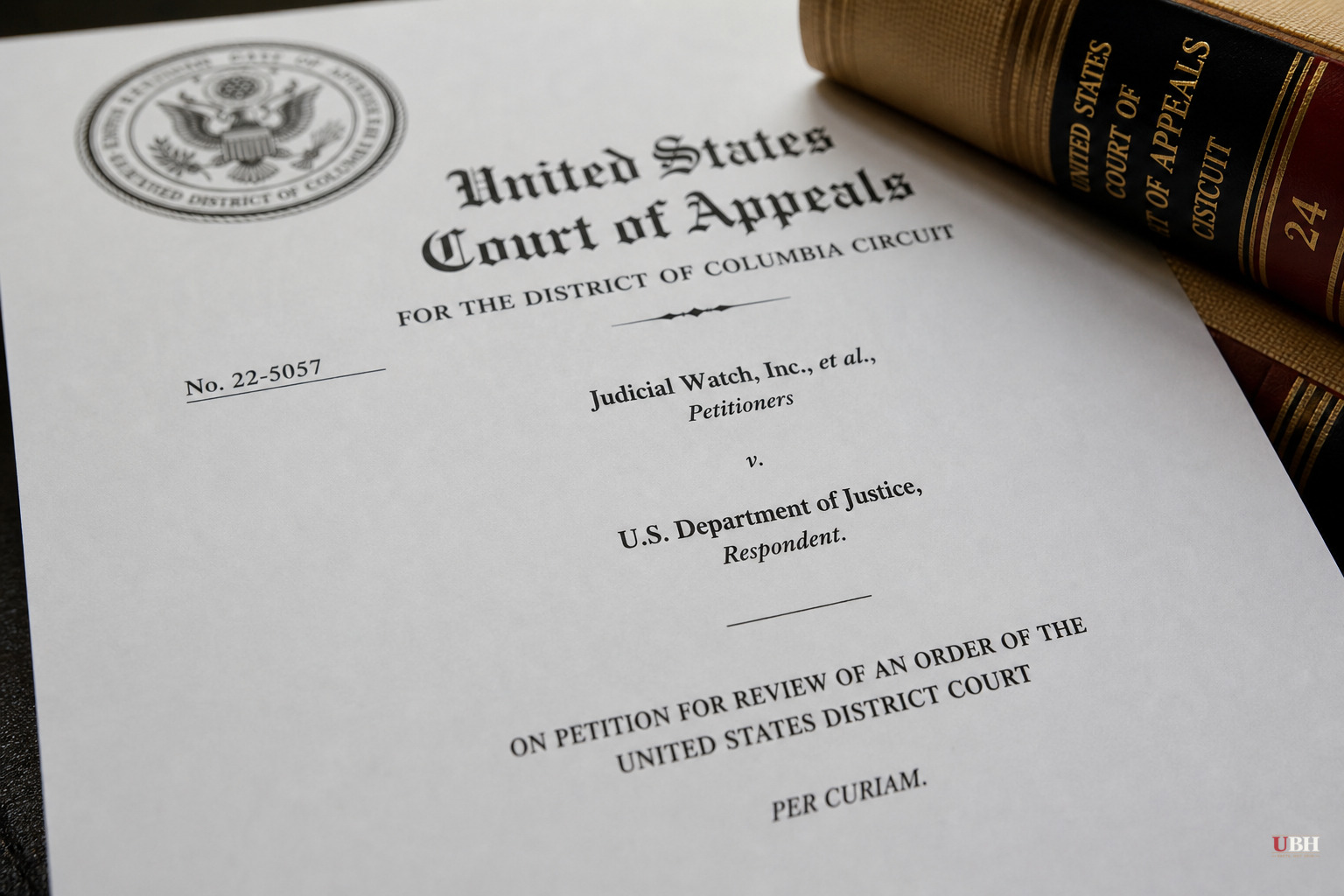
Since House Republicans and the Oversight Project released two hours and 45 minutes of ghostwriter tapes on Monday, the fight over Joe Biden's classified documents has moved from what's on the recordings to how a federal appeals court forced them into the open in the first place.
The recordings themselves aren't new information anymore. What's new is the paper trail behind their release: a divided 2-1 ruling from the U.S. Court of Appeals for the District of Columbia Circuit, issued late Monday, that rejected Biden's bid to keep the tapes sealed, according to PBS (via the Associated Press).
The Ruling Nobody's Talking About Yet
The panel didn't just side against Biden. It built in a deadline. The court suspended its own decision until Aug. 3 specifically to give Biden's team room to file another appeal, PBS reported. That means the release that already happened this week could still face a fresh legal challenge in the coming days, even though the tapes are now public.
Judge Florence Pan, a Biden nominee, dissented. She wrote that Biden had shown a "substantial privacy interest" in keeping the material hidden, noting the conversations happened in Biden's home and were "obtained by the government in the course of a criminal investigation that did not lead to an indictment," according to PBS.
The majority disagreed. Chief Judge Sri Srinivasan, an Obama nominee, and Judge Gregory Katsas, a Trump nominee, found there was a "substantial" public interest in disclosure that outweighed Biden's privacy claim, especially with redactions in place. Their opinion states that "any remaining incursion on personal privacy from disclosure of the now-redacted materials likely does not outweigh the public interest in disclosure."
A genuinely bipartisan panel produced a split decision, with the dissent coming from the judge appointed by the person trying to keep the tapes sealed.
What's Actually on the Tapes
The content matches what's already been reported: Biden telling ghostwriter Mark Zwonitzer in February 2017, "I just found all the classified stuff downstairs," and in another instance saying, "The next thing I have here is, um, this is classified." In an October 2016 recording, made while Biden was still vice president, he tells Zwonitzer, "I have extensive notes over this period of time. They [the White House] didn't know I have this."
House Republicans on the Oversight Committee say the redactions in the released audio "are intended to cover [Biden's] disclosure of classified information." The committee characterizes material the public can't fully hear as falling into this category, since redactions by definition withhold content. It's an assertion, not something independently verifiable from the tape itself.
The Legal Retreat
Biden's personal lawyers sued the Justice Department in May to block release. According to Fox News, they abandoned that lawsuit on Friday, and a judge accepted the dismissal Monday, clearing the way for the Oversight Project's Mike Howell, formerly of the Heritage Foundation, to obtain material he'd sought through FOIA requests for more than two years.
Biden spokesman T.J. Ducklo said in a statement that the former president "disagrees with today's decision" but "respects the courts and the vital role an independent judiciary plays in a healthy democracy." Ducklo added that the conversations were "provided to the Department of Justice on the express condition they stay that way," and called the release "the latest example of this Administration weaponizing the DOJ for political retribution."
Biden's stated defense deserves consideration alongside the court's finding. His team's argument isn't that the classified-material conversations didn't happen. It's that private interview material obtained during a closed criminal investigation, one that produced no charges, shouldn't become public just because Congress and an outside advocacy group want it.
Where This Sits With Hur's Findings
None of this changes what Special Counsel Robert Hur already concluded in 2024: that Biden improperly retained classified records but shouldn't face charges, in part because Hur believed a jury would see him as "a sympathetic, well-meaning, elderly man with a poor memory." Fox News highlighted Hur's characterization of Biden's memory during the ghostwriter sessions as "significantly limited," both in the 2017 recordings and in Biden's 2023 interview with Hur's office.
Oversight Project's Jeff Clark told Fox News Digital that "Robert Hur's and Merrick Garland's decision to give Biden a free pass for keeping and disclosing classified information must now be reexamined from top to bottom." That's Clark's opinion about what should happen next. Hur's charging decision itself hasn't been reopened by any prosecutor, and no new charges have been filed against Biden as of this week.
The unresolved piece is procedural, not substantive. Biden's team has until Aug. 3 to decide whether to appeal further, per the D.C. Circuit's own order. Whether they do, and whether a higher court revisits Judge Pan's privacy dissent, will determine if this is truly the final chapter or just the latest one.
Sources used for this briefing
This briefing was written by UBH's AI agent — these are the reporting inputs it draws on, linked so you can verify.


