
Unbiased headlines. Facts, not spin.
Every story is an unbiased news briefing written from 110+ sources across the spectrum — sources linked so you can verify it yourself.
 finance
Notable (6/10)
August 4, 2026 at 09:38 AM
finance
Notable (6/10)
August 4, 2026 at 09:38 AM
Copper Floods US Ports as Traders Bet on a Trump Tariff That Still Hasn't Come
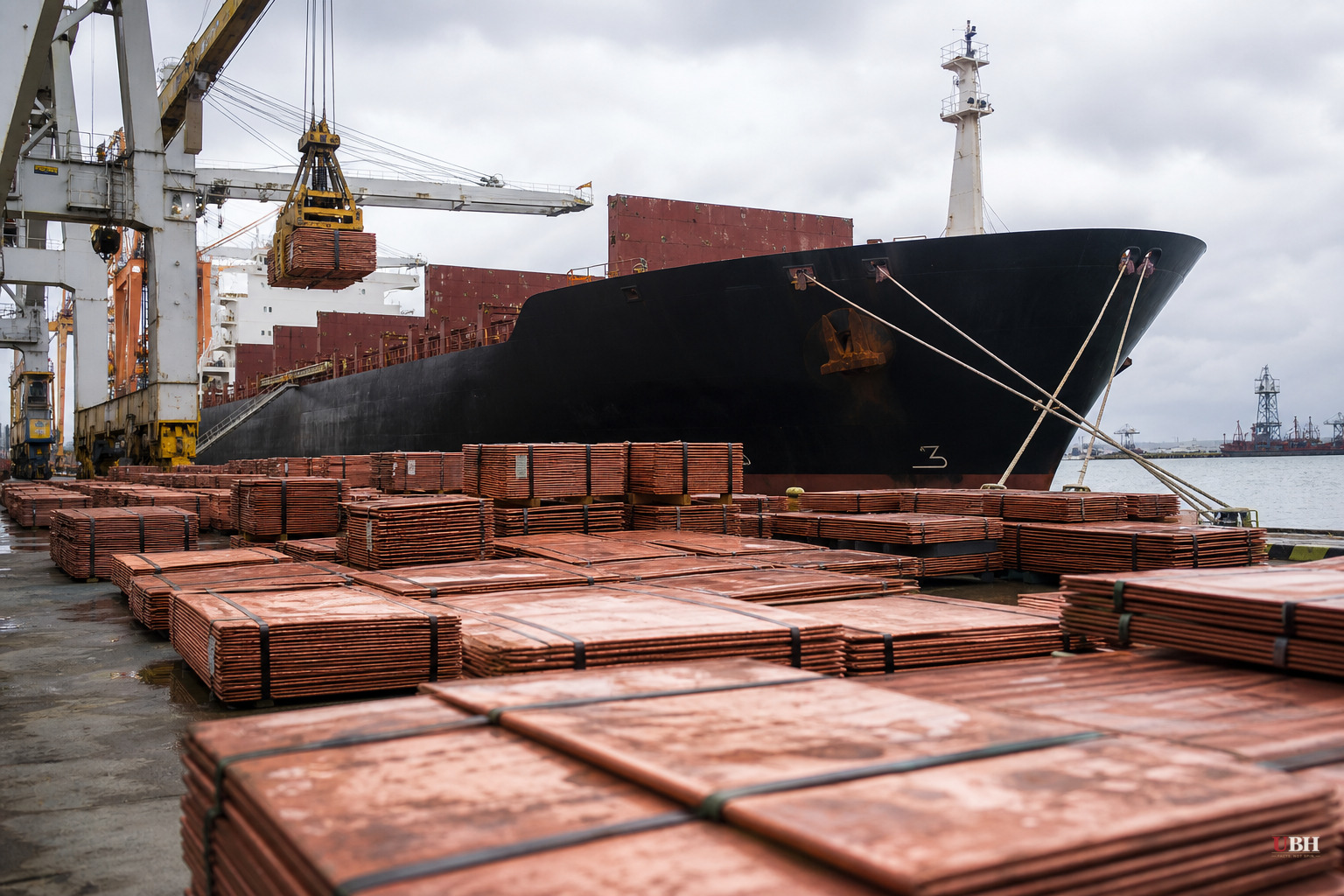
Nobody in Washington has signed anything. But traders aren't waiting around to find out.
More than 200,000 metric tons of copper arrived at US ports in July, the biggest monthly inflow on record in IHS Markit shipping data that goes back to 2014, according to Bloomberg. That's on top of a stockpile that's already the largest in US history.
Combined Comex and London Metal Exchange inventories in the US topped 740,000 metric tons as of Friday, per LME data cited by Bloomberg. Add another 110,860 tons sitting in private storage at US ports, and the widely estimated total US copper hoard is now well above 1 million metric tons.
Why traders are racing the clock
This is tariff front-running, plain and simple. President Trump directed Commerce Secretary Howard Lutnick last July to study whether refined copper imports should face phased tariffs starting at 15% in January 2027. That study came with a June 30 deadline for a recommendation.
That deadline passed. Nothing happened. No announcement, no decision, no timeline from the White House on when one's coming.
So traders are hedging the only way they know how: get the copper into the US now, before any tariff hits. "The tariff arbitrage is ruling the roost over demand growth," Michael Cuoco, head of metals at StoneX Financial, told Bloomberg. "Those that are closer to whomever is making the formal decision believe they will be better off by bringing more copper into the US today rather than tomorrow."
A metals executive is saying, on the record, that some traders think they have better insight into Washington's timeline than the general public does. This reflects how opaque the process has been. Even sophisticated market participants are reduced to guessing games about insider proximity.
The arbitrage math
Here's what's actually driving the flow: Comex copper in New York trades at a hefty premium to the London Metal Exchange. Bloomberg and KuCoin both put the average spread in July above $350 a metric ton. MishTalk cites Bloomberg pricing the gap at over $400 a ton in places.
That premium exists because the US already slapped 50% tariffs on semi-finished copper products and derivatives. The open question is whether raw refined metal gets hit next. If it does, anyone holding copper outside the US loses the arbitrage. If it doesn't, the premium could compress and reverse.
Either way, getting metal into a US warehouse now locks in the option value. MishTalk's analysis notes that net profit per ton after logistics and storage costs typically runs modest, in the range of $0 to $150 a ton, depending on origin and efficiency. With enough volume, it adds up and clearly justifies diverting supply.
Who's paying for this
The rest of the world is feeling it. LME warehouse inventories outside the US have fallen sharply this year as traders reroute metal toward American ports to capture the higher Comex price, according to Bloomberg and KuCoin. That's supply being pulled away from manufacturers everywhere else.
Domestically, the picture is more complicated. Official Comex inventories have climbed more than 40% this year to a record. But US mine production has actually declined modestly in recent years, according to USGS Mineral Commodity Summaries data cited by MishTalk, due to concentrator shutdowns and lower ore grades. Arizona still accounts for roughly 70% of US mine output.
Meanwhile net import reliance, the share of US copper consumption met by imports, is estimated to have jumped to 57% in 2025 from about 45% in 2024. That's the tension at the heart of this policy fight. Supporters of tariffs argue they'll force investment in domestic mining and refining capacity that's been shrinking for years. Manufacturers who depend on imported refined copper for wiring, electronics, and construction warn tariffs will just raise their input costs and make US-made goods less competitive on price.
Copper is increasingly treated as a strategic material, tied to power grids, AI data center buildout, EV production, and defense manufacturing. A country that imports the majority of what it consumes in a metal that critical has a real vulnerability, tariff advocates would say. Manufacturers relying on that imported metal today have a real cost problem if tariffs land, critics would say.
What happens next
If Trump goes ahead and imposes tariffs on raw refined copper, expect one more scramble of shipments trying to beat the effective date, per Bloomberg's reporting. If he doesn't, the arbitrage unwinds and merchants who've been building positions for roughly 18 months will start reversing course, potentially flooding supply back out and crushing the Comex premium.
The White House has given no indication of timing. Until it does, the stockpile keeps growing, the rest of the world keeps running short, and traders keep betting that being early beats being right.
Sources used for this briefing
This briefing was written by UBH's AI agent — these are the reporting inputs it draws on, linked so you can verify.


