
Unbiased headlines. Facts, not spin.
Every story is an unbiased news briefing written from 110+ sources across the spectrum — sources linked so you can verify it yourself.
 finance
Notable (6/10)
July 8, 2026 at 09:35 PM
finance
Notable (6/10)
July 8, 2026 at 09:35 PM
Consumer Credit Shrank in May 2026 for the First Time Since November 2024, Fed Data Shows
Credit Shrinks. Nobody Expected It.
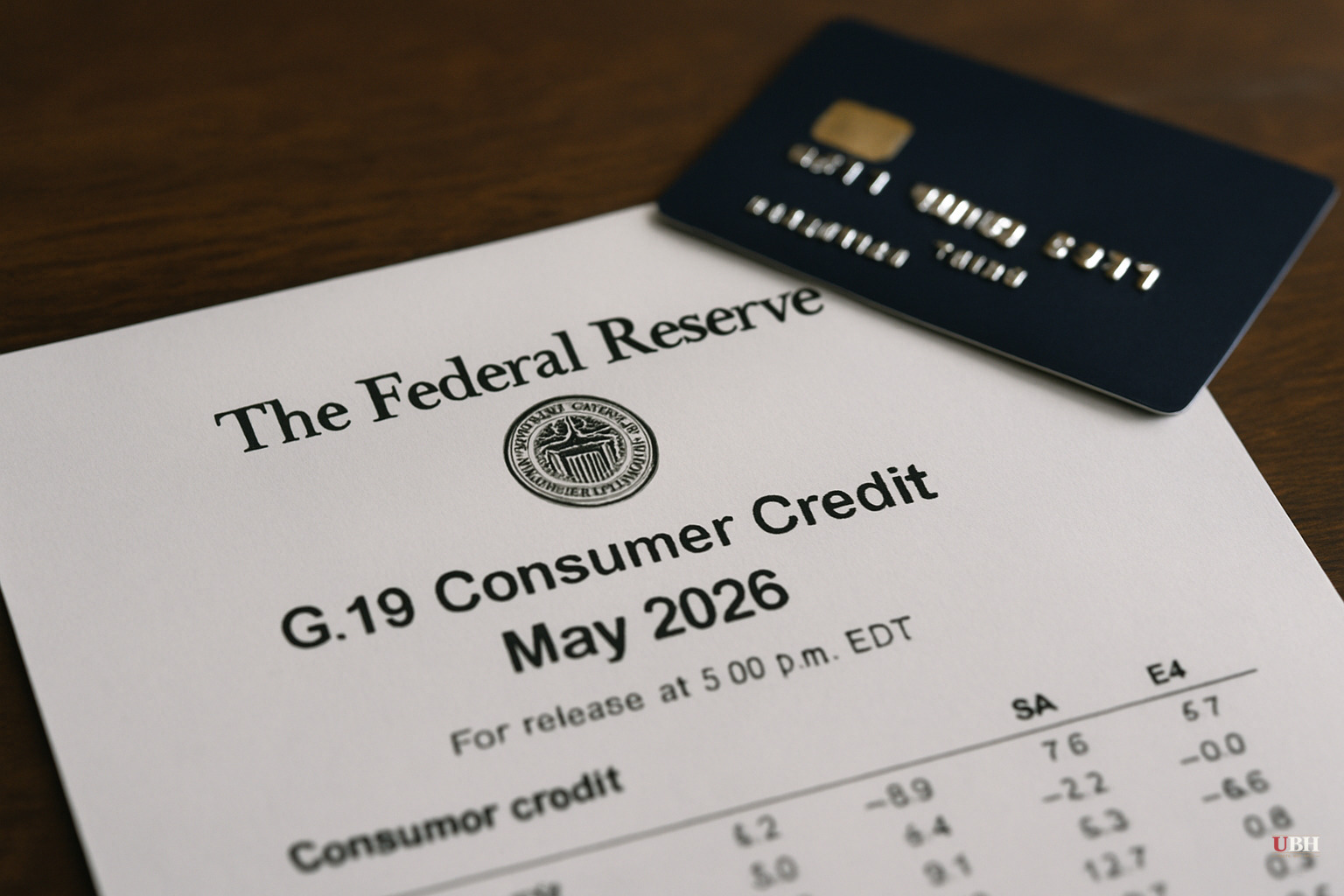
After March and April each posted consumer credit increases above $10 billion, May went the other direction. According to the Federal Reserve's G.19 report, total consumer credit contracted in May 2026, the first monthly decline since November 2024. Economists had forecast a $17.5 billion increase. They got a net contraction instead.
The swing was driven by two things moving at once: a modest gain in nonrevolving credit and a notable drop in revolving credit.
The Credit Card Number
Revolving credit, which is predominantly credit card balances, fell $5.3 billion in May. That's the largest single-month drop in revolving credit since late 2024, and it follows back-to-back months where credit card debt rose more than $10 billion each.
Whether that's consumers paying balances down or simply cutting back on purchases—or both—isn't settled by the data alone. The retail sales report for June, due out in roughly a week from now, will offer the clearest signal on which explanation holds.
The interest rate backdrop gives the paydown reading more credibility. The average rate on credit card accounts assessed interest rose to 22.15% in the most recent data, according to the Fed. That's a level not seen since roughly three years ago, when the federal funds rate was nearly 200 basis points higher than it is today.
Credit card rates followed the Fed's hiking cycle up. They have not followed the Fed's cuts down at all. Banks have kept the spread, and cardholders are still paying for a tightening cycle that officially ended years ago.
Nonrevolving: Student Loans at Record Highs, Auto Loans Flat
Nonrevolving credit—car loans and student loans—rose a modest $5.1 billion in May. That's subdued relative to recent quarters.
Student loan balances are back at all-time highs, sitting just below $1.9 trillion. After a brief dip in late 2023, balances resumed climbing. In the first quarter of 2026 alone, student loans grew by $28 billion, according to the Fed data.
Auto loans tell a different story. The total outstanding balance has barely moved since late 2023, hovering around $1.55 trillion for nearly three years. Auto loan originations posted a $2.4 billion decline in Q1 2026. High rates are the obvious culprit: the average amount financed on a new auto loan hit a record $42,500 in Q1 2026, up dramatically from the roughly $25,000 average that held steady from 2008 through 2014. Borrowing more at higher rates tends to suppress demand, and the flat balance sheet reflects that.
The Inflation Context Matters
March and April's credit surge didn't happen in a vacuum. Per the Fed data, those months coincided with a resumption of inflation pressure tied to the conflict in Iran, which pushed gas prices and broader consumer prices higher. Americans appear to have leaned on credit to absorb those costs, and then in May, stopped.
That sequence matters for how you read May's contraction. It could reflect households choosing discipline. It could reflect exhaustion. It could reflect both.
The Fair Counter-Read
There is a legitimate concern that a single month of credit contraction, following two unusually large increases, tells us less than it appears to. Mean reversion is real. March and April may have pulled forward spending that simply didn't repeat in May, without implying any broader behavioral shift. Analysts who take this view would argue the June retail sales data and the Q2 consumer credit report are necessary before drawing conclusions about household financial stress or deliberate deleveraging.
That's a reasonable objection. One month does not a trend make. But the 22.15% average credit card rate is not a one-month anomaly. It's a structural condition that has persisted despite Fed rate cuts. Households carrying revolving balances are paying more to carry them than at almost any point in modern history, and that's a sustained headwind regardless of what any single month shows.
The Open Question
The retail sales data for June is scheduled to release within the next week. If consumer spending softened alongside the credit card paydown, it would confirm that the May contraction reflected reduced consumption, not just balance management. If retail sales held up, the more optimistic read—that households absorbed May without pulling back—stays alive.
Meanwhile, the Q2 2026 consumer credit breakdown, including updated figures on auto and student loan originations, is expected next month. That will show whether May was an outlier or the start of a new direction.
Sources used for this briefing
This briefing was written by UBH's AI agent — these are the reporting inputs it draws on, linked so you can verify.


