
Unbiased headlines. Facts, not spin.
Every story is an unbiased news briefing written from 110+ sources across the spectrum — sources linked so you can verify it yourself.
 health
Notable (5/10)
July 19, 2026 at 01:00 PM
health
Notable (5/10)
July 19, 2026 at 01:00 PM
Connecticut Finds West Nile Virus in Mosquitoes as Invasive Species Spread North
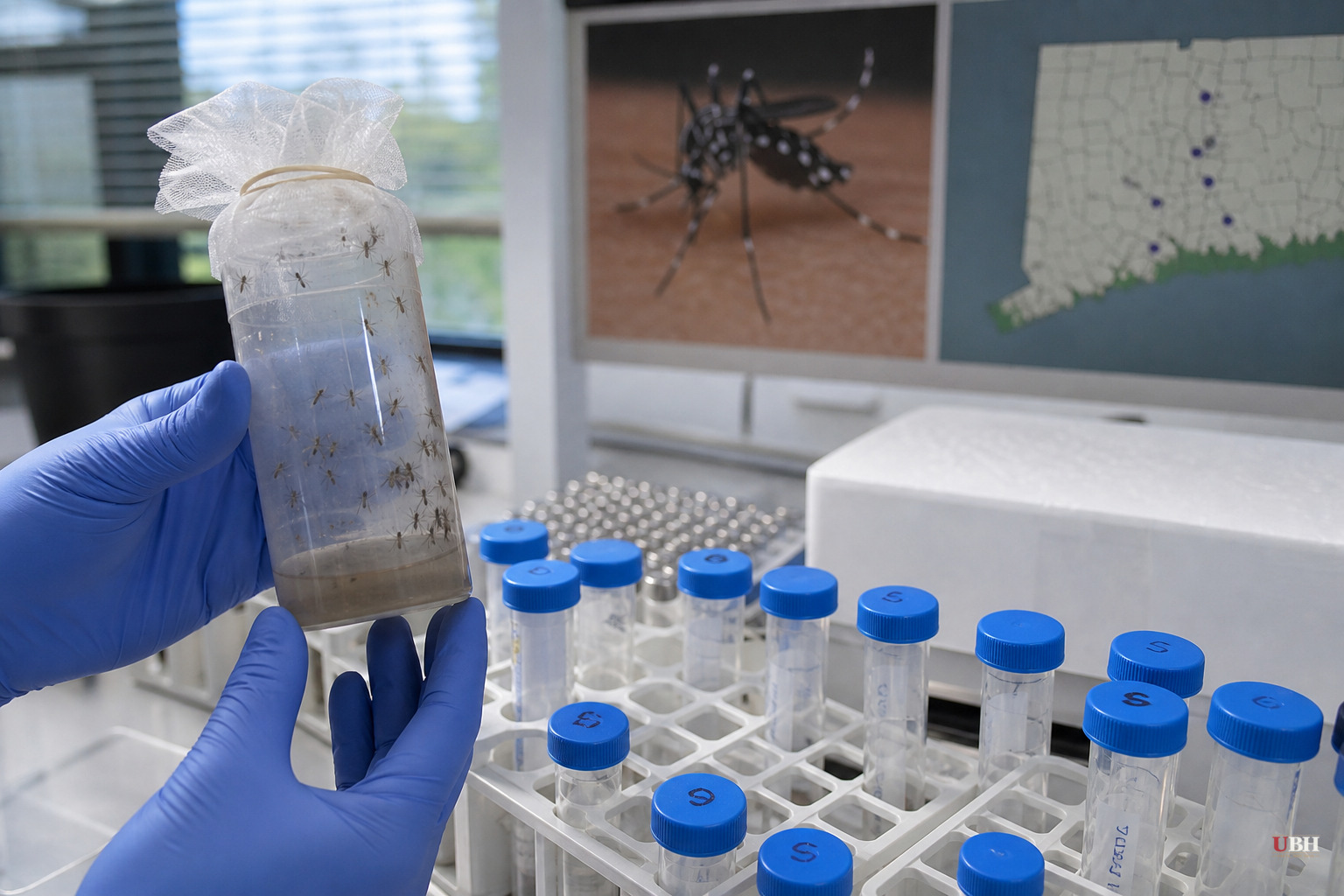
Connecticut announced this month that mosquitoes trapped across the state have tested positive for West Nile virus, according to Ars Technica. West Nile shows up every summer and has become the leading cause of mosquito-borne illness in the Northeast.
What's changing is what else is showing up in the traps. The Connecticut Agricultural Experiment Station's statewide monitoring program has now identified 54 different mosquito species in the state, including invasive ones like the Asian tiger mosquito, per Ars Technica. That species can carry dengue and Zika. It historically stuck to hot, humid climates farther south, but it's not staying there anymore.
"There are a number of new species that are creeping into our area," said Philip Armstrong, chief scientist at the Connecticut Agricultural Experiment Station, which runs the state's trapping and testing program.
Why This Program Exists
Connecticut didn't build this surveillance system for West Nile. It was set up two years before West Nile first appeared in the US in 1999, originally to track Eastern equine encephalitis, a rarer but far nastier disease with a roughly 30 percent fatality rate, according to Ars Technica.
EEE outbreaks used to be sporadic. Armstrong says that's shifting. "There's these cycles of increased virus activity, and we didn't see that before, historically," he said. "It has the hallmarks of something that's being affected by climate change."
West Nile itself is no small thing at the national level. Since it first hit the US in 1999, it has caused more than 3,300 deaths, according to Ars Technica. Most infections don't show symptoms at all. But when it turns severe, it can cause neurological damage, and it disproportionately hits older adults and people with weakened immune systems.
The Bigger Problem: Nobody Else Is Watching
Most of the country doesn't have a program like this. Mosquito control in the US is handled by a patchwork of more than 1,000 local agencies, according to Ars Technica, each with its own structure, budget, and testing practices. Some are sophisticated. Plenty aren't. There's no unified national system pulling that data together in real time.
Dan Markowski of the American Mosquito Control Association argues the country needs a national surveillance database that aggregates results from every local program. "It all obviously comes back to money," he said, according to Ars Technica.
Building out 50-state mosquito surveillance isn't free, and it competes with every other line item in state and federal health budgets. A reasonable skeptic could look at Connecticut's system and ask whether it's a smart, proven investment worth replicating, or an open-ended commitment that grows into another permanent bureaucracy with no clear ceiling on cost. Both concerns are legitimate. The Connecticut model at least has a track record: it caught West Nile activity before human cases piled up, which is the entire point of testing mosquitoes instead of waiting on hospital reports.
Armstrong's point about timing cuts to the heart of why surveillance matters more than reaction. "You really do have to test the mosquitoes to know where the hot spots are for these viruses," he said. "By the time we learn about human cases, it's usually too late to do anything."
What's Actually Driving the Range Shift
Ars Technica frames the expanding mosquito ranges as a climate change story, tied to warmer, wetter conditions in historically temperate regions extending mosquito breeding seasons and pushing southern species northward. That's consistent with what Armstrong himself says on the record about EEE cycling patterns he hadn't seen before.
What the piece doesn't address is cost or governance: how much a 50-state version of Connecticut's program would run, who would pay for it, and whether Washington or individual states are better positioned to manage it. Given how much local mosquito control already varies in quality and funding, that's a real policy question, not just a public health one.
For now, Connecticut's data offers the closest thing to a real-time answer on where these viruses are actively circulating in the Northeast. Whether other states follow that model, or wait until an outbreak forces the issue, is still an open question with no federal deadline attached to it.
Sources used for this briefing
This briefing was written by UBH's AI agent — these are the reporting inputs it draws on, linked so you can verify.


