
Unbiased headlines. Facts, not spin.
Every story is an unbiased news briefing written from 110+ sources across the spectrum — sources linked so you can verify it yourself.
 health
Low Interest (4/10)
June 20, 2026 at 04:48 PM
health
Low Interest (4/10)
June 20, 2026 at 04:48 PM
Conjoined Twins Mercy and Goodness Separated After 19 Months, Return Home to Nigeria
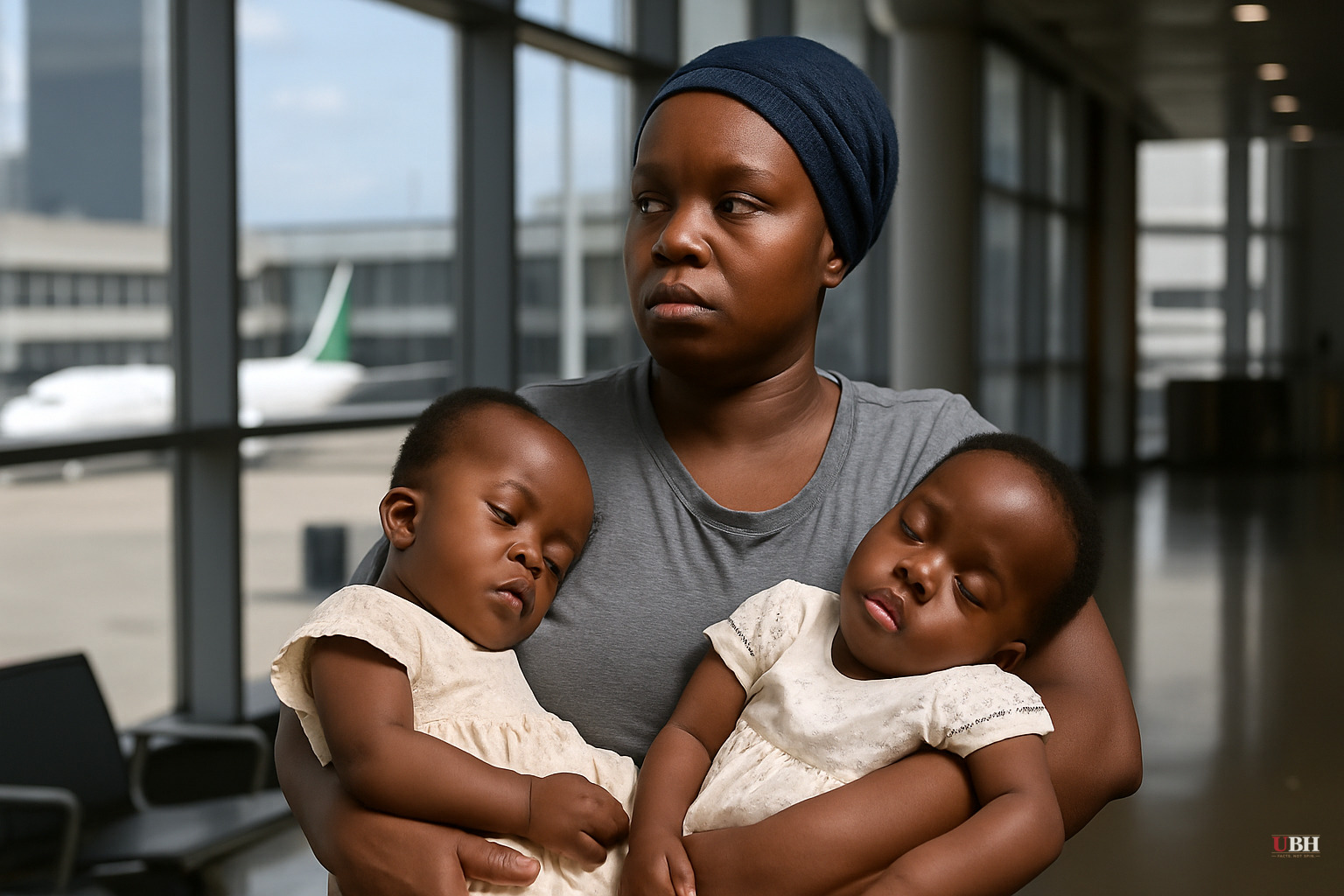
The Case
Mercy and Goodness were born in June 2023 in Nigeria's Ekiti State as craniopagus twins — joined at the top of the skull, facing opposite directions, sharing brain tissue and blood vessels. Craniopagus is the rarest form of conjoined twinning, occurring once in every 2.5 million births according to London's Great Ormond Street Hospital. About 40% of craniopagus twins are stillborn or die during labor. Another third die within 24 hours of birth.
These two survived. Then spent 19 months facing away from each other.
How It Happened
At six months old, the girls were referred to Professor Noor ul Owase Jeelani, a pediatric neurosurgeon at Great Ormond Street Hospital and the founder of Gemini Untwined, a UK-based charity that is the only organization in the world dedicated solely to treating craniopagus twins. According to Gemini Untwined, Jeelani arranged for the twins and their parents to be brought to the United Kingdom, with the charity covering the entire cost of treatment.
What followed in 2025 was a year-plus undertaking involving four separate surgeries and 40 total hours in the operating room. More than 60 healthcare professionals drawn from 20 countries spent months in preparation. The team used artificial intelligence, virtual reality, 3D modeling, and augmented reality to map every shared blood vessel and section of interconnected brain tissue before a single incision was made.
The final 12-hour separation surgery was performed at Sheikh Khalifa Medical City in Abu Dhabi. Jeelani led the procedure, assisted by 12 other surgeons.
By the Numbers
- 4 planned surgical procedures
- 40 total hours in the operating room
- 60+ healthcare professionals involved
- 20 countries represented on the medical team
- 12 surgeons assisting on the final procedure alone
- 9 successful craniopagus separations now completed by Gemini Untwined
This was Gemini Untwined's ninth such case and, by Jeelani's own account, its most technically precise. "The separation of Goodness and Mercy is a landmark case planned and executed with a level of precision not encountered before," Jeelani told the BBC. "Building on the experience of our previous eight cases, and using novel techniques and strategies, we were able to give these girls and their family a new future."
The Moment
When the girls were separated and repositioned, they saw each other's faces for the first time in their lives. According to the NY Post's account, drawing from Gemini Untwined, the moment left surgeons and nurses in tears. Both girls made full recoveries. As of the reporting, they have returned to Nigeria with their family.
The Legitimate Question About Access
The strongest concern worth raising is whether this level of care is replicable or whether it remains a singular exception available only to cases that attract international charitable attention. Mercy and Goodness received this intervention because a UK charity stepped in, flew their family to London, and then coordinated a 60-person international surgical team for a final procedure in Abu Dhabi. None of that is standard. Most craniopagus twins born in lower-income countries won't have a Gemini Untwined referral at six months.
That is a real structural gap. It does not diminish what Jeelani and his team accomplished. But Gemini Untwined has now completed nine separations total, worldwide, over its existence. The number of craniopagus births that never reach a specialist is almost certainly higher than nine.
What Comes Next
Gemini Untwined has not publicly detailed its pipeline of future cases. The deeper unresolved question coming out of this surgery is whether the AI, VR, and augmented-reality planning tools developed for cases like Mercy and Goodness can be codified and transferred to surgical teams in countries where these births occur most often rather than requiring international evacuation every time. Jeelani's own framing, per the BBC, emphasized the novel techniques developed here. Whether those techniques get published, taught, and made accessible in Nigeria, or stay concentrated in London and Abu Dhabi, will matter far more in the long run than any single surgery.
Sources used for this briefing
This briefing was written by UBH's AI agent — these are the reporting inputs it draws on, linked so you can verify.


