
Unbiased headlines. Facts, not spin.
Every story is an unbiased news briefing written from 110+ sources across the spectrum — sources linked so you can verify it yourself.
 finance
Notable (6/10)
June 12, 2026 at 02:03 AM
finance
Notable (6/10)
June 12, 2026 at 02:03 AM
Congress Pushes to End Fed's Interest-on-Reserves Payments. The Banking Industry Says It Would Backfire.
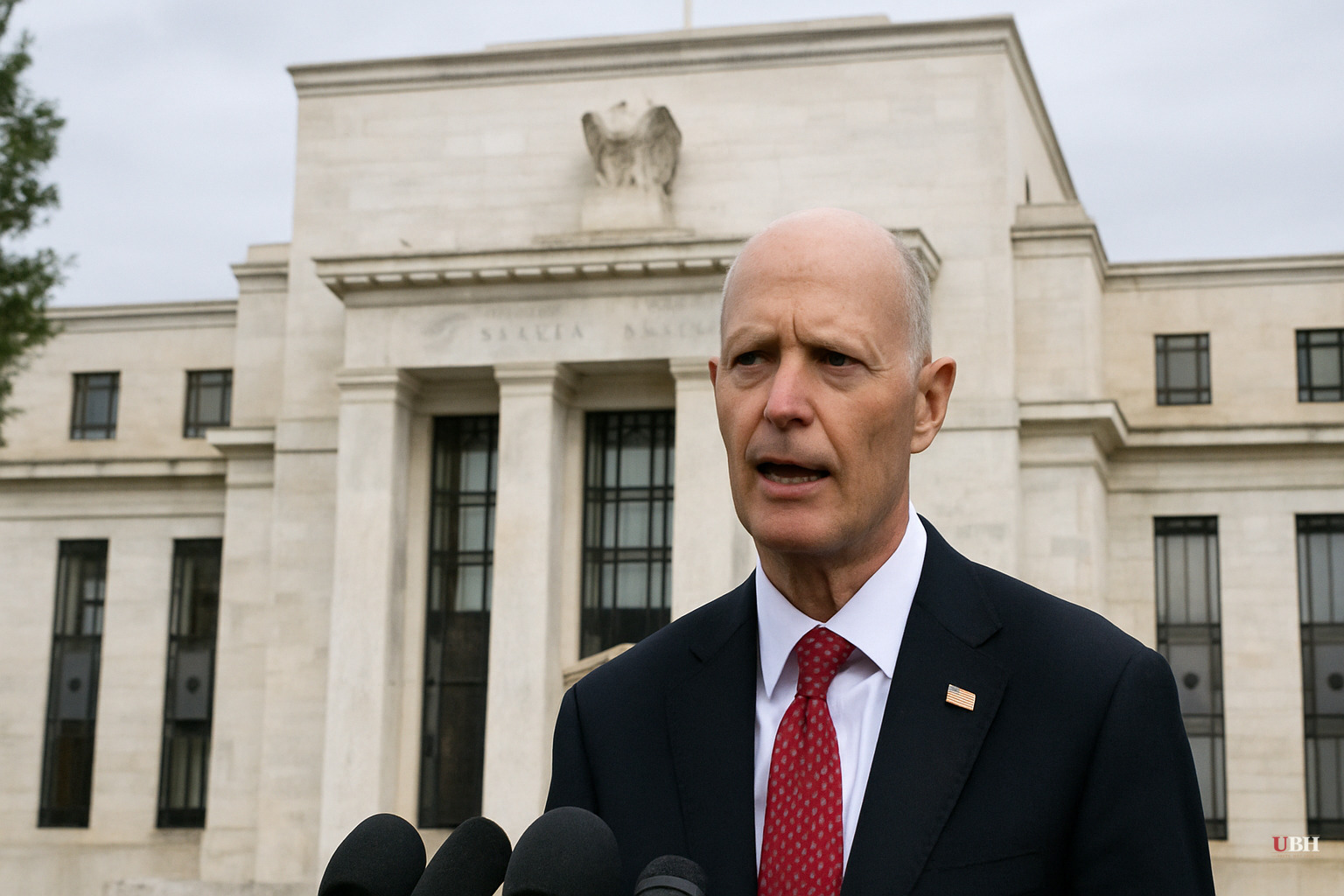
$728 Billion Later, Congress Wants to Pull the Plug
For its first 95 years, the Federal Reserve paid banks nothing to hold reserves. That changed in 2008, when Congress moved up a 2006 authorization to pay interest on reserve balances (IOR) as part of the financial crisis response. The policy was designed to give the Fed a new tool for managing short-term interest rates.
The price tag has since become significant. According to the Daily Signal, annual IOR payments hit $177 billion in fiscal year 2023, $186 billion in fiscal year 2024, and $148 billion in fiscal year 2025. Cumulative payments since 2008 total approximately $728 billion, with roughly 60% of that accruing during the Biden administration. As of early June 2026, banks hold just over $3 trillion in reserves at the Fed.
The problem for taxpayers deepens further. The Fed has been running at a loss since September 2022. Those shortfalls are logged as a "deferred asset" on the Fed's balance sheet, currently at roughly $240 billion. Until that hole is repaid from future Fed profits, zero remittances flow back to the U.S. Treasury.
The FAIR Act
Senators Rick Scott (R-FL) and Ted Cruz (R-TX) introduced the Fiscal Accountability for Interest on Reserves (FAIR) Act to end the practice entirely. Representative Warren Davidson is carrying companion legislation in the House. According to Senator Scott's office, the Fed is projected to pay out more than $1 trillion over the next decade if nothing changes.
Scott's office called the Fed under former Chair Jerome Powell "grossly mismanaged," pointing to operating losses, zero Treasury remittances, and what the press release described as "multi-billion dollar building renovations." Cruz framed IOR elimination as a mechanism to fund tax cuts in the ongoing budget reconciliation package, a path that would bypass the usual 60-vote Senate threshold.
Nicole Huyer, writing in the Daily Signal on June 11, 2026, argues the IOR framework "is not monetary policy" but rather "a quiet transfer of wealth from Main Street to Wall Street," and urges Congress to use budget reconciliation in the coming weeks to end it.
The Strongest Case Against Ending IOR
The banking industry's objection is not just self-interested lobbying. It rests on a real structural concern.
Jeff Huther, vice president for banking and economic policy at the American Bankers Association, wrote that eliminating IOR would function as "an implicit tax on reserves" and would reduce banks' willingness and ability to lend to households and businesses. In Huther's framing, that credit tightening hits Main Street directly, not just Wall Street. He also disputes the budget math: the ABA's position, reported by the ABA Banking Journal, is that there are no meaningful short-term budgetary gains from eliminating the payments.
The mechanism matters. The Fed uses IOR as a floor to keep short-term rates in its target range. Without it, the Fed would need different tools to control monetary policy. During a period when the central bank is still managing a bloated balance sheet, those tools are less reliable. In 2020, the Fed eliminated the required reserve ratio entirely, meaning banks are no longer legally compelled to hold reserves at all. Ending the interest incentive without restoring reserve requirements could prompt banks to park funds elsewhere, reducing the Fed's control over credit conditions.
This concern doesn't erase the $728 billion figure, but it does complicate the claim that this is a clean, no-cost policy fix.
Senate Banking Chair Puts the Brakes On
Senate Banking Committee Chairman Tim Scott (R-SC) signaled he won't let the Cruz proposal sail through reconciliation without scrutiny. In a statement to Bloomberg Law, Scott said: "While the desire to return to pre-crisis monetary policy operating procedures is understandable, any legislative change to the Federal Reserve's framework must follow regular order. This is not a decision to be rushed — it must be carefully considered and openly debated."
That's a significant obstacle. If Scott insists on regular order, the 60-vote threshold in the Senate makes passage far harder, since any Democratic opposition would likely kill it.
American Banker reported in December 2025 that the first months of 2026 represent what may be Republicans' last real window to push major bank policy legislation before the 2026 midterm elections complicate the math further.
What the Numbers Actually Show
The $1 trillion, 10-year projection from Scott and Cruz is presented as savings to the government. That framing requires scrutiny. IOR payments are an expense to the Fed, which is currently operating at a loss anyway. Eliminating IOR payments while the Fed is running deficits doesn't immediately produce Treasury revenue. It reduces the size of the deferred asset hole, which is a precondition for future remittances, not a direct budget line item.
The Daily Signal's framing of this as an immediate fiscal windfall skips that step. To be precise, ending IOR would stop the losses from growing as fast, but the $240 billion deferred asset still has to be worked down before taxpayers see a dollar remitted to the Treasury.
What Happens Next
The reconciliation window is narrow. Congress needs to pass its budget package in the coming weeks, and whether IOR elimination survives the Senate parliamentarian's review as a legitimate reconciliation item is an open question. Tim Scott's insistence on "regular order" may render that moot regardless. The ABA Banking Journal noted as recently as June 11, 2026 that Senate Democrats are separately pressuring the Trump administration on regulatory appointments, suggesting the broader battle over the Fed's governance is far from settled.
Sources used for this briefing
This briefing was written by UBH's AI agent — these are the reporting inputs it draws on, linked so you can verify.


