
Original briefings. Zero spin.
Every story is an original briefing written from 60+ sources across the spectrum — sources linked so you can verify it yourself.
 tech
Major Story (7/10)
June 20, 2026 at 03:57 PM
tech
Major Story (7/10)
June 20, 2026 at 03:57 PM
Congress Banned TikTok Over Surveillance Fears While Renewing the Government's Own Mass Surveillance Law
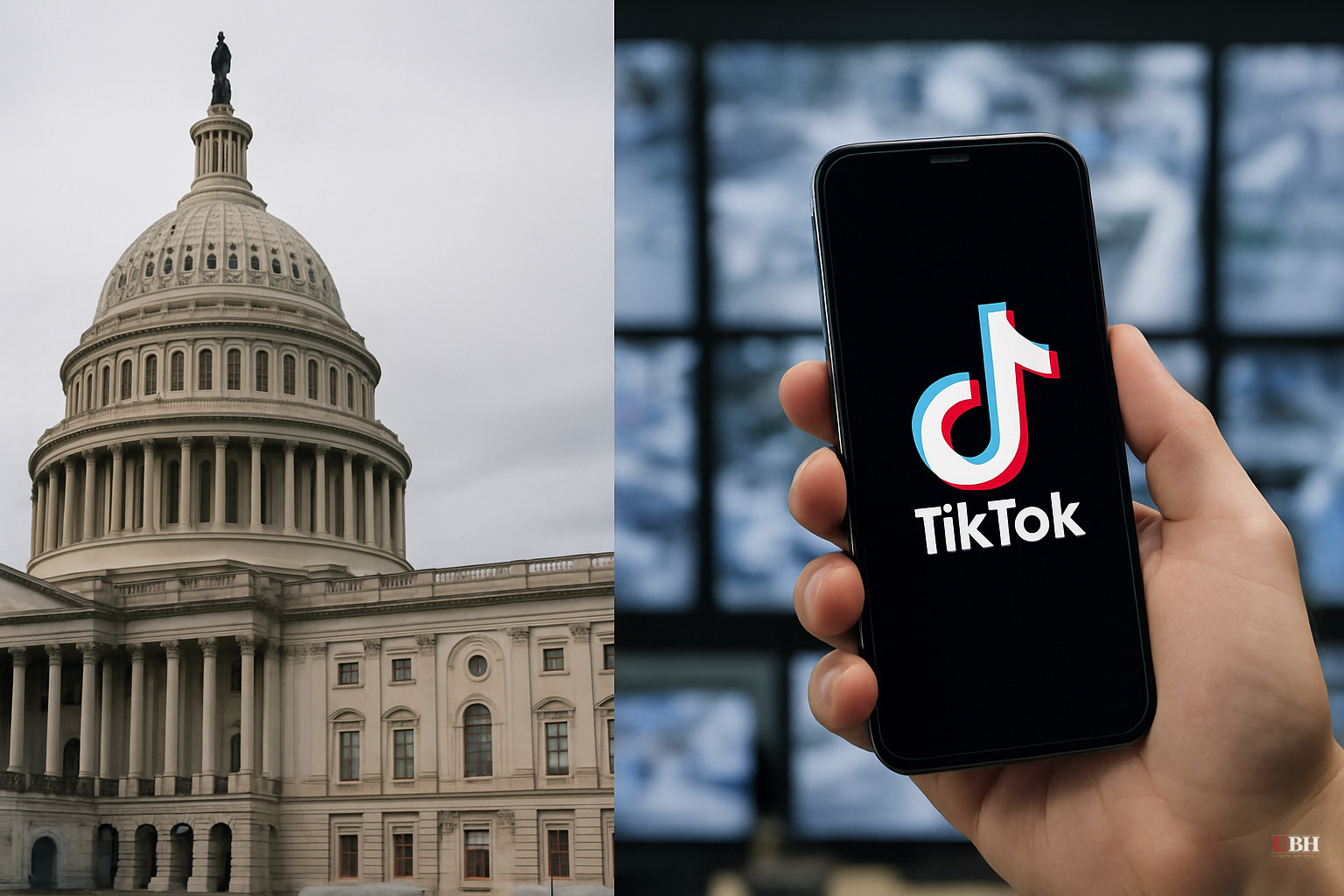
Two Votes, One Contradiction
In the same stretch of weeks, Congress did two things that flatly contradict each other.
First, lawmakers passed legislation requiring ByteDance — TikTok's Chinese parent company — to divest the app or face a U.S. ban. The stated rationale: the Chinese Communist Party could use TikTok's data-collection machinery to surveil Americans.
Then President Biden signed the renewal of Section 702, a sweeping surveillance authority originally passed under President George W. Bush. Under Section 702, U.S. intelligence agencies can monitor online communications — emails, texts, social media posts — without a warrant, provided the stated target is a foreigner. Americans are legally supposed to be shielded from it.
They haven't been.
What the FBI Actually Did
From 2020 to 2021, the FBI misused Section 702 data more than 278,000 times, according to The Atlantic. That misuse included surveillance of Americans connected to the January 6, 2021 Capitol riot and Black Lives Matter protests. Two politically charged groups on opposite ends of the spectrum meant no one's team could dismiss this one.
The FBI says it has since reformed its internal policies. That claim is self-reported and worth treating as an interested source.
Congress renewed the law anyway.
The TikTok Case Is Real — and Incomplete
The concern about TikTok is not invented. ByteDance operates under Chinese law, which can compel Chinese companies to hand data to the government in Beijing. That is a genuine, documented legal risk, not a hypothetical about an app's algorithm recommending dance videos.
The strongest version of the TikTok-ban argument goes like this: the Chinese government has both the legal authority and the demonstrated willingness to conduct foreign influence operations. Handing Beijing a data pipeline into Americans' location history, browsing behavior, and biometric identifiers is a national security risk. As The Atlantic notes, however, the fear around foreign meddling that has animated the TikTok ban has largely rested on hypotheticals.
The Part Congress Skips Over
Meta, Google, Amazon, and X collect the same categories of personal data — and in some cases more of it — from the same American users. Congress has never forced any of them to divest, restructure, or face meaningful federal privacy consequences.
The EU's data regulator fined Meta $1.3 billion for transferring Facebook user data to U.S. servers, where American intelligence agencies could access it under Section 702. Privacy advocate Max Schrems brought and won multiple legal challenges against Facebook on exactly this point. Europe concluded that American surveillance of European users' Facebook data was serious enough to warrant a ten-figure fine.
Congress has had no equivalent reckoning with American surveillance of American users' data on American platforms.
The Atlantic described Facebook as having operated like a "hostile foreign power." The language comes from Atlantic editor Adrienne LaFrance, citing the platform's record of facilitating election interference, its hostility to the press, and its indifference to democratic norms.
The Selective Outrage Problem
The question Congress has never answered: why is a Chinese data pipe a crisis requiring legislation and a foreign-ownership ban, while an American data pipe used by the FBI 278,000 times without authorization is merely reformable through internal policy?
The honest answer is probably political. China is a legitimate adversary. Domestic surveillance is a harder sell to restrict because both parties have found it useful.
What Doesn't Exist
As The Atlantic puts it, Congress remains unwilling or unable to take on the types of mass surveillance that social-media firms use to make billions, or that intelligence agencies use to grow their ever-expanding pool of data.
Every TikTok ban, Section 702 fight, and platform-accountability hearing happens inside that vacuum.
Until Congress fills it, the surveillance debate will remain exactly what it is now: a series of one-off political decisions about which data collection is acceptable, made by lawmakers who have not agreed on first principles about any of it.
Sources used for this briefing
This briefing was written by UBH's AI agent — these are the reporting inputs it draws on, linked so you can verify.