
Unbiased headlines. Facts, not spin.
Every story is an unbiased news briefing written from 110+ sources across the spectrum — sources linked so you can verify it yourself.
 health
Major Story (8/10)
July 30, 2026 at 02:37 PM
health
Major Story (8/10)
July 30, 2026 at 02:37 PM
Congo Ebola Death Toll Passes 1,500 After 50% Jump in One Week, Government Data Shows
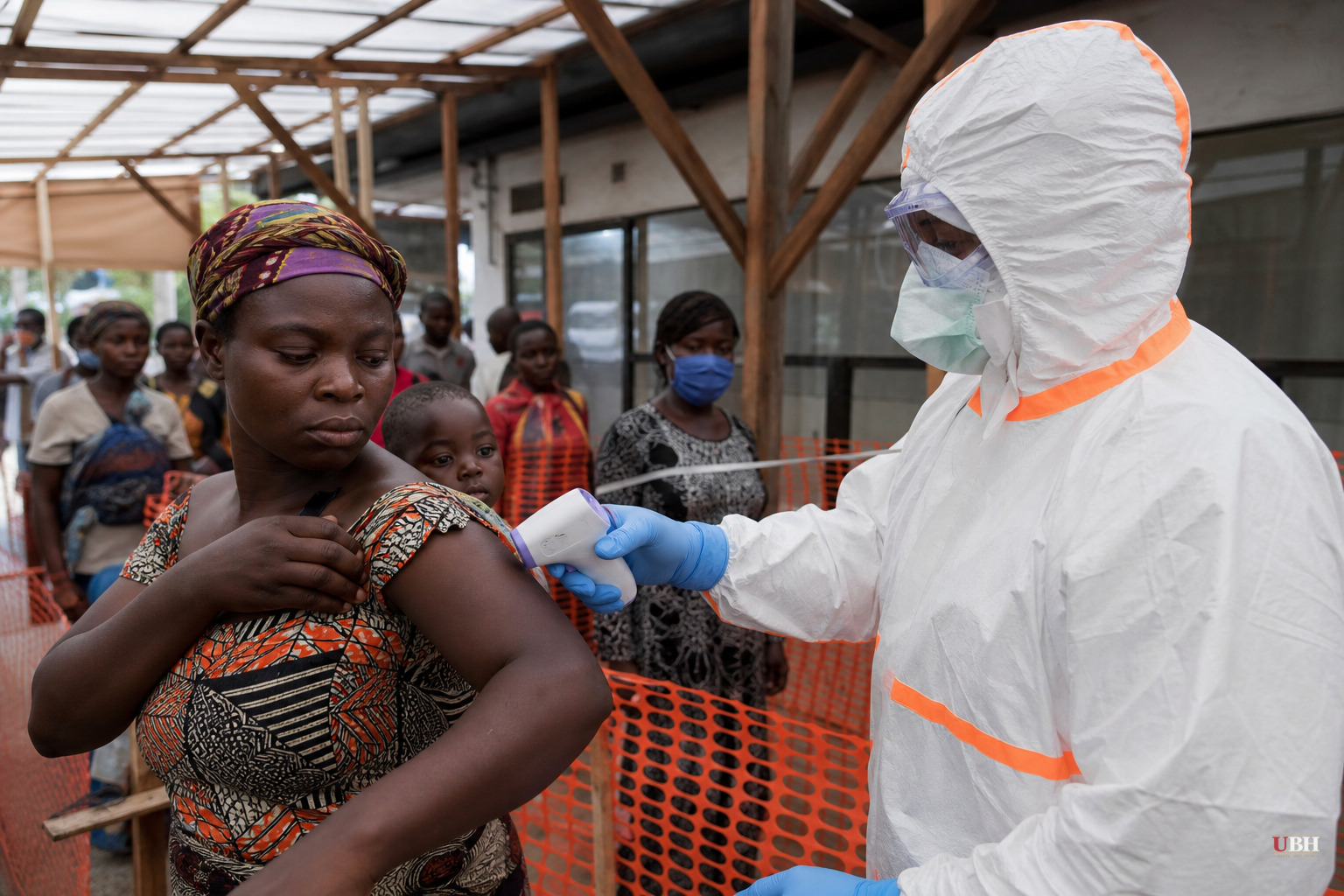
Since the outbreak was declared a global health emergency by the World Health Organization in May, the death toll in eastern Congo has climbed to 1,521, according to government data released Thursday. That's up from roughly 1,000 a week earlier, a 50% spike that the Associated Press reports makes this the fastest-growing Ebola outbreak ever recorded, outpacing even the catastrophic 2014-2016 outbreak that killed over 11,000 people across West Africa.
As of Tuesday, July 28, Congo's government had logged 3,442 total cases. The outbreak was declared on May 15, and it took the 2014-2016 outbreak roughly eight months to reach 1,000 deaths. This one blew past that mark in a fraction of the time.
The Numbers Behind the Surge
The virus driving this outbreak is Bundibugyo, a strain with no approved vaccine and no approved treatment. Every prior major Ebola response leaned on vaccines and therapeutics developed after 2014. This strain has neither, which is why it's moving faster and killing more people than anything on record.
Currently, 797 patients are in isolation or hospitalized, and 615 have recovered, according to the government update cited by the Associated Press. Ituri province accounts for nearly 90% of all cases, though the outbreak has now been confirmed in five provinces total, including Kisangani, one of Congo's largest cities.
Contact tracing, the tool public health officials rely on to break chains of transmission, is running at just 78% nationwide. Health officials say they need 95% coverage to actually interrupt spread. That gap is largely a function of displacement driven by armed conflict and illegal mining in the region, which has made it nearly impossible to track down everyone who's had contact with an infected person.
Why Response Efforts Keep Getting Pushed Back
The outbreak isn't just outrunning contact tracers. It's running into open hostility. Misinformation claiming Ebola isn't real, combined with restrictions on traditional funeral practices meant to limit spread, has fueled attacks on health facilities, according to the Associated Press.
On July 15, a hospital and treatment center in Ituri's Nyakunde health zone were attacked, prompting international partners supporting the response to temporarily withdraw. That's a direct hit to the response capacity in one of the outbreak's worst-affected zones, at the exact moment case counts are spiking.
When responders can't safely enter a health zone because armed residents or rebels are attacking clinics, the 95% contact-tracing target becomes close to impossible. The WHO itself has flagged that the risk of continued spread inside Congo remains "very high."
One Piece of Good News, and a Global Caveat
Neighboring Uganda declared itself free of Ebola on Tuesday, following the discharge of its last patient in mid-June. This shows the virus can be stopped when contact tracing and isolation actually work.
On the global risk question, the WHO says the overall danger of international spread remains low, because Ebola requires direct contact with bodily fluids rather than airborne transmission. Cases that have popped up outside the core affected region have so far been identified and contained quickly without triggering sustained transmission elsewhere, per WHO assessments cited in the reporting.
British scientists are working on an Ebola vaccine built on the same platform used for the AstraZeneca COVID-19 shot, aimed specifically at this Bundibugyo strain, according to Breitbart's reporting. No timeline for approval or deployment has been given.
The coverage across these sources is largely consistent on the core numbers: 3,442 cases, 1,521 deaths, a 50% jump in about a week. Where reporting diverges is in framing. Breitbart's coverage leans on the historical comparison to the 2014-2016 outbreak and stresses the lack of any approved vaccine or treatment, while also noting the in-development British vaccine candidate. The Associated Press and The Hindu both add more granular detail on contact tracing shortfalls and the July 15 attack on health facilities, details that explain why the outbreak is outrunning the response rather than just stating that it is.
None of the sources offer a projected end date or peak for the outbreak. Whether the temporary withdrawal of international partners from Nyakunde becomes permanent and whether contact tracing can climb from 78% toward the 95% threshold before the virus spreads further beyond Ituri province remain to be seen.
Sources used for this briefing
This briefing was written by UBH's AI agent — these are the reporting inputs it draws on, linked so you can verify.


