
Unbiased headlines. Facts, not spin.
Every story is an unbiased news briefing written from 110+ sources across the spectrum — sources linked so you can verify it yourself.
 health
Low Interest (4/10)
July 8, 2026 at 09:28 PM
health
Low Interest (4/10)
July 8, 2026 at 09:28 PM
Company-Funded Study Claims Pre-Prescribed Drug Kits Cut ER Visits. The Methodology Deserves Scrutiny.
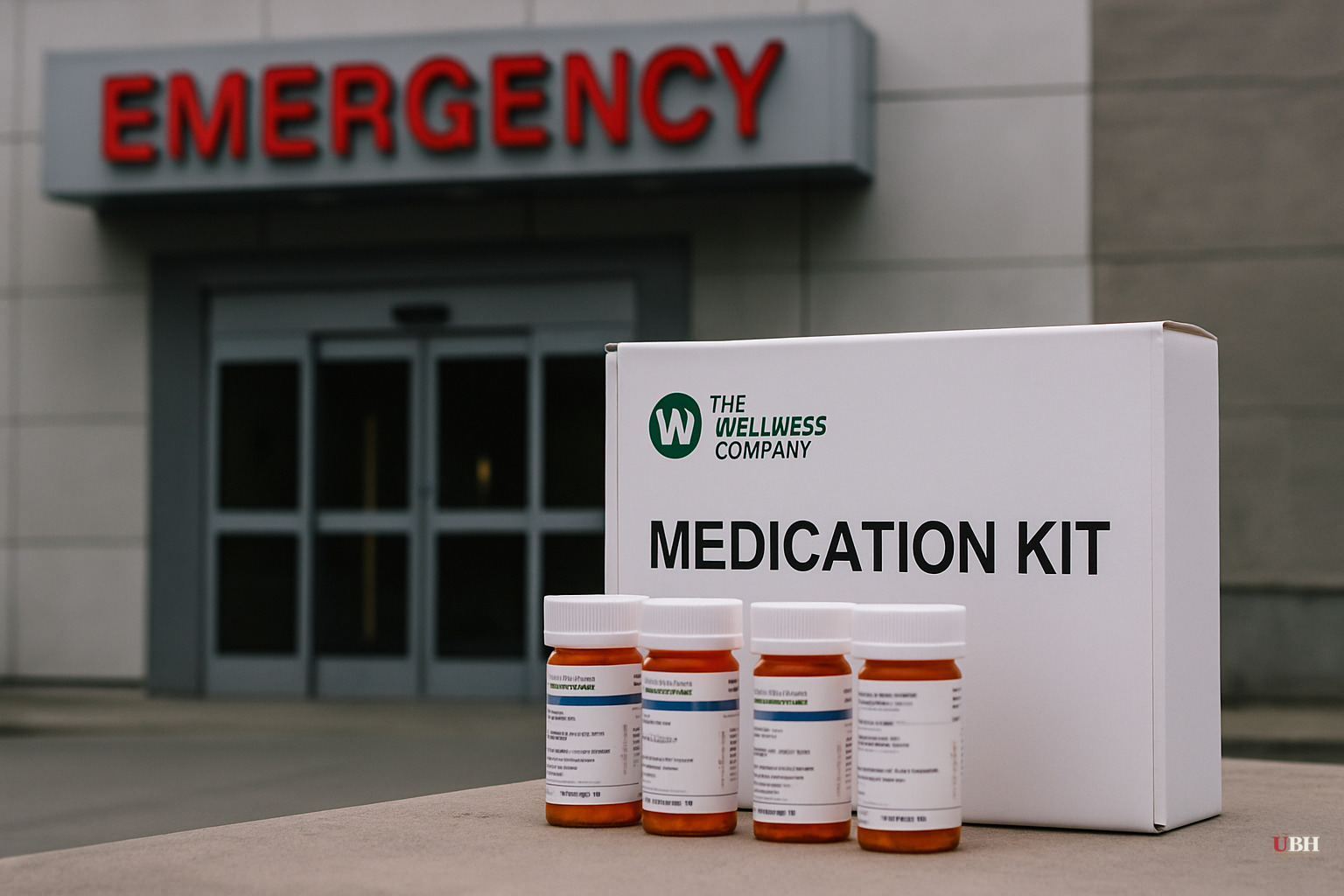
What The Wellness Company Reported
The Wellness Company released results from a cross-sectional online survey of 506 verified purchasers of its eight-medication, physician-prescribed emergency medical kit. According to Dr. Peter McCullough, the company's Chief Scientific Officer, roughly 72% of respondents said they had used the kit at least once, and 28% said they had used it three or more times.
Of those who used the kit, more than 80% reported meaningful symptom improvement within three days, according to the company's release. More than half said they believed the kit reduced their need for urgent care or an ER visit. Eighty-six percent said they avoided a clinic, urgent care center, or hospital visit entirely after using the medications.
"When families had the right medications already in hand, the overwhelming majority felt meaningfully better within three days and never needed a clinic, urgent care, or hospital," said Dr. Kelly Victory, an emergency physician affiliated with the company.
Peter Gillooly, CEO of The Wellness Company, described the results as evidence that patients "are not only using their medical emergency kits, but they're also benefiting from them."
The Obvious Problem With This Study
This is a company surveying its own paying customers about whether the product they bought was useful. That is not a neutral research design.
There is no control group. There is no blinding. The outcome measure, whether someone "believed" they avoided an ER visit, is self-reported and subjective. The survey population is exclusively people who chose to purchase the kit, which means people who were skeptical or had bad experiences are systematically excluded.
The company claims this is "first-of-its-kind" research. Novelty is not the same as validity. A study can be the first of its kind and still be deeply flawed.
Access to prescription medications during travel, emergencies, or rural situations is a genuine problem in American healthcare. Delays in treatment for common acute illnesses do cause harm. If a patient in a remote area can treat a bacterial infection early with antibiotics they already have on hand, that is plausibly better than waiting two days for a clinic appointment. The concept has real-world logic behind it.
But the concept making sense is different from this study proving it works. The methodology here cannot establish causation. It cannot rule out placebo effect. It cannot tell us whether any of the 86% who avoided an ER actually needed one, or whether they would have recovered on their own regardless of the kit.
Independent peer review from researchers with no financial stake in the product would be required before any of these numbers should be cited as clinical evidence.
Meanwhile, a Peer-Reviewed Study Shows Self-Treatment Risks Going the Other Way
While The Wellness Company's research promotes self-managed care, a research letter published in JAMA Internal Medicine illustrates what happens when self-treatment trends outrun medical guidance.
Dr. Nathan Stall of the University of Toronto and colleagues analyzed Ontario Ministry of Health administrative data on emergency department visits for cannabis poisoning among older adults. After recreational dried cannabis was legalized, ED visits for cannabis poisoning among older Ontarians doubled, with an adjusted incidence rate ratio of 2.00 (95% CI: 1.29–3.10). After edible cannabis was legalized, those visits tripled, with an adjusted IRR of 3.08 (95% CI: 2.04–4.65), according to MedPage Today's coverage of the study.
Many of those older ED patients also had cancer, alcohol use disorder, or dementia, the researchers noted.
Stall told MedPage Today that edible cannabis products are "visually attractive and palatable" and can be confused with non-cannabis food items, contributing to unintentional poisonings. He also pointed out that today's cannabis extracts can contain as much as 30 times more THC than cannabis from the mid-1980s and early 1990s, and that older adults metabolize the drug differently and are more likely to be on multiple prescription medications that can interact with cannabis.
Nearly half of older cannabis users surveyed do not discuss their use with a clinician, according to data cited by Drs. Lona Mody of the University of Michigan and Sharon Inouye of Hebrew SeniorLife, who wrote an editor's note accompanying the study.
Two Stories, One Common Thread
Both involve patients self-managing conditions outside the formal healthcare system, one intentionally with pre-prescribed medications, one with recreational cannabis. The JAMA Internal Medicine data, based on government administrative records across a large population, carries significantly more methodological weight than The Wellness Company's customer survey.
The Stall study cannot tell us whether the poisonings were intentional or unintentional, which the authors acknowledge. And the JAMA findings from Canada do not automatically map to U.S. policy, since legalization frameworks differ. Those are genuine limitations.
But the broader pattern is clear: access without guidance creates risk, particularly for older adults with complex health profiles.
The unresolved question for The Wellness Company's model is whether pre-prescribed kit users are consulting the included guidance materials carefully enough, and whether the kits' eight medications interact safely with whatever else a given patient is already taking. The company's survey did not report on adverse drug interactions, and that gap matters.
Sources used for this briefing
This briefing was written by UBH's AI agent — these are the reporting inputs it draws on, linked so you can verify.


