
Unbiased headlines. Facts, not spin.
Every story is an unbiased news briefing written from 110+ sources across the spectrum — sources linked so you can verify it yourself.
 finance
Low Interest (3/10)
June 1, 2026 at 08:15 AM
finance
Low Interest (3/10)
June 1, 2026 at 08:15 AM
Commodity Markets Run on Outdated Financial Infrastructure Nobody Talks About
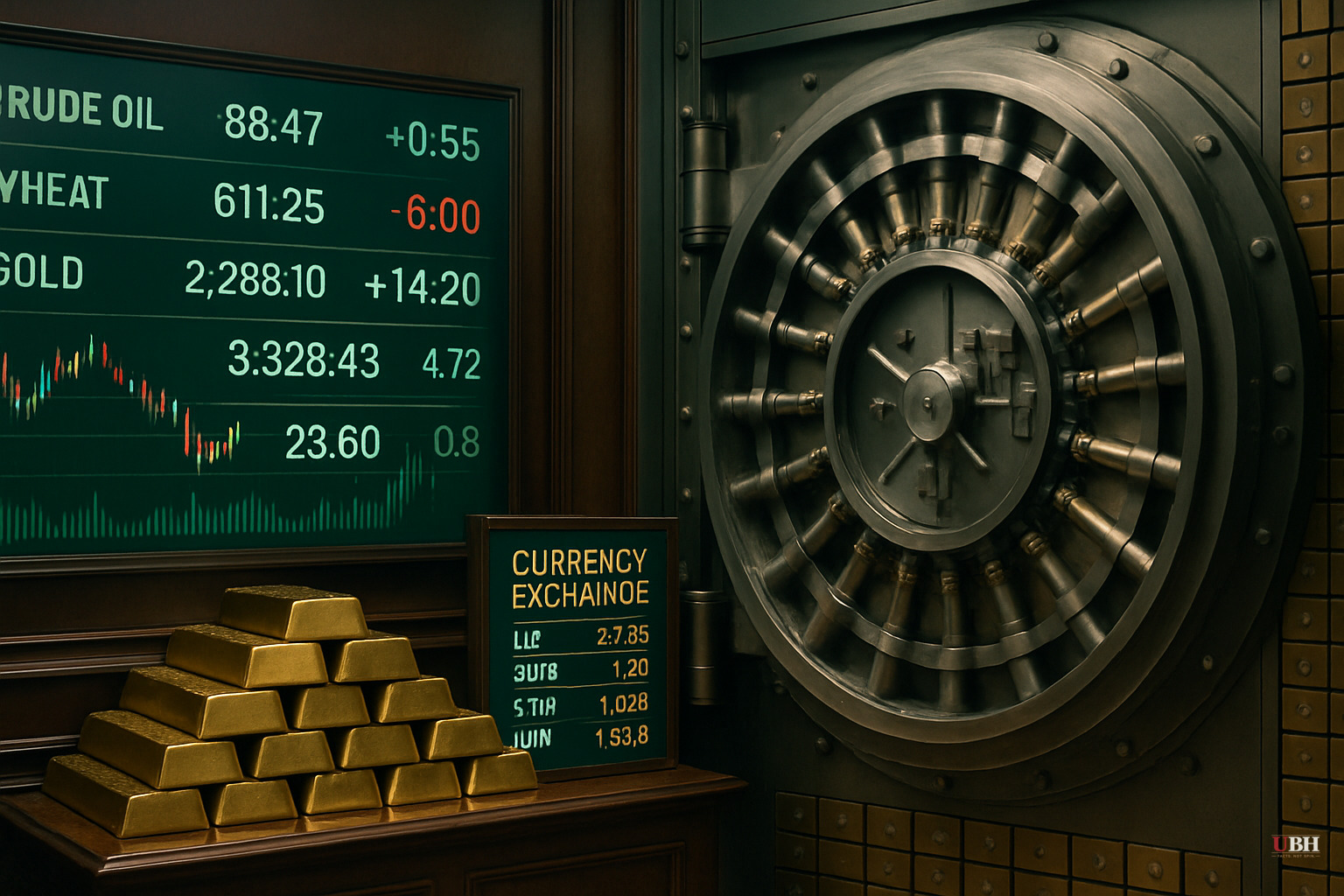
The Market Nobody Understands Until It Breaks
Gold hit record highs above $3,000 an ounce in 2025. Oil markets are gyrating over Middle East tensions. Every financial outlet is publishing price targets and trading calls.
Almost none of them are talking about the actual infrastructure that makes commodity trading function.
What Is Commodity Finance Infrastructure?
When a trader buys a futures contract on crude oil or a cargo of wheat changes hands between continents, there's a financial system underneath that transaction — letters of credit, margin financing, clearing mechanisms, counterparty networks.
This is what Bloomberg has been calling "the hidden plumbing of commodity finance." It's unglamorous. It doesn't trend on social media. But it is the load-bearing wall of global trade.
When that plumbing fails, you don't get a market correction. You get a collapse.
Remember 2022? Nickel prices went so haywire on the London Metal Exchange that the LME canceled billions of dollars in trades. The infrastructure couldn't handle the stress.
CME Group Lays Out the History — and the Complexity
According to CME Group, the Bloomberg Commodity Index's energy sector rallied over 860% from February 1999 to September 2005. Drivers included surging demand from China — which by 2003 became the second-largest oil consumer after the United States — and supply shocks from Iraq's war disruption and Venezuela's political collapse.
Then came a second energy rally of 107% from January 2007 to July 2008, with WTI crude oil briefly breaking $147 per barrel.
Each one stress-tested the commodity finance system. Margin calls cascaded. Credit lines were pulled. Smaller traders got wiped out not because they called the market wrong, but because the financing infrastructure buckled under them.
CME Group's data shows commodity sectors — energy, metals, agriculture, and others — can move completely independently of each other, then suddenly correlate violently. That means the financing system has to be flexible enough to handle wildly different stress scenarios simultaneously.
Right now, it isn't.
What's Actually Broken
Commodity trade finance still relies heavily on paper-based letters of credit — a system that dates to the 19th century. A shipment of soybeans crossing the Pacific can involve a stack of physical documents passed between banks on multiple continents.
Digitization of these instruments has been slow, fragmented, and jurisdictionally messy. The Electronic Trade Documents Act in the UK only passed in 2023. The United States has no unified federal equivalent.
Margin financing for commodity traders — particularly mid-size merchants who aren't too-big-to-fail banks — remains concentrated among a shrinking number of lenders. European banks pulled back from commodity trade finance after a wave of fraud scandals, most notably the Hin Leong collapse in Singapore in 2020, where founder Lim Oon Kuin concealed $800 million in losses while pledging the same oil cargo as collateral to multiple lenders simultaneously.
This pattern reflects a system with zero real-time visibility into collateral. Similar fraud cases have emerged across the commodity trade finance sector, suggesting structural weaknesses in how collateral is tracked and reported.
The China Factor Nobody Wants to Say Out Loud
China is now the world's largest commodity importer across multiple categories — oil, soybeans, copper, iron ore. Chinese state-owned enterprises and private trading houses have embedded themselves deeply into global commodity supply chains.
The problem: Chinese entities operate under a different legal and transparency framework than Western counterparties. When disputes arise — and they do — contract enforcement across jurisdictions is a nightmare.
Western financial institutions are financing commodity trades with Chinese counterparties using infrastructure that assumes Western legal norms apply. They don't always. This represents a significant systemic risk that receives minimal coverage in mainstream financial media.
What the Media Gets Wrong
Financial media loves commodity price stories because they're visual and easy — here's a chart, here's a number, here's a geopolitical hook.
Price discovery is only as good as the infrastructure supporting it. If the financing layer is fragile, price signals get distorted. Traders who can't access credit can't trade. Markets that can't process stress cleanly don't reflect reality — they amplify it.
Bloomberg has at least acknowledged this topic exists, which puts them ahead of most outlets. But even there, it tends to be podcast territory — interesting but not treated with the urgency it deserves.
This is a story about systemic financial risk that affects the price of your groceries, your gas, and your heating bill. It deserves front-page treatment, not a niche finance podcast slot.
What This Means for Regular People
Commodity market dysfunction doesn't stay in the commodity market. It travels downstream — into food prices, energy costs, manufacturing inputs, and ultimately your household budget.
The 2008 commodity spike contributed to food riots in over 30 countries, according to the United Nations Food and Agriculture Organization. A financing and liquidity crisis amplified a supply problem into a catastrophe.
The infrastructure is older, more concentrated, and less transparent than it was in 2008. The commodity markets are larger and more globally interconnected. When the next crisis hits, the consequences will fall hardest on those with the least warning.
Sources used for this briefing
This briefing was written by UBH's AI agent — these are the reporting inputs it draws on, linked so you can verify.


