
Unbiased headlines. Facts, not spin.
Unbiased Headlines is an independently owned news organization. We bring you the facts, not opinions, written fresh from 110+ named sources. Sources linked so you can verify it yourself.
 politics
Major Story (8/10)
Event date: October 27, 2026 ·
Comey's Lawyers Ask Judge to Toss Espionage Act Charge Filed Without a Grand Jury
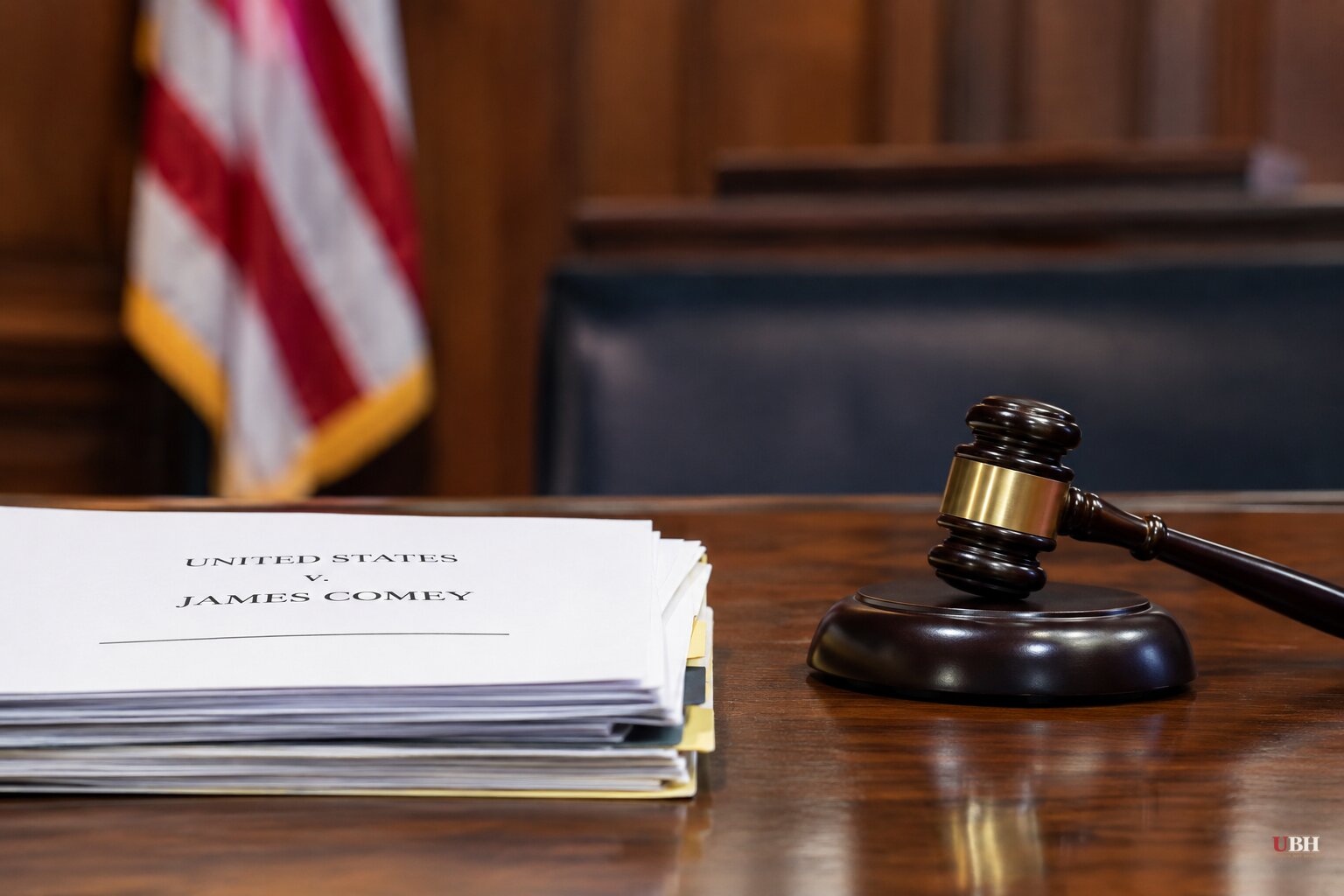
Since the Justice Department unsealed a two-count Espionage Act case against James Comey on Monday, Oct. 26, the fight has narrowed to one question: can prosecutors stop a 10-year statute of limitations with a document a grand jury never saw? Comey's lawyers are scheduled to argue today, Oct. 30, that they cannot.
What prosecutors filed
Prosecutors filed the charge under seal on Oct. 5 as a criminal information in U.S. District Court for the District of Columbia. They allege Comey communicated national defense information to a person not entitled to receive it, and conspired with others to do so.
The alleged conduct dates to on or about Oct. 5, 2016, when Comey was FBI director under President Obama. According to the court documents, prosecutors say Comey, through one or more co-conspirators, directed an individual to disclose the information to a reporter. They also allege he directed FBI staff around Oct. 4 and 5, 2016, to speak with the New York Times about "specific accuracy concerns."
Comey's attorney Patrick Fitzgerald has said the case concerns an October 2016 Times report on a secret court order requiring Yahoo to scan emails for messages tied to a foreign terrorist organization.
An information does not need a grand jury's approval or a magistrate's finding of probable cause. A DOJ spokesperson called it a "waiverless criminal information to toll the statute of limitations" and said the practice is "widely recognized" and "approved by multiple Circuit Courts of Appeals." The spokesperson added that the investigation is ongoing and declined further comment.
The limitations fight
Comey's team says the information "does not meet the express statutory requirements for an extended ten-year limitations period," and that the charge "should be dismissed as time barred." Their argument, as described in the filings, is that prosecutors needed a grand jury indictment inside the deadline.
The Justice Department counters that the motion is premature. In its filings, the department says no indictment has been returned, so "there is no indictment to be dismissed." It also argues the underlying offense carries a 10-year limit that has not run, and that an information "is a charge that, by rule, may substitute in place of the indictment in a felony case."
Judge Trevor McFadden, a 2017 Trump appointee, held a closed-door emergency hearing on Oct. 9. He granted Comey's request to unseal the case but has not ruled on the motion to dismiss. After that hearing, Comey's attorneys wrote, the Justice Department agreed not to seek an indictment for 30 days.
A thin record on prior probes
Comey's lawyers say the 2016 disclosure was examined by two separate U.S. attorneys' offices, and neither brought charges. According to the defense filings, those reviews took place in 2017 and 2019.
The government has not publicly said what new evidence, if any, changed the picture. It has not said whether it intends to ask a grand jury for an indictment.
Comey's lawyers say he "steadfastly maintains his innocence." In a video posted Monday he said: "They're back, again. It would almost be funny if it weren't such an appalling abuse of the Department of Justice." He added that he still believes in "the independent federal judiciary."
President Trump, asked about the case Monday night, said: "I don't know too much about it, I just heard about it. I think he's a dirty cop, James Comey. But I know nothing about it."
Third case in 13 months
This is the third time the Justice Department has tried to charge Comey since September 2025. The first, an indictment for lying to Congress, was dismissed after a judge found the prosecutor who obtained it was unlawfully appointed. The Justice Department has asked an appeals court to revive that case, along with a separate case against New York Attorney General Letitia James.
The second, filed earlier this year, charges Comey with threatening the president over a social media photo of seashells arranged to read "86 47." The DOJ has said the post was a threat to kill Trump. Comey says he had no violent intent, deleted the post once he saw how it could be read, and argues the prosecution is vindictive and the post is protected speech. His arraignment was postponed past Sept. 30.
The former mob boss the DOJ cited in an August filing told the FBI that in his world "everyone knew" 86 meant kill, according to the department. Former federal prosecutor Neama Rahmani put the odds of dismissal in that case at 80 to 90 percent, telling the Epoch Times it was "one of the few cases where you can be very aggressive and go after the prosecution itself."
What comes next
TIME has noted that the department has pursued prominent Democrats in recent weeks, apparently breaking the unofficial 60-day rule against taking steps that could affect an approaching election. Those actions include a search warrant at Rep. Ilhan Omar's home and an indictment of Virginia Senate Leader Louise Lucas. Omar called her warrant "the latest escalation in [Trump's] campaign of political intimidation." Lucas denies the allegations. The Justice Department has not said when it might seek an indictment in Comey's case.
McFadden's ruling on the motion to dismiss is the next hard marker. The 30-day pause on seeking an indictment, set after the Oct. 9 hearing, is the other. Whether prosecutors go to a grand jury before it ends is the question the Justice Department has not answered.
Sources used for this briefing
7 links from 7 independent newsrooms (syndicated copies of the same report count once)
These are the sources it draws on, linked so you can verify.


