
Unbiased headlines. Facts, not spin.
Unbiased Headlines is an independently owned news organization. We bring you the facts, not opinions, written fresh from 110+ named sources. Sources linked so you can verify it yourself.
 politics
Major Story (7/10)
CNN, MS NOW and Politico Ask Judge to Make Press Access Order Permanent, Say White House Still Keeps Them Off Air Force One
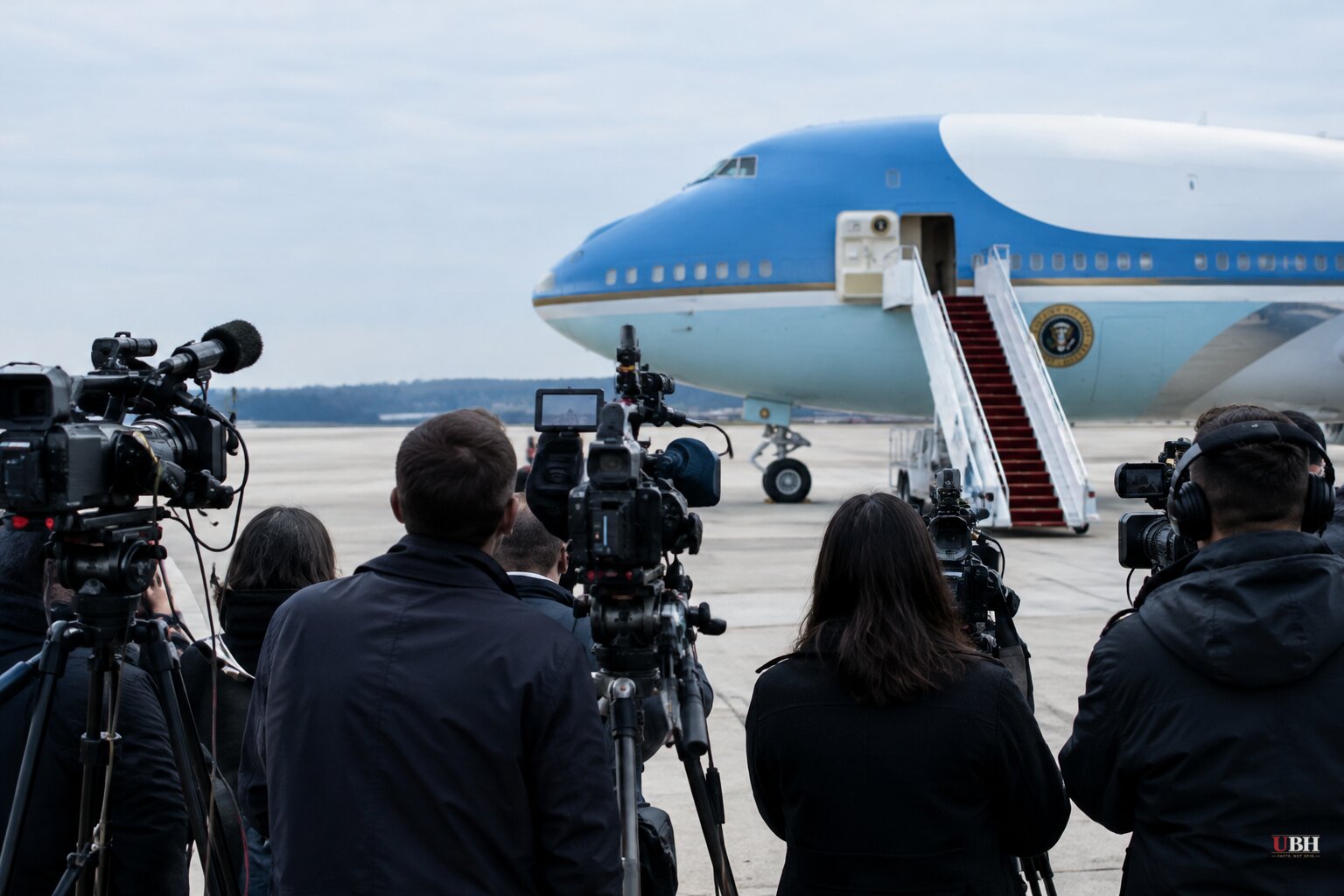
CNN, MS NOW and Politico went back to federal court on Wednesday, Oct. 28, saying the White House is still shutting them out of the places where President Donald Trump most often takes questions. They want the judge to turn his temporary orders into a permanent injunction.
The amended complaint, filed in U.S. District Court for the District of Columbia, accuses the administration of "continued retaliatory and viewpoint-discriminatory deprivation" of access. It renews claims under both the First and Fifth Amendments.
The orders so far
The dispute began when Trump announced a ban on the three outlets on Sept. 18. They sued on Sept. 21.
Judge Timothy Kelly restored their White House credentials on Sept. 24, on Fifth Amendment due-process grounds. The White House complied and reinstated the credentials.
On Oct. 13, Kelly granted a preliminary injunction on First Amendment grounds. He rejected the argument that the ban was driven by policy goals such as national security. He found it was driven by Trump's stated belief that the outlets' reporting was inaccurate and biased.
"Simply put," Kelly wrote, "that is unlawful viewpoint discrimination."
What the outlets say happened after
The new filing is about the press pool, the rotating arrangement in which a few outlets cover the president up close. Credentials alone did not get the outlets back into those rooms, according to the complaint.
CNN says it was denied access to Air Force One on all six occasions it was scheduled to serve as the television pool representative since the ban was announced. Those trips fell on Sept. 21, Sept. 26, Oct. 1, Oct. 16, Oct. 21 and Oct. 26.
Politico says it was kept out of scheduled print pool slots for Trump's Oct. 5 trip to Nebraska and his Oct. 26 trip to Mississippi.
MS NOW says it has received no secondary television pool assignments since the ban. Before it, the network filled that role roughly every two to three weeks, the filing states.
The complaint also puts numbers on what is at stake. Trump has held 121 press events aboard Air Force One or on the tarmac and 138 in the Oval Office in his second term, it says. He has taken at least 4,700 questions from reporters in those settings.
Theodore J. Boutrous Jr., the outlets' attorney, said the White House continues to block reporters "in the very locations that the president most frequently engages with the press." Last week he asked the administration to confirm it would "abandon any policy of excluding CNN from the Oval Office and Air Force One." The administration did not respond, according to CNN.
The White House position
The White House does not dispute that it controls who gets into those spaces. It says that is the point.
"No person and no journalist has a constitutional right to access to the President's Oval Office, Air Force One, or other sensitive and private facilities," the White House said in a statement emailed Oct. 28. "When publications lie, fabricate, and ignore the truth, proximity matters less and they can write their fiction from outside of these secure facilities."
A White House official told CNN that "the Fake News has no place demanding a spot in the President's Oval Office."
Trump has said he is not targeting press freedom, only that the outlets have not treated him fairly. After the original suit was filed, he said the Oval Office should not be "defiled by Third Rate Clowns" and vowed to "do whatever is necessary," according to the amended complaint.
Where the legal line sits
The outlets' filing concedes the White House's best point. They "do not claim an unrestricted right to enter the Oval Office or travel aboard Air Force One," the complaint says. Their claim is narrower: once the White House opens those spaces to selected journalists, it "may not exclude plaintiffs because it dislikes their coverage."
That is a question about motive, and Kelly has already answered it once at the preliminary stage. He found the outlets likely to win on the argument that the exclusion punishes viewpoint.
The outlets warn that the stakes go past three newsrooms. "Every news organization now faces the risk of similar punishment for coverage the President deems insufficiently favorable," the filing says, "and the public is deprived of current and complete information about its government."
The principle is not partisan. A government that can pick which reporters get access based on whether it likes their stories can do it under any president. Free speech protections exist for coverage officials hate.
The flip side is real too. The president has wide control over his own plane and his own office, and the White House says that control is not a court's to second-guess. Courts will have to say where the line falls when access is handed out to some outlets and withheld from others.
What comes next
As of Thursday morning, Oct. 29, the White House had not filed a response to the amended complaint. CNN reports the administration is appealing Kelly's preliminary injunction.
Two tracks are now running. Kelly has been asked to declare the ban unlawful and enter permanent relief. An appeals court may weigh in on the injunction he already issued. Which ruling lands first, and whether the next pool slots go to CNN, MS NOW and Politico, is unresolved.
Sources used for this briefing
7 links from 7 independent newsrooms (syndicated copies of the same report count once)
These are the sources it draws on, linked so you can verify.


