
Unbiased headlines. Facts, not spin.
Unbiased Headlines is an independently owned news organization. We bring you the facts, not opinions, written fresh from 110+ named sources. Sources linked so you can verify it yourself.
 politics
Major Story (7/10)
China Names Gen. Zhang Shengmin to Politburo, the First Mid-Term Addition Since 1994
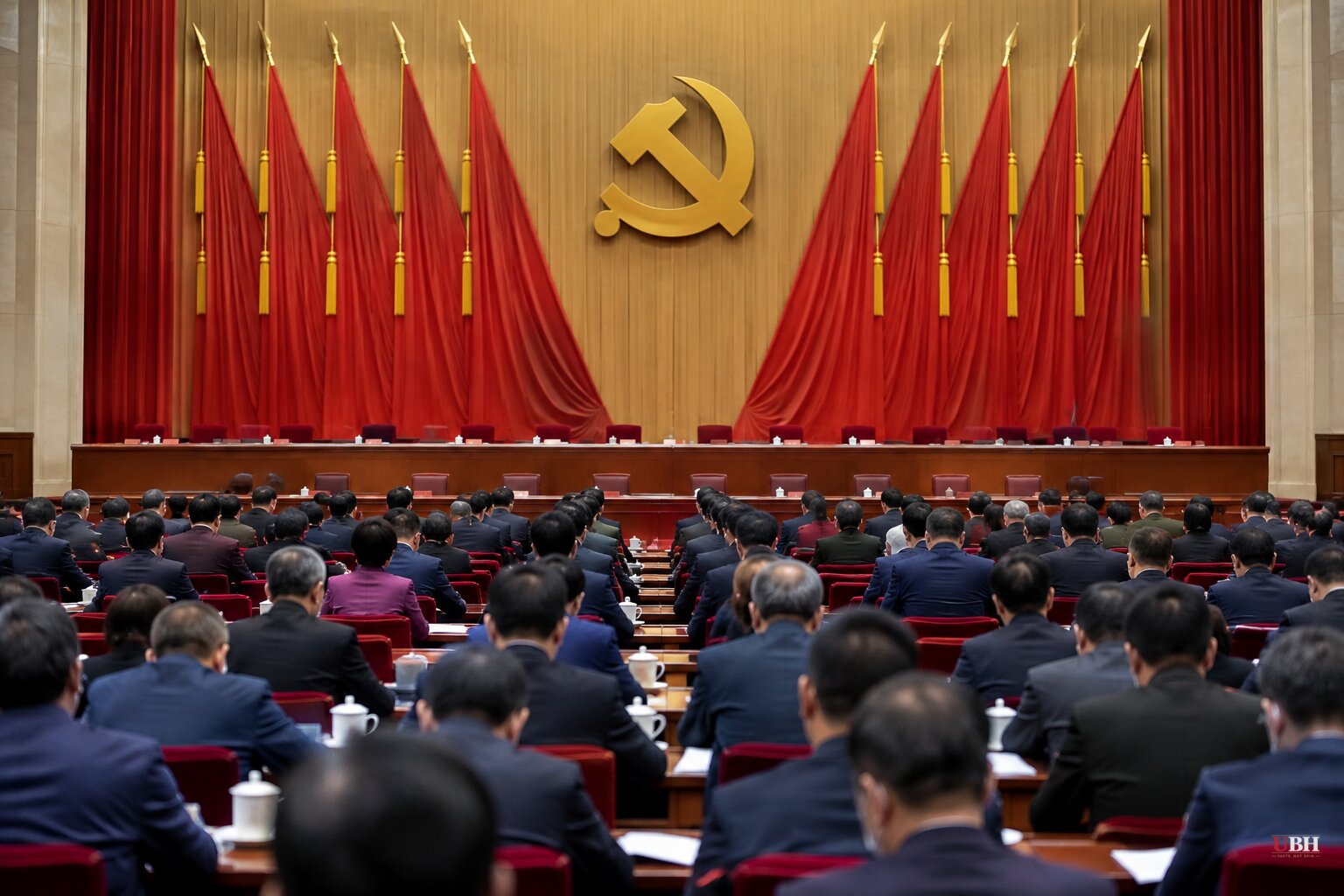
The attendance figures released from its fifth plenum were stark, and the meeting also produced its main personnel decision. On Thursday, Oct. 29, China's Communist Party named Gen. Zhang Shengmin, vice chairman of the Central Military Commission, to the Politburo.
The decision came at the end of four days of closed-door meetings in Beijing, according to an official readout from the Xinhua News Agency.
A Politburo with no military voice, until now
Xi Jinping earlier purged two of China's top generals. That left Zhang as the only member of the Central Military Commission besides Xi himself.
It also left the Politburo without a single representative from the People's Liberation Army until Zhang's elevation. His promotion fills that gap.
Zhang also serves as deputy secretary of the commission's discipline inspection body, so the person now sitting on the Politburo for the military is also the one overseeing internal discipline inside it.
The move follows the convention that the CMC's two vice chairmen sit in the party's leadership. The timing is unusual. The party has not added a Politburo member at a mid-term plenum since September 1994, when Huang Ju joined at the fourth plenum after the death of Huang Shaowen, according to the Epoch Times.
The discipline resolution
The plenum also adopted a resolution on strengthening party self-governance, discipline and anti-corruption. In a summary carried by Xinhua, the party said the tasks it faces are "increasingly arduous," including "uniting and leading the people to safeguard national sovereignty, security, and development interests."
The party said it must step up its self-governance, which includes rooting out corruption and maintaining ideological purity. It should, the summary said, "with an eye on enhancing its long-term governance capacity, maintain its progressive nature and purity, and its close, flesh-and-blood ties with the people."
That is the party's own account: corruption and discipline problems are threats to its ability to govern, and the answer is more enforcement.
Xi has run an anti-corruption crackdown since taking power in 2012. Analysts say the focus now also reaches officials judged to be underperforming.
Mingda Qiu, a senior analyst at the Eurasia Group, said the message shows Xi treats corruption and disciplinary violations as "existential challenges" for the party. "The anti-corruption push should no longer be treated as a campaign. It is here to stay," Qiu said, adding that more mechanisms to deal with such violations will be created.
The plenum also reviewed the earlier purges of senior party and military officials and confirmed the personnel changes.
Attendance and an absent diplomat
Neil Thomas, a senior fellow at the Asia Society Policy Institute, calculated a 74% attendance rate at the meeting, the lowest since the Mao Zedong era. He said it showed wider purges than expected. The readout counted 162 Central Committee members and 117 alternates present and gave no reason for the absences or names of those who stayed away.
The Epoch Times reported that Beijing also disclosed on Oct. 29 that Liu Jianchao, director of the party's International Department, is under investigation for serious violations of discipline and law. The party has not said when the investigation began. His last public appearance listed on the department's website was in July 2025, when he met officials in Algeria. Liu, 62, had been widely seen as a possible successor to Foreign Minister Wang Yi, 73, who is likely to retire at the next Party Congress.
The Liu detail rests on that single outlet's account, and no charges or findings have been made public.
What comes next
The plenum sets up the leadership turnover about a year away, when Xi is widely expected to secure a fourth five-year term as party leader.
Sources used for this briefing
8 links from 7 independent newsrooms (syndicated copies of the same report count once)
These are the sources it draws on, linked so you can verify.


