
Unbiased headlines. Facts, not spin.
Unbiased Headlines is an independently owned news organization. We bring you the facts, not opinions, written fresh from 110+ named sources. Sources linked so you can verify it yourself.
 politics
Major Story (8/10)
Event date: September 29, 2026 ·
Early Vote Passes 43 Million Ahead of Nov. 3 Midterms, With Democrats Ahead Among Party-Registered Voters
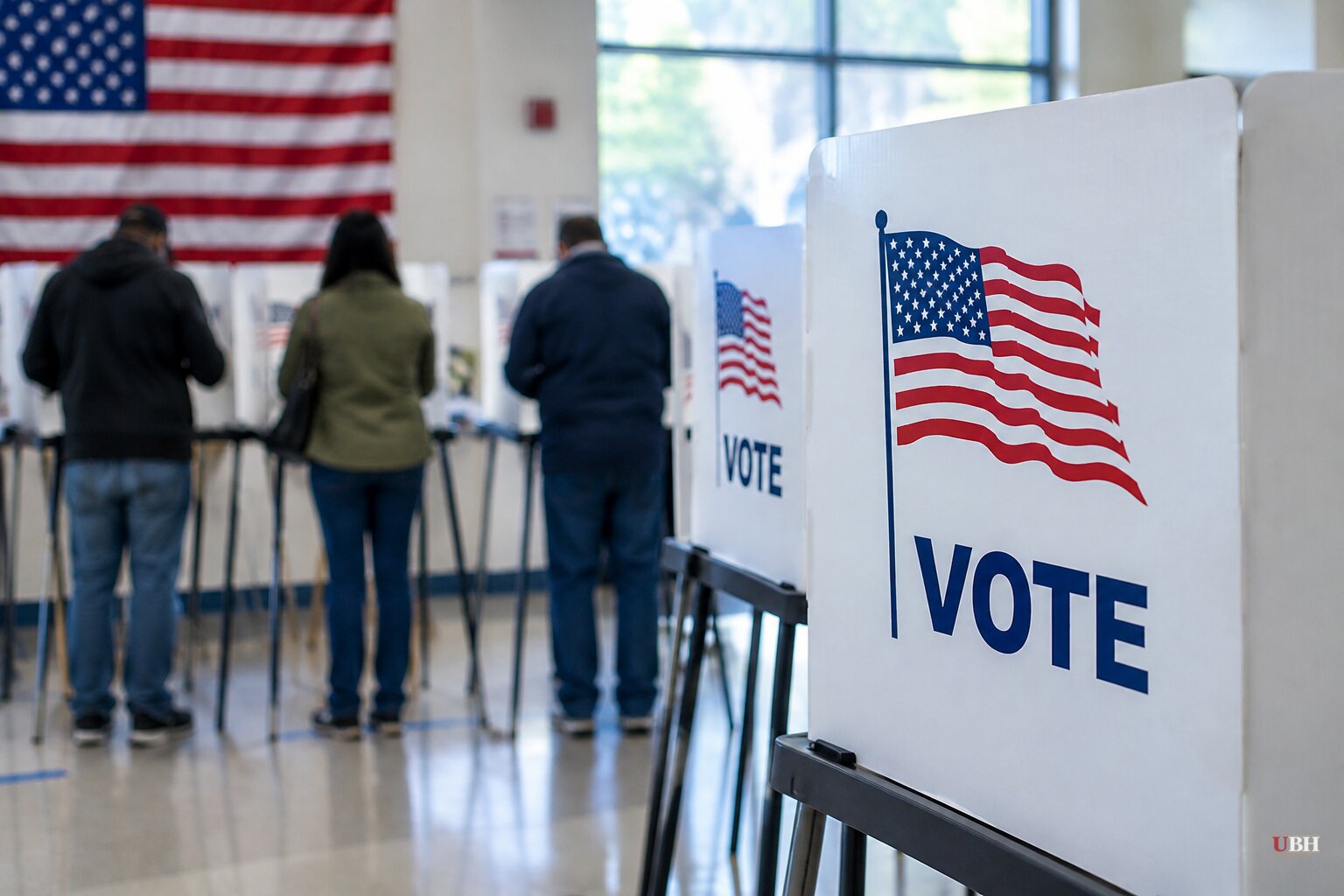
Since the first early ballots were cast more than a month ago, the count has climbed from about 23 million on Oct. 24 to more than 43 million as of Thursday, Oct. 29, according to the University of Florida Election Lab. Election Day is Tuesday, Nov. 3.
That is more than a third of the roughly 122 million Americans who voted in the 2022 midterms. Lab director Michael McDonald says four to five million early votes have been landing each day, a faster pace than in most previous cycles. Turnout appears on track to beat 2020 and 2018, which broke the 1914 midterm record.
Where the ballots are coming from
Texas leads the surge. More than 5.8 million ballots are in, about 1.75 million above its entire 2022 early total, McDonald says. Texas does not record party or race on voter registration, but McDonald points to border counties that are more than 90% Hispanic. "Some of them are going to beat their 2022 turnout in just the early vote alone," he said.
In Georgia, which records race, ballots from Hispanic and Black voters are up from 2022 while white voting is on par with that year, according to McDonald. Georgia had received more than 1.8 million ballots as of Oct. 26.
Iowa's early returns are 22% above 2022 at the same point, and the state has already received 83% of its 2022 early and mail vote total.
Indiana shows a different pattern. A week out, the state had 476,802 ballots, versus 415,547 at the same point in 2022. In-person early voting rose from 296,792 to 405,786. Mail ballots fell from 113,808 to 64,721, a drop of more than 43%. McDonald says voters nationally increasingly prefer to vote in person even when voting early, and are returning ballots sooner.
The lab's Oct. 25 snapshot showed 27.7 million votes in 47 states: 13.5 million in person and 14.2 million by mail. That snapshot showed 50.8% of early voters were 65 or older and 53.9% were women.
The partisan split
In states that record party registration, Democrats have cast about 44% of early ballots and Republicans 31.2%, with 24.7% from voters with no affiliation, according to Thursday's lab figures. That covers only roughly half the states. Earlier in the week, TIME's account of the lab data put the split at about 45% to 31%.
In Georgia, Democrats account for 46% of ballots and Republicans 37%. In 2022 the split was 40% Democratic and 41% Republican. In North Carolina, Democratic ballots are 42% of the total, above 2022 and matching 2018 at this point. In Maine, Democratic early turnout is 1 point above its 2022 level while Republican turnout is 3 points below. Iowa Democrats lead returned ballots by 17 points.
Republican early voting is generally similar to 2022, McDonald says. The increase comes from Democrats and from voters with no party registration.
What the numbers do not show
Registration is not a vote. McDonald says the data shows the party a voter registered with, not the candidate they chose, and it cannot say how unaffiliated voters voted.
He also expects the gap to narrow. "We expect the Democrats to build up a lead in the early vote, and Election Day tends to be a Republican day, so you can't just look at the early vote as it is now," he told TIME. A Pew Research survey after the 2024 election found nearly 40% of registered Republicans voted in person on Election Day, versus 28% of registered Democrats.
Republicans make that argument themselves. Former Trump White House spokesperson Jalen Drummond said on Fox News's Saturday in America that Republican enthusiasm remains high. Democratic strategist Mally Smith, on the same program, pointed to a 15-point Democratic lead in early voting.
President Trump, who has been skeptical of early and mail voting, has urged supporters to "swamp the Vote" so that his predicted Republican victory is "too big to rig."
McDonald says that consistency across multiple days and states makes it likelier that relative engagement carries through to Election Day. Polling points the same way on enthusiasm. A PBS News/NPR/Marist survey released Tuesday found 52% of likely voters backing the Democrat in their House district and 44% the Republican.
What is on the ballot
Republicans hold a 218-214 House majority, with two vacancies and one independent who caucuses with them. Democrats need a net gain of four seats. In the Senate, Republicans hold a 53-47 majority, and Democrats also need a net four. Races in Maine, Ohio, North Carolina, Iowa and Georgia are among those that could decide control.
In Texas, Republicans redrew congressional maps in 2025 to boost their House position. The Daily Wire reports that some GOP officials fear the effort could backfire as polls show Hispanic support for Republicans softening since 2024. In TX-15, Democrat Bobby Pulido leads Republican incumbent Monica De La Cruz in most polls, even though Trump carried the district by 18 points in 2024, according to Cook Political Report.
AdImpact projects record cycle spending of $11.6 billion by Election Day.
What remains to be seen is how many of the remaining ballots arrive on Nov. 3, and how far a historically Republican-leaning Election Day vote closes a registered-party gap of 13 points or more. The lab will keep updating its count through Tuesday.
Sources used for this briefing
8 links from 8 independent newsrooms (syndicated copies of the same report count once)
These are the sources it draws on, linked so you can verify.


