
Unbiased headlines. Facts, not spin.
Unbiased Headlines is an independently owned news organization. We bring you the facts, not opinions, written fresh from 110+ named sources. Sources linked so you can verify it yourself.
 politics
Major Story (8/10)
Event date: October 27, 2026 ·
China's Communist Party Expels 33 Officials, 16 From the Military, as Plenum Attendance Falls to 279
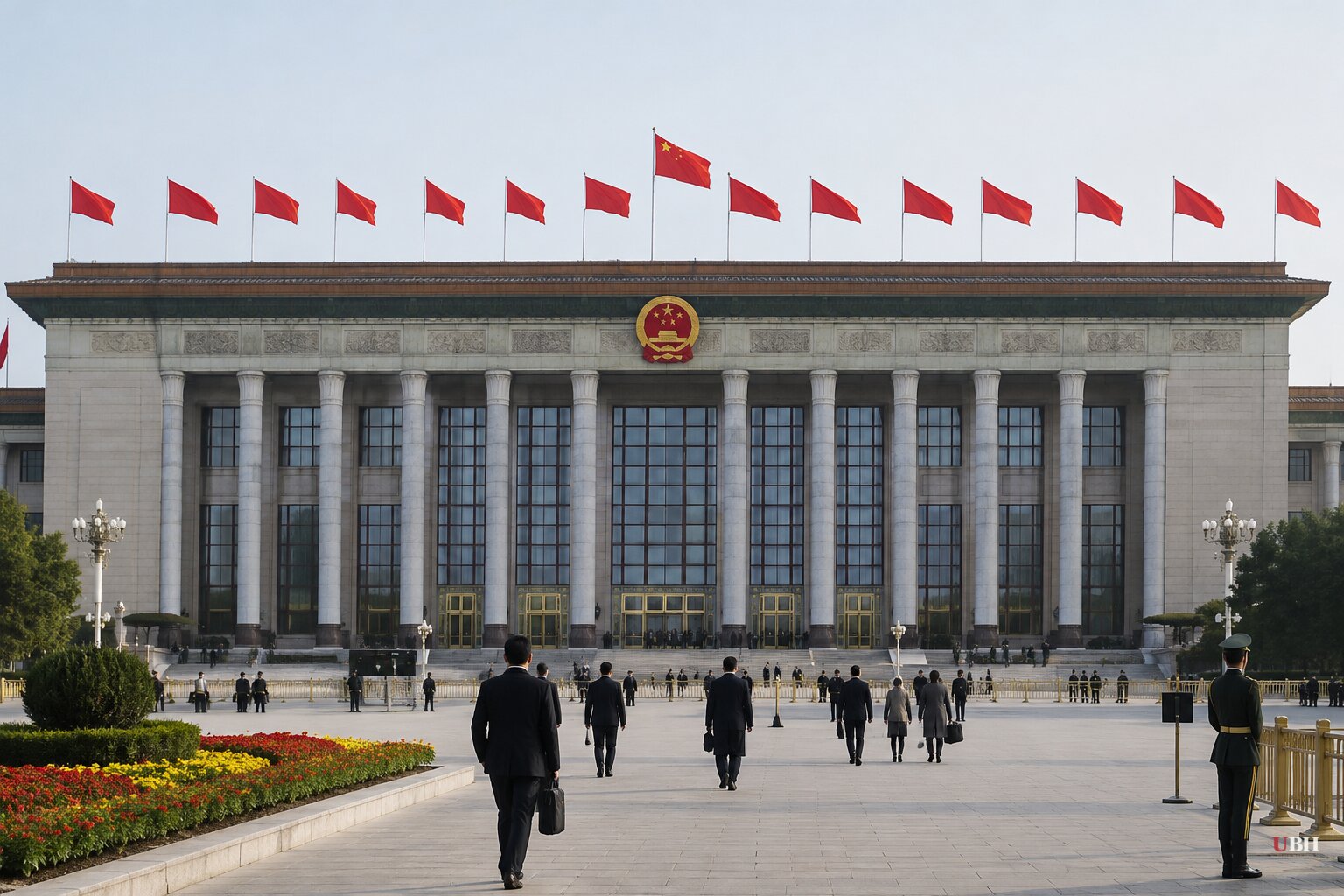
China's Communist Party closed its fifth plenum Thursday, Oct. 29, with a communique confirming the expulsion of 33 officials. Sixteen of them came from the military, according to the BBC.
The party cited "serious disciplinary and legal violations." It offered no details on what any individual did.
Who got expelled
The list includes former Xinjiang party chief Ma Xingrui, former diplomat Liu Jianchao, and two senior generals: Zhang Youxia and Liu Zhenli. Zhang was a vice-chairman of the Central Military Commission, the body that oversees China's armed forces.
That commission is normally seven members. It is now down to two, Xi Jinping and one other.
Mundo America reported that the plenum promoted General Zhang Shengmin, 68, to the Politburo. Zhang spent years running the anti-corruption campaign inside the People's Liberation Army. His elevation restores military representation on the Politburo, which traditionally holds two generals and had none after both fell.
The empty seats
The plenum opened Monday, Oct. 26, with Xi delivering a work report and introducing a draft decision on "full and rigorous party self-governance," according to the Xinhua News Agency. Only 279 Central Committee members attended.
The trend is steep. The second plenum in February 2023 drew 373 full and alternate members. July 2024 drew 364. October 2025 drew 315.
In an Oct. 18 analysis, the Asia Society Policy Institute's Neil Thomas, Lobsang Tsering and Shengyu Wang forecast that about 291 of the 376 members elected in 2022 could attend, or 77.4 percent. Actual turnout came in below that.
The institute's forecast rested on expulsions, investigations and unexplained disappearances. Attendance alone does not show how many absences were purges. Some members may be absent for other reasons.
The military bears the brunt
Brookings Institution analysts Jonathan Czin and Allie Matthias wrote on Oct. 23 that only 17 of the 44 military-affiliated full Central Committee members elected in 2022 nominally remained. Just two of those 17 had appeared publicly in recent months.
That is the force Washington is told to plan around as the main strategic threat. Its top command is a shell of what Xi installed four years ago, and many of those removed were his own picks.
The campaign has reached well beyond the generals. Last week a Beijing deputy mayor was meeting Walmart CEO John Furner and urging American companies to invest in the capital. He has since vanished from public life. Officials who were tasked with policing graft have also been swept up, along with a former top judge and a spy chief.
Scale of the campaign
Official data from the party's Central Commission for Discipline Inspection show over 500 ministerial-level officials were investigated, convicted, removed and expelled between 2012 and 2022. In just the past three years, more than 410 have been purged.
Xi has framed this as a fight for the party's health. In a speech published this month in the party journal Qiushi, he said the fight against corruption is "a crucial battle that we cannot afford to lose." Earlier this year he told cadres the problem "remains grave" and that "two-faced people" remain in the ranks. He called the effort a "never-ending struggle."
At this week's plenum he urged the party and the military to "turn the blade inward" and root out "viruses."
Discipline or consolidation?
The party presents all of this as an anti-corruption drive. Critics argue the campaign also doubles as a tool to consolidate power. Analysts cited by The Times of India say it has increasingly become a way to enforce political obedience, with even officials Xi hand-picked failing to escape scrutiny.
Ruby Osman, a senior policy adviser at the Tony Blair Institute for Global Change, argues the emphasis has shifted. "It's less about purging elite rivals and more about building a disciplined system that can sustain Xi's political priorities across leadership cycles," she said. She added that record disciplinary numbers do not necessarily mean corruption is rebounding, only that Xi keeps raising the bar for officials.
Both readings can hold at once. Without specifics from the party, outsiders cannot separate graft from disloyalty in any single case.
What comes next
The meeting comes about a year before the Party Congress in fall 2027, where Xi, 73, is widely expected to secure a fourth term as party leader. The plenum's work on personnel discipline is aimed at that handoff. The open question is who fills the vacated military and Central Committee seats, and whether the party announces replacements before the Congress convenes.
Sources used for this briefing
6 links from 6 independent newsrooms (syndicated copies of the same report count once)
These are the sources it draws on, linked so you can verify.


