
Unbiased headlines. Facts, not spin.
Unbiased Headlines is an independently owned news organization. We bring you the facts, not opinions, written fresh from 110+ named sources. Sources linked so you can verify it yourself.
 politics
Major Story (7/10)
Event date: October 23, 2026 ·
FCC Bans Two Huawei-Chip Devices Under New Rule, Votes Today on Barring Chinese Test Labs
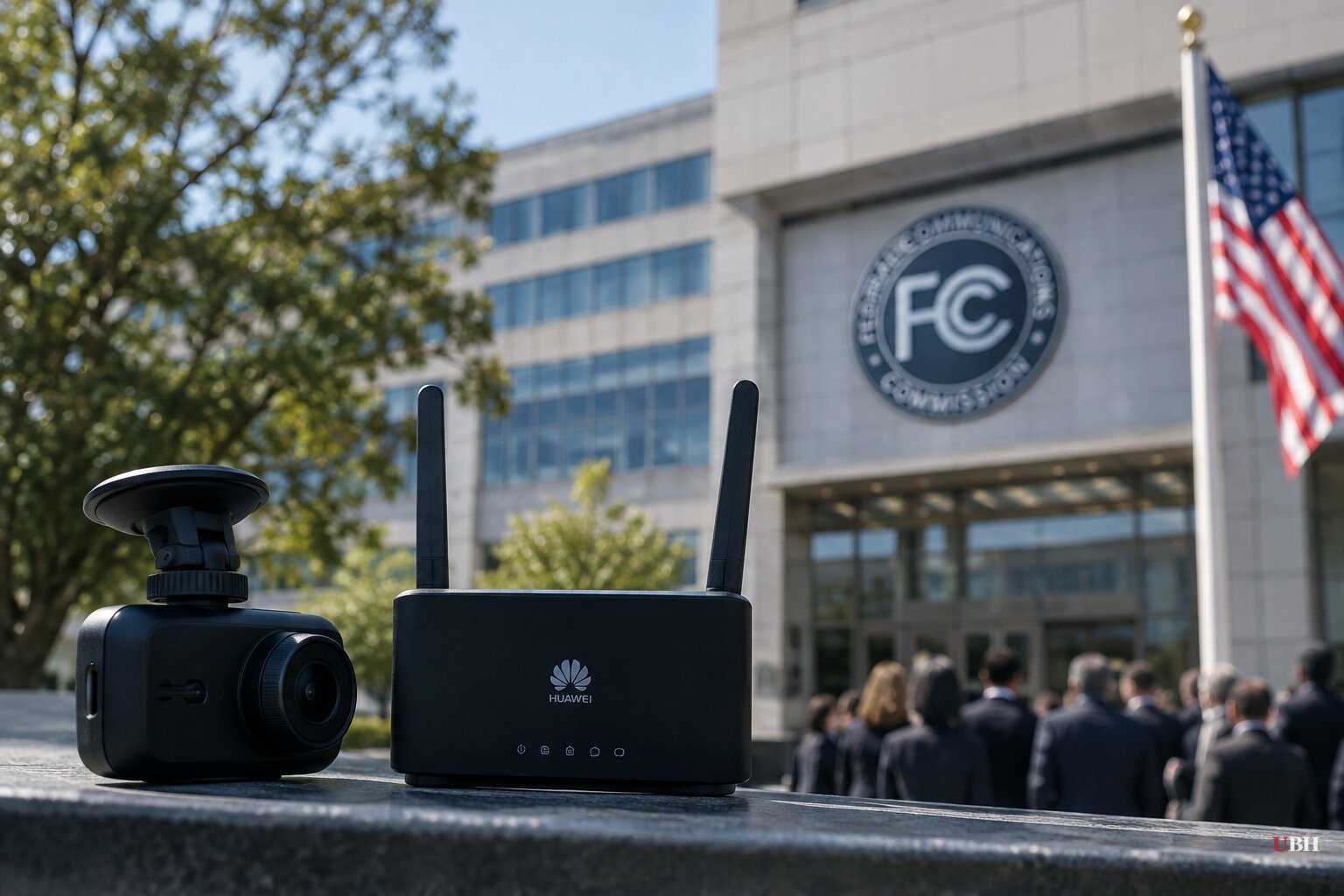
Since the FCC barred new drone models in December 2025, the agency has moved on routers, robots, power inverters and now the chips inside consumer devices. The pace has not slowed.
First bans under the chip-level rule
The FCC has announced its first bans under a rule that took effect Oct. 13. The rule lets the agency block devices that contain "smart" components made by entities on its Covered List, instead of going product by product or brand by brand.
The two banned devices are a dashboard camera and a wireless video transmitter. Both use chips from HiSilicon, a Huawei subsidiary that sits on the Covered List. The FCC said HiSilicon markets its products as "designed for the surveillance market" with "built in detection algorithms for human faces."
The chip at issue is the Hi3516CV610, a system-on-a-chip with an Arm Cortex-A7 processor, Wi-Fi, Ethernet, video encoding and a neural processing unit. Its data sheet advertises tracking of faces, human figures, pets and parcels across video frames.
Before Oct. 13, FCC rules did not bar "otherwise lawful devices" from carrying parts made by Covered List companies. That gap let rebranded products slip through.
"Video devices containing surveillance chips produced by Covered List entities pose an obvious and unacceptable risk to the nation and our people," FCC Chairman Brendan Carr said, calling the products potential spyware. Huawei did not immediately respond to a request for comment.
Lab-testing vote scheduled for today
The FCC said Oct. 7 that it will vote today, Oct. 29, on a rule barring all labs in China from testing smartphones, cameras, computers and other electronics for the U.S. market. The ban would take effect Dec. 1, 2028. It would also cover labs in any country that denies reciprocal treatment to U.S.-based labs.
Carr's numbers: fewer than 4% of electronic devices are tested in U.S. labs, and 82% were tested in China in 2025. In April, when the rule was first proposed, he said more than 75% of testing happens in countries that have refused to commit to reciprocal treatment of U.S. labs and certification bodies.
The vote follows a string of FCC actions. Since September 2025 the agency has withdrawn or denied recognition of 23 labs controlled by foreign-adversary governments. In June it banned imports of more equipment from a group of Chinese manufacturers including Huawei and ZTE. In July it voted to bar U.S. sales of devices containing key hardware from firms deemed national security risks.
Beijing announced three countermeasures against the FCC on Aug. 5. China's Ministry of Commerce warned it would take further action if Washington introduced new restrictions, according to Chinese media reports.
Waivers: who gets in
The router ban has produced a patchwork. Netgear and Asus, which build routers in Asia, obtained blanket approvals for all new models earlier this year. Taiwan's MSI has now received conditional approval for two specific routers, the Radix GRBE94 and GRBE34, pending certification.
TP-Link has no waiver. It has launched its first Wi-Fi 8 routers but cannot sell them in the U.S. It has offered to invest nearly $1 billion in U.S. router manufacturing, creating "hundreds of high-paying research and development, manufacturing, and construction jobs for American workers over the next four years," according to a letter the company sent to the FCC. The FCC has not announced a decision on that offer.
The Verge, which tracks the bans, says the government has offered no public evidence of a specific threat from the banned drones, routers or robots. It also says the government has done nothing about the devices already in American homes. Its reporter Sean Hollister calls the policy xenophobic and says the waivers give no visible link to security.
The Verge also notes that practically all routers and drones are made overseas, so there are rarely U.S. companies to fill the gaps.
The administration's position, stated by Carr, is that these products pose unacceptable national security risks and that reciprocity in trade is the standard. The FCC has not published the criteria it uses to grant or deny waivers in the sources reviewed for this story.
What the record shows
The HiSilicon case rests on firmer ground than most. The vendor is already on the Covered List, and the chip's own marketing describes face detection for surveillance. Huawei has also been tied to an earlier scheme in which shell companies were used to get TSMC to produce AI chips for it, against U.S. requests to halt supplies to Chinese customers.
The waiver process is harder to read. Two Asian router makers got blanket approval, one got a partial pass, and one that is offering a $1 billion U.S. investment is still waiting. The agency has not explained those differences.
The lab-testing vote is the next test. Manufacturers could move testing to Southeast Asia or keep producing in China and absorb higher logistics costs from shipping samples to overseas labs. The rule's effective date is more than two years away, and whether China follows through on its promised retaliation is still open.
Sources used for this briefing
6 links from 4 independent newsrooms (syndicated copies of the same report count once)
These are the sources it draws on, linked so you can verify.


