
Unbiased headlines. Facts, not spin.
Unbiased Headlines is an independently owned news organization. We bring you the facts, not opinions, written fresh from 110+ named sources. Sources linked so you can verify it yourself.
 politics
Breaking / Critical (9/10)
Judge Denies DOJ Bid to Set Aside 20,000 California Ballots; Justice Department Appeals to 9th Circuit
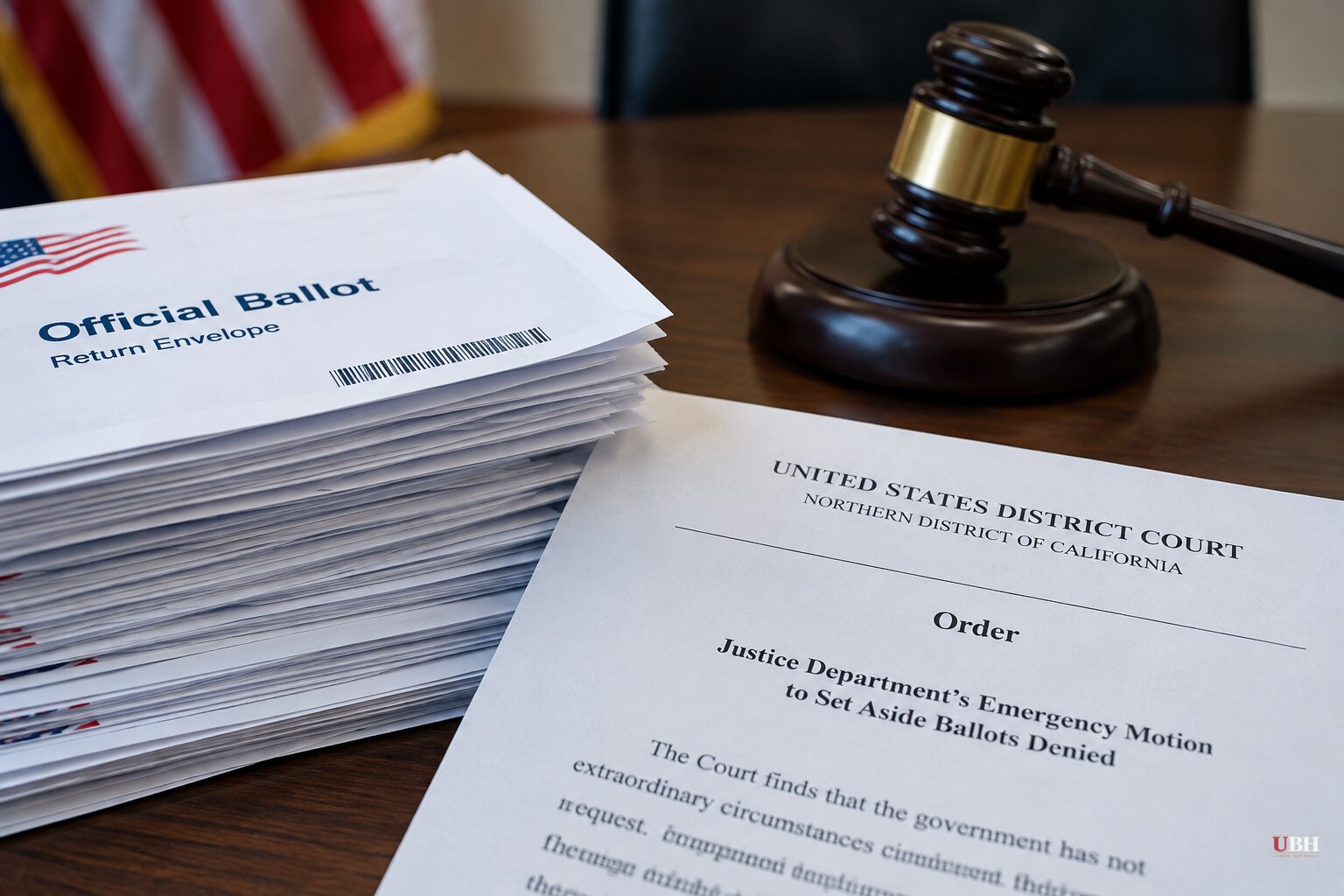
Since the Justice Department sued California on Oct. 15, the fight over a list of roughly 20,000 voters has moved from a federal courtroom to an appeals panel and back. On Wednesday evening, Oct. 28, it moved again. Judge David Carter of the Central District of California denied the department's request for a temporary restraining order.
The department wanted California and Los Angeles County to set aside mail ballots tied to the names on its list and hold them uncounted until citizenship could be confirmed. Carter, a Clinton appointee, said no in a 26-page order.
What the judge wrote
"Never before in American history has the federal government, on the eve of an election, sought to coerce a state and local government to abandon their own Constitutional elections procedures and bend to the will of the Executive Branch," Carter wrote.
He said the department had not shown a likelihood of success on the merits. He also questioned whether the government has standing and whether federal law gives it a cause of action here. He wrote that federal criminal laws against noncitizen voting do not clearly override California's ballot-counting procedures.
Carter leaned on the Purcell principle, which discourages federal courts from changing election rules close to an election. He said the requested relief would "wreak havoc and disrupt the election that is already underway."
The judge also found the government's list unreliable. "Given the vagueness of Plaintiff's descriptions of its procedures and the unreliability of its similar claims in other states, the Court cannot conclude that Plaintiff's process is credible," he wrote.
He pointed to Nevada. There, he wrote, DHS first identified up to 15,903 registered voters as noncitizens based on "high-confidence" matches. The figure fell to 6,218, then to 185 after manual review. Nevada officials later confirmed all 185 were citizens.
Carter also noted the department has filed at least 31 federal lawsuits seeking complete state voter rolls and has prevailed in none.
"Once a vote is segregated, lasting harm has occurred," he wrote. "If the Executive can discount votes and threaten an ongoing election due to unproven allegations, then our democracy is in danger."
How the list got here
The department delivered a password-protected USB drive to election officials in Los Angeles and Sacramento about two weeks ago. It gave them 48 hours to review it and threatened to sue if they did not sequester ballots they could not confirm. It declined to detail its methodology. DHS said in July that as many as 190,000 registered California voters could be ineligible.
Los Angeles County's preliminary analysis found many names on the list had no active registration. Local officials also reported signs that some people flagged as likely noncitizens were born in the U.S. DHS has disputed aspects of that assessment.
California has more than 23 million registered voters. According to court proceedings, more than 3.7 million had already voted before the ruling. State attorneys told the court they cannot verify citizenship for those on the list before Election Day. Carter wrote that a segregated ballot is, in effect, a removed ballot.
The department's position
The Justice Department says the delay itself does damage. "Every day, more ballots are processed by election officials. This ongoing emergency disenfranchises American citizens through dilution," said First Assistant U.S. Attorney Bill Essayli, the top federal prosecutor in Los Angeles. He said the Solicitor General authorized an immediate appeal and that his office would seek an emergency order from the 9th Circuit.
That argument has support from one appellate judge. On Monday, a three-judge 9th Circuit panel rejected the department's earlier emergency appeal 2-1. Judges Mark Bennett and Gabriel Sanchez ruled that the government had moved before the lower court had time to consider its request. Judge Patrick Bumatay dissented.
"Those questionable ballots are now rolling in. Once those ballots are processed, it would be impossible to identify them, and they must be counted in the election," Bumatay wrote. He argued California should not be allowed to "bury its head in the sand while aliens may be voting in federal elections."
Carter suggested a different route for the government. He said it can keep prosecuting noncitizens who illegally register or vote. The department says it has charged dozens in the past two months, including 28 people in California.
He also said that ordering the sequestration would likely run afoul of a 1993 federal law requiring ineligible voters to be removed from the rolls at least 90 days before an election.
Reaction and what is next
Gov. Gavin Newsom called the ruling a case of the legal system standing up to "the President's authoritarian attempts to remain in power unchecked and unchallenged." Attorney General Rob Bonta called it "another important victory for the rule of law and the right to vote" and said the fight is not over.
The California case is one of several election-related moves by the department near Election Day. Federal prosecutors asked Washington state on Monday to review 400 registered voters they believe are likely noncitizens. Last week the department filed a lawsuit in Alaska seeking to block certification of the Senate race if the Republican incumbent loses.
The 9th Circuit has not yet said when it will act on the new emergency request. Carter's order stands in the meantime, and California counties are still opening and processing ballots six days before the Nov. 3 election.
Sources used for this briefing
9 links from 9 independent newsrooms (syndicated copies of the same report count once)
These are the sources it draws on, linked so you can verify.


