
Unbiased headlines. Facts, not spin.
Unbiased Headlines is an independently owned news organization. We bring you the facts, not opinions, written fresh from 110+ named sources. Sources linked so you can verify it yourself.
 politics
Major Story (8/10)
Israel's Final Count Leaves Netanyahu at 53 Seats and Eisenkot at 48 as Likud Declares the Election 'Stolen'
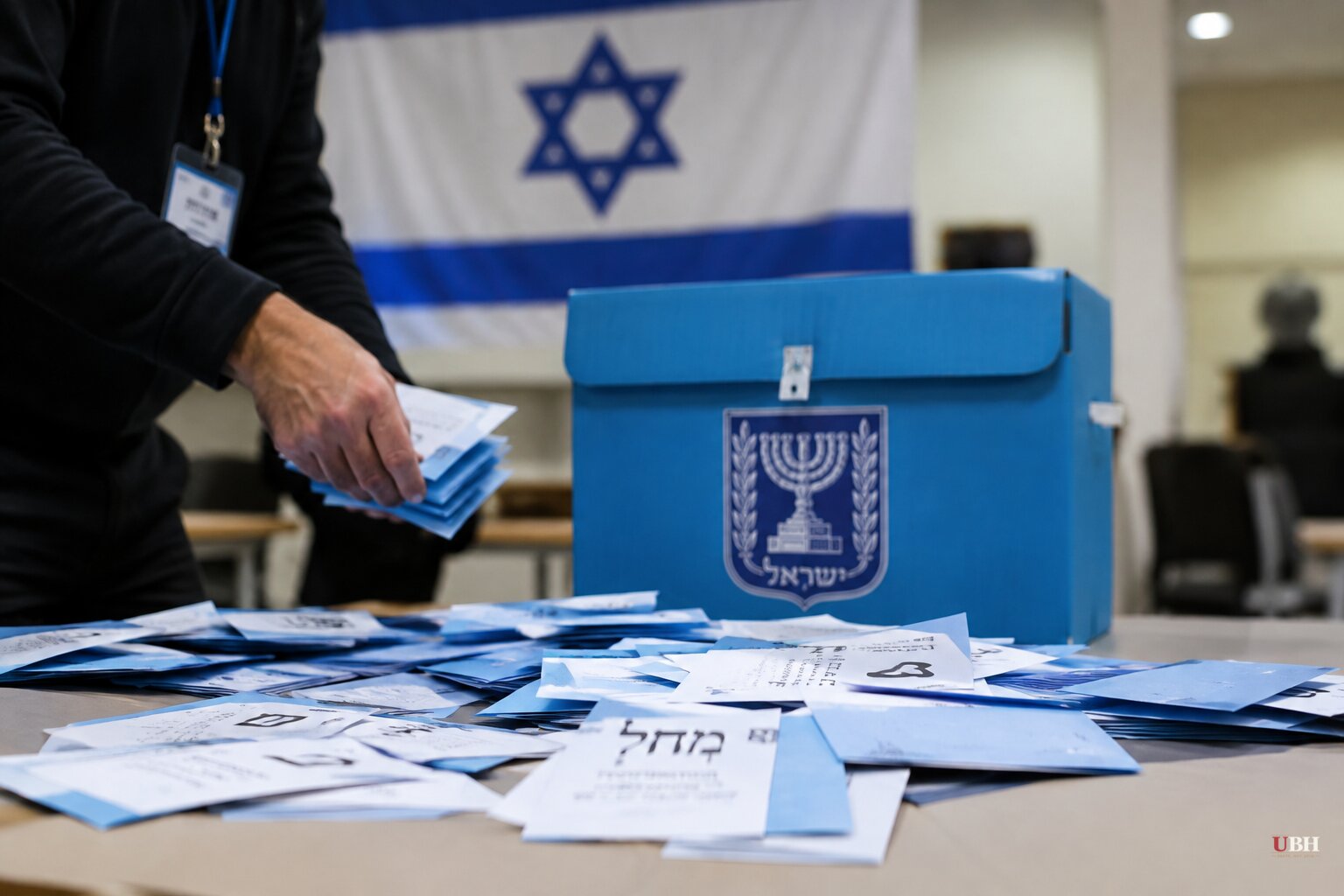
Since Israelis voted on Oct. 27, the count has settled into a stalemate. Final results released Thursday, Oct. 29, show Prime Minister Benjamin Netanyahu's right-wing and religious bloc with 53 seats in the 120-member Knesset. The bloc led by former military chief Gadi Eisenkot has 48. Neither gets to 61.
The remaining 19 seats belong to the two main Arab-led parties, the Joint List and Ra'am. In the 2022 election they won 10, according to Fox News.
The numbers
Netanyahu's bloc won 53 seats, well below the 68 it controlled at its peak in the previous parliament, according to NBC News and the Associated Press.
Likud remains the largest single party with 27 seats, according to official election data cited by CBS News. Eisenkot's Yashar party took 21.
Turnout hit 77.7% at the 10 p.m. close on election night, the highest level at that hour since 1999, according to Israel's Central Elections Committee. The Israel Democracy Institute puts preliminary Arab turnout at roughly 80%, up from 53.2% in 2022.
Both main blocs promised during the campaign not to build a government that depends on Ra'am or the Joint List. Netanyahu has kept to that line. On Wednesday he said: "We must not endanger Israel and establish a government that relies on anti-Zionist Arab parties."
Yair Golan, who leads Israel's main left-wing party, is pushing the other way. "We have a responsibility. And we have an opportunity to form a government of change in partnership with Israel's Arab citizens," he said on X. Joint List leader Yousef Jabareen made a similar pitch: "The change comes through Jewish-Arab partnership."
Breaking an election-season vow is a common occurrence in Israeli politics, CBS News noted. If the opposition did it, 48 plus 19 would give an anti-Netanyahu majority of 67, according to Fox News. Fox News Digital reported that Arab-party support could also be enough to replace Knesset Speaker Amir Ohana, a Netanyahu ally, before any government exists.
Analysts cited by CBS News see another path: a unity government of the two main blocs without the Arab parties or the ultra-Orthodox. That leaves the question of who would be prime minister, or whether Netanyahu and Eisenkot would rotate.
The 'stolen' claim
On Oct. 28, Netanyahu alleged that Arab parties were involved in bribery, intimidation, violence, forged ballots and prohibited mobilization software, according to the Epoch Times. He said Likud was submitting evidence to police, the Shin Bet and the Central Elections Committee, and he called for a criminal investigation. He also referred to a "Ra'amgate affair," saying foreign entities had tried to influence the vote.
A Likud statement on Thursday went further: "The elections in Israel have been stolen!" It described the alleged interference as aimed at "a foreign takeover of the Knesset, the Islamization of Israel and toppling of the right wing government." Israeli media reported that Likud members accused Qatar. Itamar Ben-Gvir, the national security minister, called for the arrest of Arab party leaders.
The AP described the Likud claims as made without evidence. Qatar called the allegations "ridiculous and dangerous." Ra'am leader Mansour Abbas rejected them, saying his party had nothing to do with the case and accusing Netanyahu of a campaign of incitement.
There is an official inquiry, though, and its scope is narrower than Likud's rhetoric. Supreme Court Justice Noam Sohlberg, who chairs the election committee, said "serious suspicions" of foreign interference had been brought to him. In a letter to the Shin Bet he said he could not verify them, but asked the agency to investigate given how serious they were, with findings requested within a week.
The Shin Bet confirmed an investigation is ongoing and said it is not about "accusing an entire community that voted democratically and legally."
Dean Livne, the committee's acting director general, said in a video statement that the probe rests on classified intelligence. He said reports about it had been "entirely unfounded." In his words, it "does not affect the final results that will be submitted to the president, nor does it concern any particular sector of the population." In a letter to a member of parliament, he also wrote that "allegations of systematic violations of electoral integrity are baseless."
Eisenkot's response
Eisenkot says the claims are a tactic. "They are doing this because they lost," he said. He added that "it is already clear that Likud and Netanyahu have launched a coordinated, organized campaign aimed at delegitimizing the results of the election."
He also mocked the Qatar accusation: "I welcome the fact that Netanyahu is finally condemning Qatari involvement in the State of Israel."
Eisenkot's Yashar party had already charged on election day that Netanyahu was laying groundwork to contest the outcome by claiming the vote was being stolen. Netanyahu's appeal that day was blunt: "If we don't go vote now, we will find ourselves with a government of Arab parties."
President Isaac Herzog called it a "sensitive moment" and called for a full investigation, warning that "we must not tarnish an entire community that sought to exercise its right to vote and take an active part in democracy."
What happens next
The count is complete but must be certified. The results are due to be submitted to President Herzog next Wednesday. Herzog will then consult party chairs and pick the candidate he thinks has the best chance of forming a government.
CNN reported that party leaders have 12 weeks to get it done before Israelis go back to the polls. With a 53-48 split and 19 seats that neither side says it will touch, Herzog's pick is the first test of which pre-election vow gives way.
The Shin Bet has been asked to report back within a week.
Sources used for this briefing
7 links from 6 independent newsrooms (syndicated copies of the same report count once)
These are the sources it draws on, linked so you can verify.


