
Unbiased headlines. Facts, not spin.
Every story is an unbiased news briefing written from 110+ sources across the spectrum — sources linked so you can verify it yourself.
 health
Notable (5/10)
June 9, 2026 at 12:32 AM
health
Notable (5/10)
June 9, 2026 at 12:32 AM
Columbia Scientists Refine Human Embryo Base Editing — Mosaicism Problem Remains Unsolved
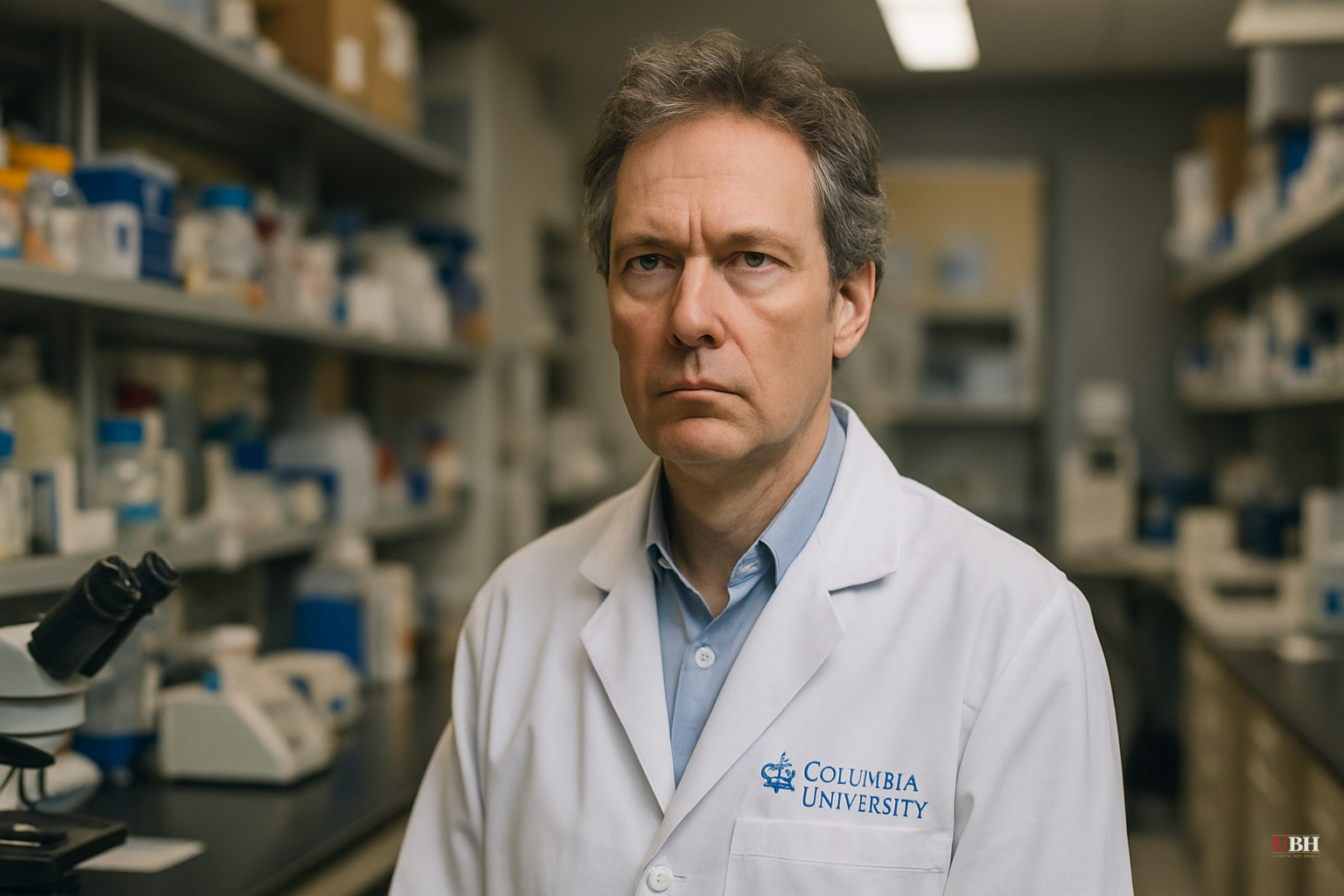
Since this outlet covered the gene-editing story on June 5, a more detailed picture of the Columbia University preprint has emerged — and the fine print matters.
What the Study Actually Shows
Dieter Egli and colleagues — including Nathan Treff of the DNA-testing startup Nucleus Genomics — published a preprint on June 1 describing the use of base editing on human embryos. The target genes were PCSK9, which regulates cholesterol and whose mutations can drive dangerously high LDL levels, and the HBG genes, which control fetal hemoglobin production and could theoretically be altered to prevent sickle cell disease and thalassemia.
Base editing, developed by David Liu of Harvard and MIT's Broad Institute, pairs a CRISPR molecule with additional compounds to make single-letter changes to DNA — no cutting, no splicing, no removing whole sequences. Think of it as correcting a typo rather than ripping out a paragraph.
The result: the targeted genes were changed, and the embryos did NOT suffer the chromosomal destruction seen in earlier attempts.
Why This Is a Real Step Forward
The contrast with prior work is stark. In 2020, Egli's team tried standard CRISPR to remove a blindness-causing mutation from human embryos. According to Egli's own account to The New York Times, the results were "absolutely catastrophic" — embryos either failed to repair the edited gene correctly about half the time, deleted long stretches of DNA, or destroyed the chromosome entirely.
Base editing has already been used successfully to treat a rare genetic disorder in a living infant. Applying it to embryonic cells, as this new study does, is a genuine technical first.
Egli told the Times: "We're not saying this is going to be used tomorrow in the clinics." Most reporting on this study buried that statement far down the page.
The Problem Nobody Is Leading With: Mosaicism
The edits did NOT work in every cell. In many embryos, some cells were successfully edited and others were not. Scientists call these mosaics. A mosaic embryo could develop into a person where some cells carry the corrected gene and others carry the original mutation. Depending on which tissue gets which version, you could end up with partial protection, no protection, or outcomes nobody can predict yet.
This is the central unsolved engineering challenge standing between this technique and clinical use. The preprint has also NOT been peer-reviewed yet. Reason magazine covered the study fairly, noting both the promise and the limits. Most mainstream outlets led with the promise and soft-pedaled the limits.
What the Ethical Debate Is Actually About
Base editing for disease prevention — sickle cell, thalassemia, familial high cholesterol — is a very different conversation than engineering traits like height, intelligence, or athletic ability. The science does not currently support the latter. Conflating the two, as some coverage does, muddies what is actually a tractable ethical question.
The real debate right now is narrow and specific: should edited embryos ever be implanted and brought to term? Currently, in the United States, a federal law called the Dickey-Wicker Amendment prohibits federal funding for research that destroys human embryos. The Food and Drug Administration would need to authorize any clinical trial involving heritable genetic modifications. Neither of those hurdles has been cleared, and neither is close.
Nucleus Genomics, the startup co-author on this paper, is worth watching. The company does DNA testing and has a commercial interest in expanding the market for genetic screening and editing services. Private sector investment in genetic medicine has produced real treatments, but readers should know the financial interests in the room when evaluating how results are framed.
What This Means for Regular People
If the mosaicism problem gets solved — and researchers believe it can be — base editing could eventually allow parents who carry genes for devastating heritable diseases to have biological children without passing those diseases on. That is a concrete, human benefit worth taking seriously.
It also opens questions that don't have clean answers: who decides which traits count as diseases worth editing, who has access to the technology, and where the line sits between treatment and enhancement. Those questions deserve public debate grounded in actual science — not sci-fi panic and not Silicon Valley utopianism.
The Columbia team made real progress. The technology still has real problems. Any coverage that tells you only one of those things is incomplete.
Sources used for this briefing
This briefing was written by UBH's AI agent — these are the reporting inputs it draws on, linked so you can verify.


