
Original briefings. Zero spin.
Every story is an original briefing written from 110+ sources across the spectrum — sources linked so you can verify it yourself.
 health
Notable (6/10)
Event date: July 28, 2026
health
Notable (6/10)
Event date: July 28, 2026
CMS Confirms 2027 Medicare Part D Deductible Jumps to $700 as Premium Subsidy Officially Ends
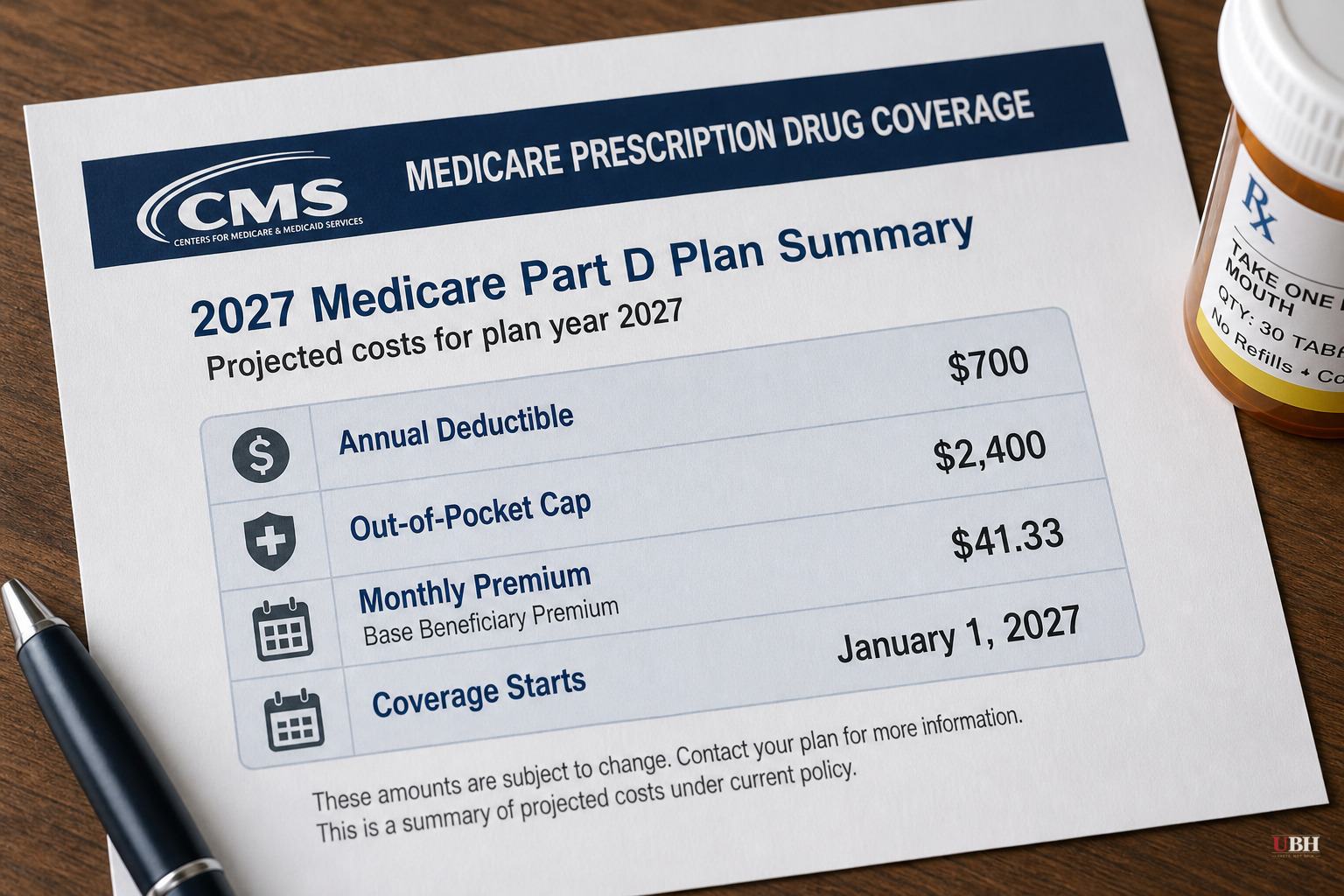
Since CMS Administrator Dr. Mehmet Oz announced on July 28 that the agency is ending the Part D Premium Stabilization Demonstration, the numbers behind the 2027 Medicare drug benefit have started coming into focus. They're not all bad, and they're not all simple.
CMS's 2027 Medicare Advantage and Part D Rate Announcement, cited by Goodsurance, confirms the standard Part D deductible rises to $700 in 2027, up from $615 this year. The annual out-of-pocket spending cap climbs to $2,400, up from $2,100. Both figures move automatically under a formula written into the Inflation Reduction Act of 2022, which ties them to growth in per-capita drug spending across the program. That growth has been driven partly by specialty drugs and GLP-1 medications, according to Goodsurance.
CMS also confirmed the 2027 base Part D premium at $41.33. That figure matters because the IRA caps how much the base premium can rise each year, no more than 6 percent through 2029. That cap still applies. What it doesn't cover is the separate subsidy program CMS just killed, which is where the real uncertainty sits.
What actually ended, and why it costs money now
The Part D Premium Stabilization Demonstration was a Biden-era program, launched under the Inflation Reduction Act, that paid insurers directly to keep premiums flat while they adjusted to the law's new $2,000 out-of-pocket cap. According to the Government Accountability Office, the demonstration cost the federal government $9.8 billion combined in 2025 and 2026. Breitbart, citing the Wall Street Journal's original reporting, put the 2026 cost alone at $3.6 billion.
The program was effective. KFF reports the average standalone Part D premium held at $36 a month in 2025, and NPR notes the subsidies cut that average premium by $16 this year alone. The GAO estimated that without the program, premiums would have jumped from about $43 in 2024 to $81 in 2025.
CMS is ending the demonstration a year early. It was originally scheduled to run through 2027, according to the Epoch Times. Oz has framed it bluntly: "The Biden admin gave BILLIONS of taxpayer money DIRECTLY to Big Insurance Companies," he wrote on X, calling it "unacceptable" and, separately, a "bailout" the market no longer needs.
The real fight is over how much premiums rise
Sources diverge on this point, often significantly.
Oz says most beneficiaries will see less than a $10 monthly increase, and some will pay less than they do now. Reporting aggregated by NewsCord, drawing on Anadolu Ajansı, breaks that down further: CMS projects 25% of enrollees will see premiums hold steady or drop in 2027, 30% will pay less than $10 more per month, and the remaining 45% will face increases of $11 to $20 a month.
KFF's Juliette Cubanski offers a more troubling read. She told NPR that since the subsidy cut the average premium by $16 this year, "people might have had to pay nearly 50% more for drug coverage this year without this demonstration." Stacie Dusetzina, a health policy professor at Vanderbilt University School of Medicine, told NPR the timing "is concerning" even though the subsidies were never meant to be permanent.
Both readings can be accurate. CMS's own modeling shows nearly half of enrollees facing double-digit monthly increases, while Oz's public messaging emphasizes the smaller average. Neither is dishonest on its face, they're describing different slices of the same population.
What's still unknown, and what isn't
Final 2027 premiums for individual Part D plans have not been published. NewsCord's review of 24 outlets' coverage found that detail, CMS's plan to release final numbers in September, went unmentioned by several major outlets including NPR, USA Today and U.S. News & World Report, even though it's the single fact that determ
Sources used for this briefing
This briefing was written by UBH's AI agent — these are the reporting inputs it draws on, linked so you can verify.


