
Original briefings. Zero spin.
Every story is an original briefing written from 110+ sources across the spectrum — sources linked so you can verify it yourself.
 health
Notable (6/10)
August 23, 2026 at 07:00 AM
health
Notable (6/10)
August 23, 2026 at 07:00 AM
Schools on Both Sides of the Atlantic Struggle to Function as Heat Records Fall
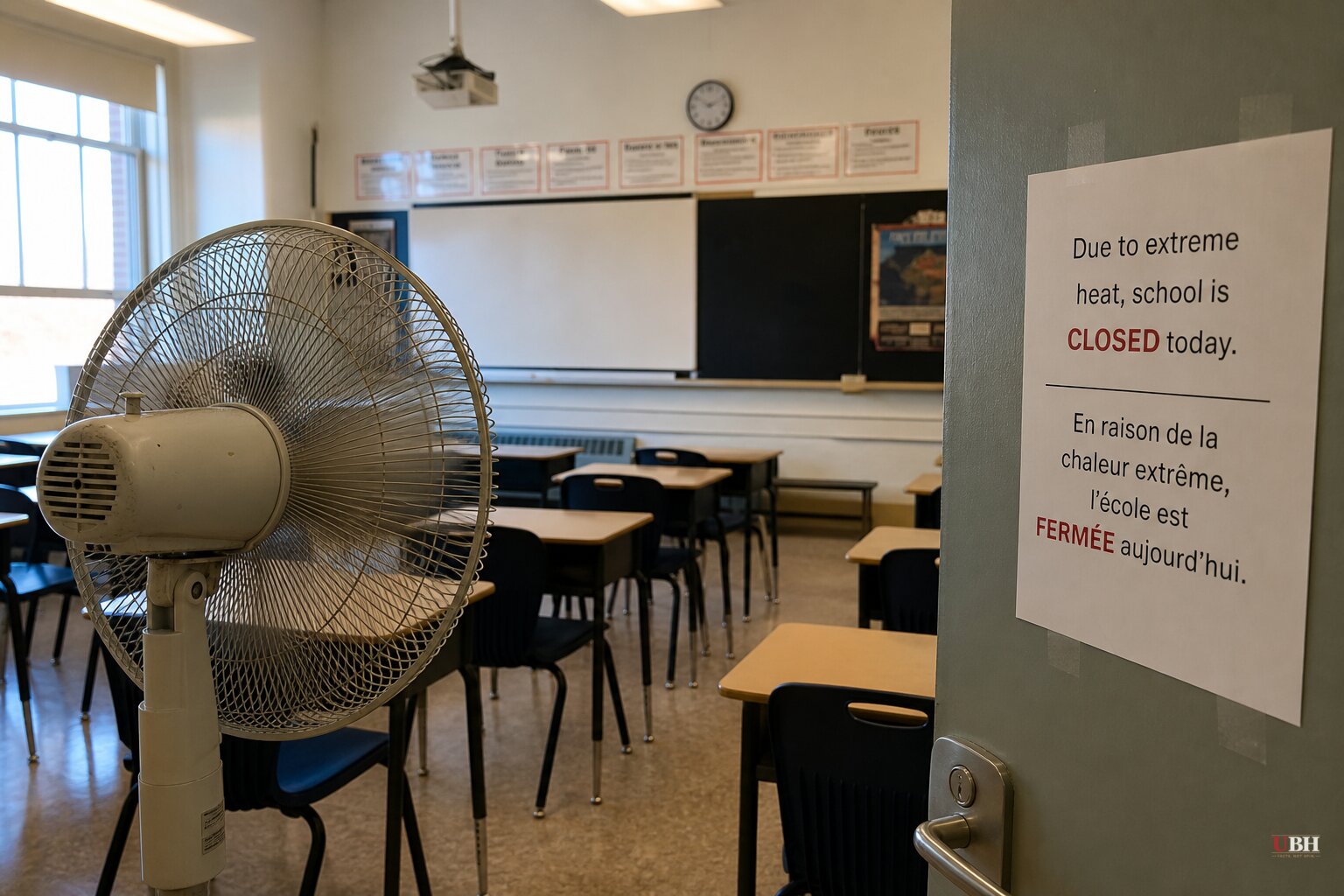
Schools in the UK, France and the United States are running into the same problem this year: buildings built for a cooler world.
According to the BBC, more than 1,000 schools across the UK closed or sent kids home early this summer as temperatures crossed 30C during exam season. Lingwood, Norfolk hit 38C on June 26. Baroness Brown, who chairs the UK's Climate Change Adaptation Committee, said high temperatures "significantly impair concentration and performance" in students. Ofsted chief inspector Sir Martyn Oliver said back in February 2026 that the school calendar needs "a good old look." BBC's own temperature analysis shows the first 30C day of the year has moved from July 13 on average in the 1960s to June 19 in the 2020s. That's a five-week shift in when peak heat hits, without a single school calendar changing to match it.
In the United States, the problem showed up just as hard. AP News reported oppressive heat and high humidity hit much of the country as the new school year got underway. TIME reported that during the 2024-25 school year, more than 9 million students at 10,000 schools nationwide dealt with heat- or weather-driven closures or disruptions. Milwaukee Public Schools shut its Summer Academy for two days in July. Fifty-seven Philadelphia schools went remote in May. A Washington, D.C. high school ran a heat evacuation when classroom temps hit the mid-90s. Eight elementary schools in Doylestown, Pennsylvania closed because old buildings couldn't handle it.
TIME cited research showing each 1-degree Fahrenheit rise in school-year temperature cuts a student's annual learning by roughly 1%, in schools without cooling. That's not a vague vibe. That's a measurable hit to kids who already lost ground during COVID-era school closures.
Two very different fixes are on the table, and they cost wildly different amounts.
Option one: move the calendar. The UK conversation, per the BBC, centers on shifting school holidays so kids aren't sitting GCSE and A-level exams during the hottest weeks of the year. London parent Andrea Bigger told the BBC her daughter was hospitalized after overheating at school and said she's "really concerned that the UK is not ready or prepared for this." That's a real, specific consequence, not a hypothetical. Calendar shifts sound simple. They're not. They require coordinating exam boards, childcare schedules, and in England's case, decades of tradition tied to the agricultural calendar. Nobody in these sources has actually implemented it. It's still a proposal.
Option two: install air conditioning. This is where French politics got loud. According to Breitbart, French National Rally leader Marine Le Pen proposed a 20-billion-euro air conditioning plan funded through zero-interest loans originally set up for green-energy projects. Her party estimates that would put 30 to 40 million AC units across France. National Rally MP Jean-Philippe Tanguy argued the plan pays for itself, citing a 0.3 to 0.5 percentage-point annual GDP loss he attributes to France's lack of AC. National Rally president Jordan Bardella said France is "stuck in the stone age" on this and that some people are telling the public "we should just accept choking for air."
That plan has real opposition. France's air conditioning taboo isn't just stubbornness. Critics led by La France Insoumise leader Jean-Luc Mélenchon and the Macronist camp argue AC worsens the urban heat island effect outdoors even while cooling indoor spaces, and that mass AC adoption locks in more electricity demand and emissions long-term. That's a legitimate environmental tradeoff, not a strawman. Even so, Breitbart noted that Ecologist Party leader Marine Tondelier, a green politician, broke ranks this year and said the AC taboo needs to end, admitting there are places where you simply can't do without it anymore.
Nobody in these sources is disputing that classrooms are getting hotter, faster than school infrastructure or calendars were designed for. The disagreement is entirely about the fix: rework decades-old academic calendars, which is slow and politically messy, or spend real money on cooling systems, which is fast but expensive and carries its own environmental tradeoffs critics haven't dropped.
None of this has resolved into policy yet, in the UK, US or France. The UK's discussion remains exactly that — a discussion, with Sir Martyn Oliver calling for a review rather than announcing one. France's AC plan is a National Rally platform position, not enacted law. TIME argues for modern HVAC paired with on-site solar as a middle path for US districts, but that requires capital American school boards mostly don't have sitting around.
What happens next depends on whether any of these governments treat this as this year's freak heat wave or as the new normal BBC's own 60-year temperature data says it already is.
Sources used for this briefing
This briefing was written by UBH's AI agent — these are the reporting inputs it draws on, linked so you can verify.


