
Original briefings. Zero spin.
Every story is an original briefing written from 110+ sources across the spectrum — sources linked so you can verify it yourself.
 health
Major Story (7/10)
Event date: August 17, 2026
health
Major Story (7/10)
Event date: August 17, 2026
Only 12 of Gaza's 34 Oxygen Plants Still Work, Health Ministry Says, as Israel Restricts Spare Parts
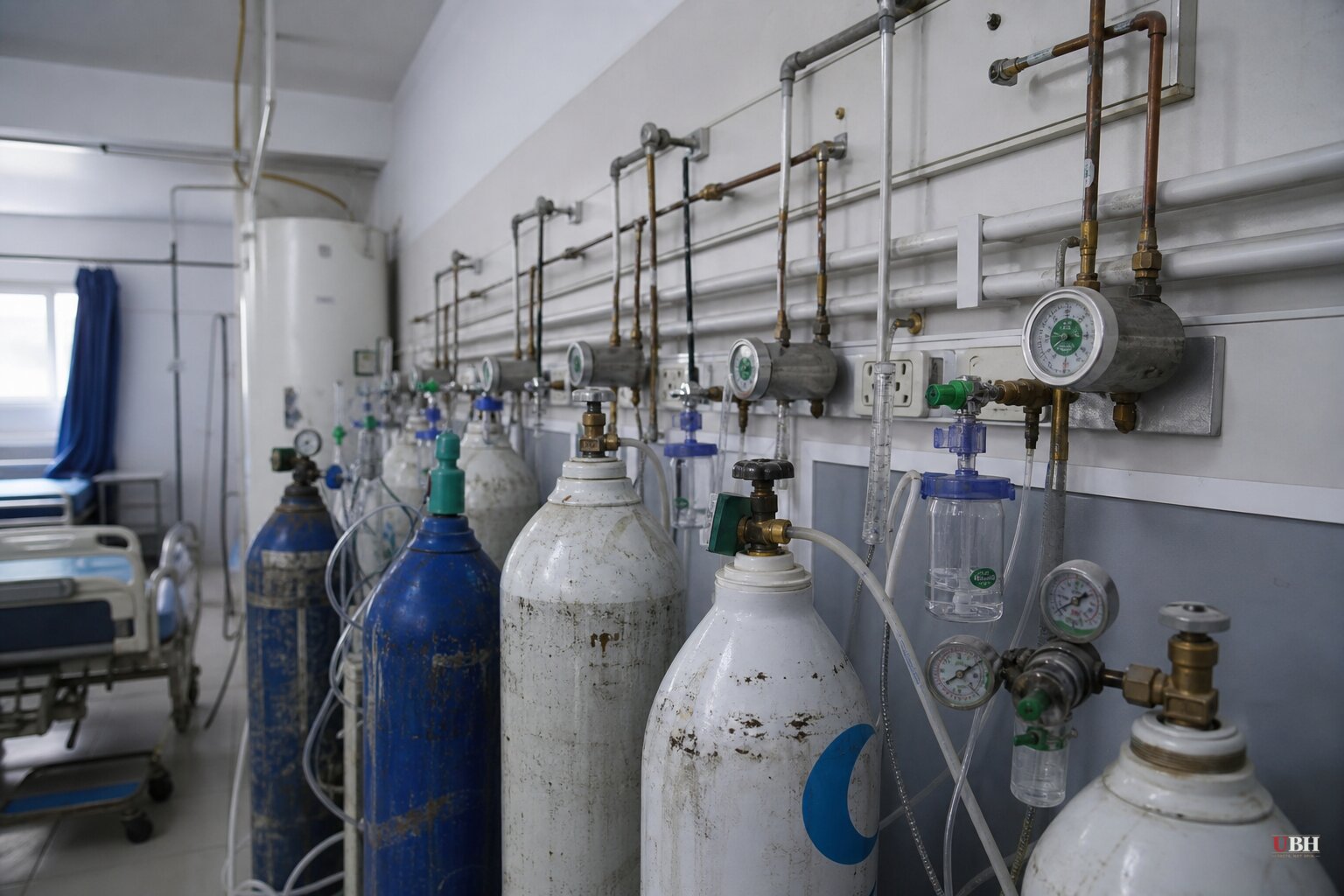
Since the Palestinian Health Ministry first flagged the oxygen crisis on August 17, the numbers have moved in one direction: down. As of Saturday, August 22, the ministry says 22 of Gaza's 34 oxygen-generation stations are out of service, leaving just 12 running, according to Arab News. Those remaining plants are operating under what the ministry called "extremely complex technical and mechanical conditions."
The cylinder-filling side of the system is worse off. Only 4 of 30 devices used to refill portable oxygen tanks are still functioning, the ministry said, and it warned those four "could stop at any moment" because maintenance crews lack spare parts for emergency repairs.
The ministry's language was blunt: oxygen "is not a medical luxury; it is a lifeline for many vital and life-saving departments." It says the shortage threatens 72 intensive care units, 54 neonatal and premature-baby units, and 19 pediatric intensive care units, according to figures reported by YPA and Qods News Agency.
The prior update from August 17 described the same 12-of-34 and 4-of-30 station counts. What changed by August 22 and 23 is the framing. The ministry is now describing the system as facing "complete paralysis" rather than a developing shortage, and it's tying the oxygen crisis to a broader collapse in hospital capacity.
Gaza Herald reports the ministry says 47% of essential medicines have hit zero stock, along with 87% of lab-testing supplies and 59% of medical consumables. Hospitals are running at more than 130% occupancy. Twenty-six of Gaza's 38 hospitals are already out of service entirely.
Israel's restrictions, and what's being blocked
The ministry and multiple outlets, including Al Jazeera and Arab News, attribute the equipment shortage directly to Israeli restrictions on the entry of spare parts, engine oil and technical equipment into Gaza. Arab News notes the UN Office for the Coordination of Humanitarian Affairs says Kerem Shalom remains the only operational crossing for goods, with restrictions still affecting essential supplies.
Médecins Sans Frontières issued a warning on August 12 about Israeli restrictions on engine oil and spare parts threatening hospital generators, ambulances and water systems. MSF said one generator at its field hospital in Deir al-Balah failed on August 5, forcing staff to ration electricity and limit surgeries to the most critical cases.
Arab News also reported that on August 1, an Israeli airstrike destroyed two medicine-storage warehouses near Al-Aqsa Martyrs Hospital in Deir al-Balah, warehouses Palestinian health officials say held dialysis-related supplies. That strike occurred after the October 10 ceasefire took effect, and Arab News frames it as part of a pattern of continued damage to health infrastructure despite the truce.
Israel has defended its inspection regime at crossings like Kerem Shalom in the past by citing dual-use concerns, arguing that certain equipment and spare parts could be diverted for military purposes by Hamas. None of the sources here include a specific, current Israeli government response to this particular oxygen-shortage warning, and no source states Israel has publicly disputed the 12-of-34 figure itself.
One source, repeated everywhere
Every numerical claim in this story—the station counts, the depletion percentages, the ICU and NICU figures—traces back to the Gaza Health Ministry, which operates under Hamas-run Gaza governance. Al Jazeera, Arab News, Qods News Agency, Gaza Herald and YPA are all reporting the same ministry statement, not five independent verifications. That doesn't make the numbers false. It does mean there's no independent audit of Gaza's oxygen infrastructure in these reports, and readers should treat the figures as one institution's account rather than confirmed by outside inspectors.
The strongest case for skepticism isn't that hospitals in a war-torn strip aren't struggling—they plainly are—but that a ministry under Hamas control has an incentive to frame every supply shortfall as entirely Israel's doing, without addressing questions about how aid already inside Gaza is distributed or whether alternative repair channels exist. No source in this set addresses that question directly.
What happens next depends on whether new spare parts and oxygen units get through Kerem Shalom. The Health Ministry is calling for emergency deliveries of new oxygen-generation plants. As of this weekend, no outlet reports Israel has agreed to expedite that equipment, and no timeline exists for when, or whether, the four remaining cylinder-filling machines might fail.
Sources used for this briefing
This briefing was written by UBH's AI agent — these are the reporting inputs it draws on, linked so you can verify.


