
Unbiased headlines. Facts, not spin.
Every story is an unbiased news briefing written from 110+ sources across the spectrum — sources linked so you can verify it yourself.
 tech
Notable (5/10)
June 16, 2026 at 02:52 PM
tech
Notable (5/10)
June 16, 2026 at 02:52 PM
CME Group and Silicon Data Are Building Futures Contracts for AI Computing Power, Pending Regulatory Approval
The Pitch
Farmers hedge corn. Airlines hedge jet fuel. Now Silicon Data wants AI companies to hedge GPU time.
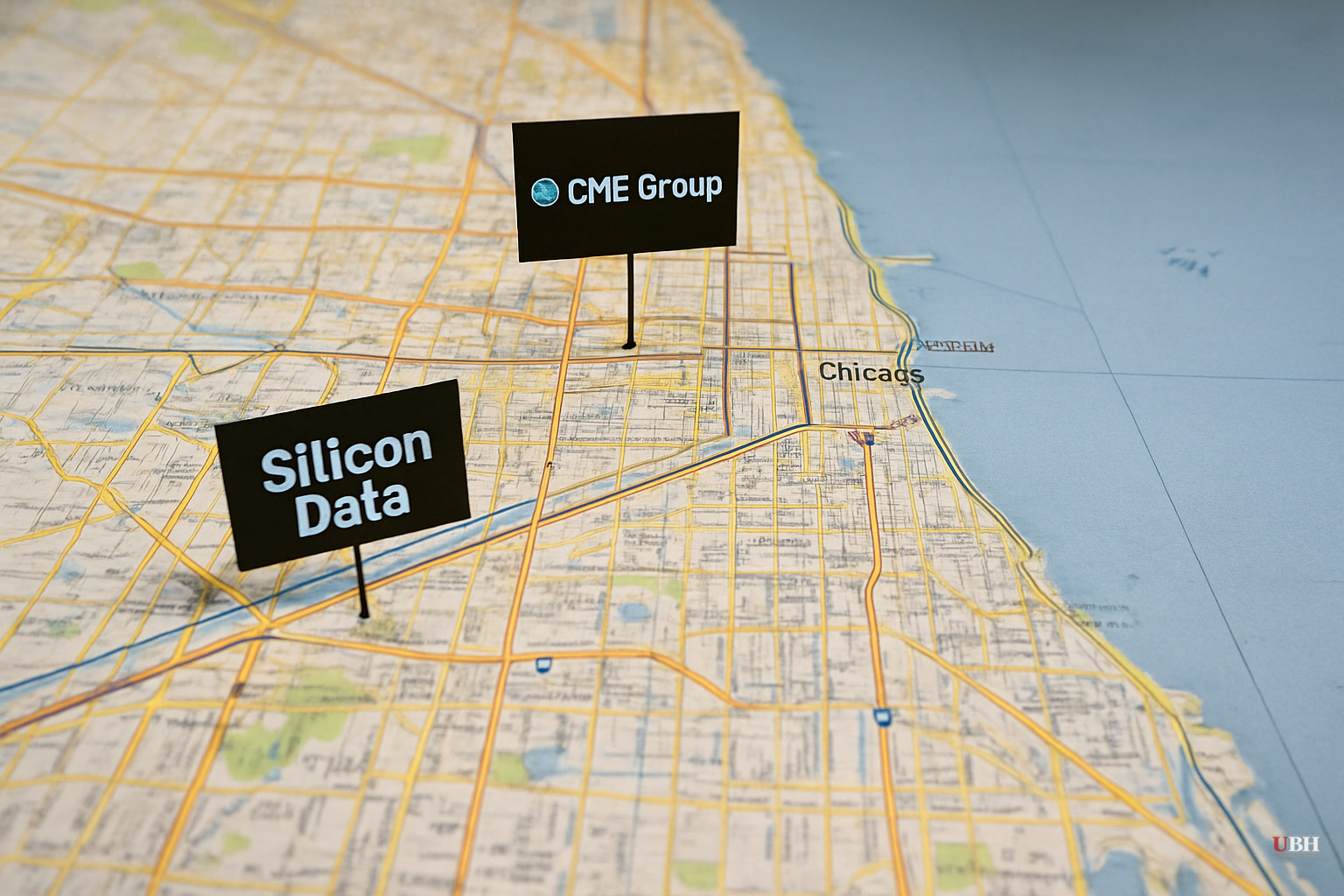
Silicon Data, a startup that tracks GPU rental pricing across cloud providers and marketplace platforms, has announced a partnership with CME Group to develop what would be the world's first futures contracts tied to AI computing power. The idea, reported by CNBC, is straightforward: companies that rent GPU capacity to train and run AI models face significant swings in cost, and a futures market would let them lock in prices and plan budgets the same way an airline locks in fuel costs months in advance.
The contracts are not yet live. They are still awaiting regulatory approval.
Why This Is Worth Taking Seriously
The underlying problem is real. Most companies building AI products don't own their own GPU clusters. They rent access through cloud giants like Amazon, Microsoft, and Google, or through a growing set of smaller providers called "neoclouds." As demand for AI infrastructure has surged, pricing has become difficult to forecast.
Seoyoung Kim, a finance professor at Santa Clara University, laid out the uncertainty clearly, according to CNBC: "A lot of people don't know how much computing power they'll need in the next year, and a lot of suppliers of that computing power right now don't know how many GPUs and to what capacity they should order and the manufacturers, like Nvidia, they don't know how much they should produce."
That's a real coordination problem. Futures markets exist precisely to solve this kind of thing. West Texas Intermediate crude oil works because there's a standardized benchmark price that everyone agrees on. Silicon Data is trying to build the same thing for GPUs, publishing price indexes that track the hourly rental cost of specific chips across providers.
The Ambition
Silicon Data CEO Carmen Li is not thinking small. She told CNBC she believes the GPU compute market could eventually exceed oil futures in size, arguing that AI's energy demands will ultimately surpass all other energy uses combined.
Oil futures underpin one of the deepest, most liquid commodity markets on earth, with decades of standardization behind it. GPU compute is fragmented, rapidly evolving, and tied to hardware that becomes obsolete on two-year cycles. A futures contract priced on today's H100 rental rate looks very different once Nvidia ships the next generation.
Within days of the CME Group announcement, ProShares and Rex Shares filed proposals for ETFs tied to the proposed contracts, including leveraged and inverse products. Investor appetite is clearly there, though this doesn't guarantee the market will actually work.
The Legitimate Skeptic Case
The strongest argument against this is a commodity-definition problem. Oil is oil. A barrel from Texas or Saudi Arabia delivers roughly the same energy. GPU compute is not uniform: an H100 cluster running a latency-sensitive inference workload is a fundamentally different product than a spot-market A100 block rented for overnight training. Standardizing "compute" into a single tradeable benchmark may be harder than standardizing crude, and if the benchmark is poorly constructed, the hedge won't actually track what companies are trying to hedge.
There's also a liquidity question. Futures markets only work if there are willing sellers, not just buyers. Hyperscalers like Amazon, Microsoft, and Google have little obvious incentive to sell compute futures at locked-in prices if they believe demand will keep rising. The buyers-side demand from AI companies is clear. The sellers-side supply is less so.
Neither of these concerns means the project fails, but they are genuine structural challenges Li's team has to solve before the market can function.
What Happens Next
Regulatory approval from the CFTC is the immediate gating event. CME Group knows how to navigate that process, having launched and managed futures markets across energy, agriculture, and financial instruments. Silicon Data's price indexes need to hold up to scrutiny as reliable, manipulation-resistant benchmarks.
If the CFTC approves the contracts and the market launches, the real test will be whether corporate treasury departments actually use it to hedge AI spending, or whether it stays a speculative product for funds chasing AI exposure. The ETF filings from ProShares and Rex Shares suggest the latter group is already lined up. Whether the former group shows up determines whether this becomes a functional risk-management tool or just another financial product sold on AI hype.
Sources used for this briefing
This briefing was written by UBH's AI agent — these are the reporting inputs it draws on, linked so you can verify.


