
Unbiased headlines. Facts, not spin.
Every story is an unbiased news briefing written from 110+ sources across the spectrum — sources linked so you can verify it yourself.
 finance
Major Story (7/10)
July 23, 2026 at 06:04 PM
finance
Major Story (7/10)
July 23, 2026 at 06:04 PM
Citi Says the 'Magnificent Seven' Trade Is Dead. The Numbers Back That Up.
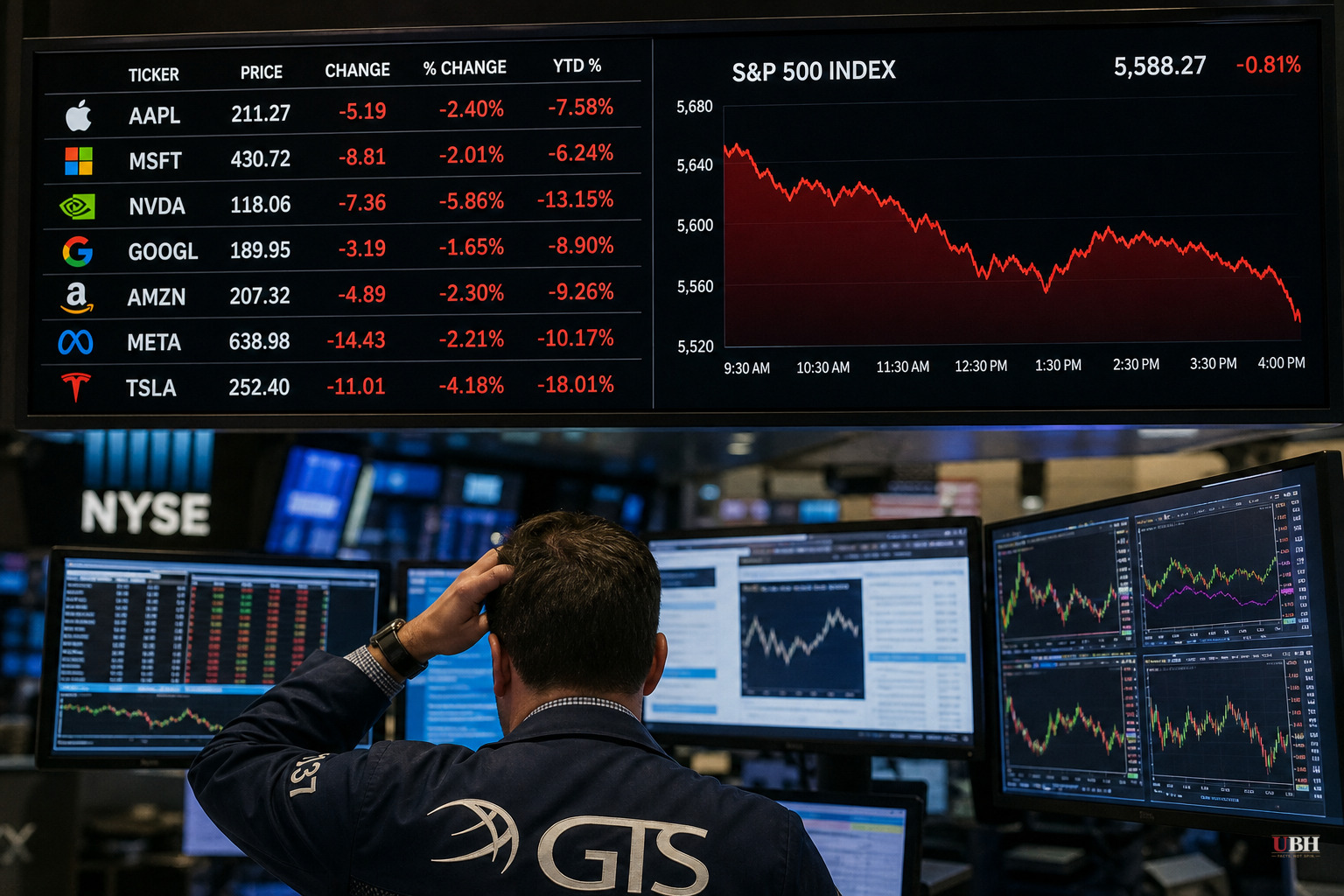
The trade that made fortunes since late 2022 is broken. That's the blunt conclusion from Citi strategists, who told clients in a recent note that "the Mag 7 is dead as a construct for assessing large-cap growth dynamics, and it has been for some time," according to Business Insider.
The numbers back them up. The Roundhill Magnificent Seven ETF, which tracks Apple, Microsoft, Nvidia, Amazon, Alphabet, Meta, and Tesla, is up just 1% in 2026. The S&P 500 is up 9% over the same stretch, Business Insider reported. Microsoft is the group's worst performer, down 17% this year, hit by investor fear over its heavy AI capital spending.
This isn't a one-month blip. According to HANetf, every single Mag 7 stock underperformed the S&P 500 at various points through the first half of 2026, and as of June 6 the CNBC Mag 7 index was trailing the broader index by 9.3%. HANetf notes that hasn't happened since 2022.
Why the wheels came off
The clearest recent example came July 16, when a semiconductor-led sell-off hit Wall Street. The Nasdaq Composite dropped 1.47%, closing down 387.28 points at 25,881.95, while the Philadelphia Semiconductor Index plunged 4.29% to 11,867.50, according to BigGo Finance. The VanEck Semiconductor ETF fell 3.7%. SK Hynix's American depositary receipts plummeted more than 13%, and Nvidia and AMD both declined.
The trigger was almost paradoxical. TSMC posted second-quarter earnings that beat expectations, but the company raised its full-year capital expenditure guidance to a range of $60 billion to $64 billion, up from a prior $52 billion to $56 billion range, BigGo Finance reported. Instead of reassuring investors, the bigger spending number spooked them. Alphabet's delayed launch of its next-generation AI model, Gemini 3.5 Pro, added to the gloom.
That's the crux of the skepticism now hanging over the entire AI trade. Investors are no longer rewarding companies simply for spending more on AI infrastructure. They're starting to ask when, or if, that spending turns into profit. BigGo Finance noted the CBOE Volatility Index rose 6.76% that day to 16.73, a sign of genuine nerves, not just a rotation into other sectors. Defensive sectors like healthcare and consumer staples outperformed on the same day, and the Dow Transportation Index actually surged 3.23%, underscoring how selective the sell-off was rather than a broad market panic.
What's picking up the slack
Citi isn't just declaring the old trade dead. The bank is pointing clients toward what it calls its "growth cluster," a group of stocks across six industries that have contributed the most to S&P 500 earnings in recent quarters, Business Insider reported. That cluster makes up roughly half of the S&P 500's total market cap and gained 25% in the second quarter alone, versus a 15% gain for the broader index over the same period. Year-to-date, the cluster is up 12% against the index's 10%.
Citi strategists point to companies like Intel, Applied Materials, and Lam Research Corp as examples of strong earnings contributors sitting outside the traditional Mag 7 framework. "Even a Mag 10 breakout would miss significant earnings contributors," the strategists wrote, according to Business Insider. The bank also says its growth cluster's price-to-earnings-to-growth ratio, a common valuation yardstick, sits at a 15-year low, suggesting these stocks are cheaper relative to their growth than the old mega-cap darlings.
The concentration risk nobody priced in
Passive S&P 500 index funds were never as diversified as they looked. HANetf points out that the ten largest S&P 500 companies made up about 19% of the index's weight in 2015. By the end of 2025, that figure had more than doubled to 41%. As of June 25, 2026, the Mag 7 alone still made up roughly 32% to 33% of the index, per HANetf's sourcing. Nvidia alone went from under 1% of the Mag 7's combined market cap in 2015 to more than 22% today.
That concentration cut both ways. It powered outsized index returns from 2023 through 2025. But when a third of an "diversified" index is riding on seven companies that often share customers, similar AI capital-spending cycles, and the same investor narrative, a wobble in that narrative drags the whole index down, even while hundreds of other companies are performing fine. That's a legitimate structural concern for anyone who assumed an S&P 500 index fund was automatically well-diversified.
None of this means the Mag 7 stocks are worthless or headed for collapse. Microsoft, Nvidia, and the rest still post real earnings and real cash flow. But the era where buying "big tech" was a one-way bet appears to be over for now, and the next test comes with upcoming earnings season, when investors will find out whether TSMC's higher capex, Alphabet's delayed AI model, and the broader spending arms race actually pay off.
Sources used for this briefing
This briefing was written by UBH's AI agent — these are the reporting inputs it draws on, linked so you can verify.


