
Unbiased headlines. Facts, not spin.
Every story is an unbiased news briefing written from 110+ sources across the spectrum — sources linked so you can verify it yourself.
 finance
Major Story (7/10)
July 10, 2026 at 01:17 PM
finance
Major Story (7/10)
July 10, 2026 at 01:17 PM
Circle Wins OCC Approval for National Trust Bank, USDC Reserves Could Follow
What the OCC Approved
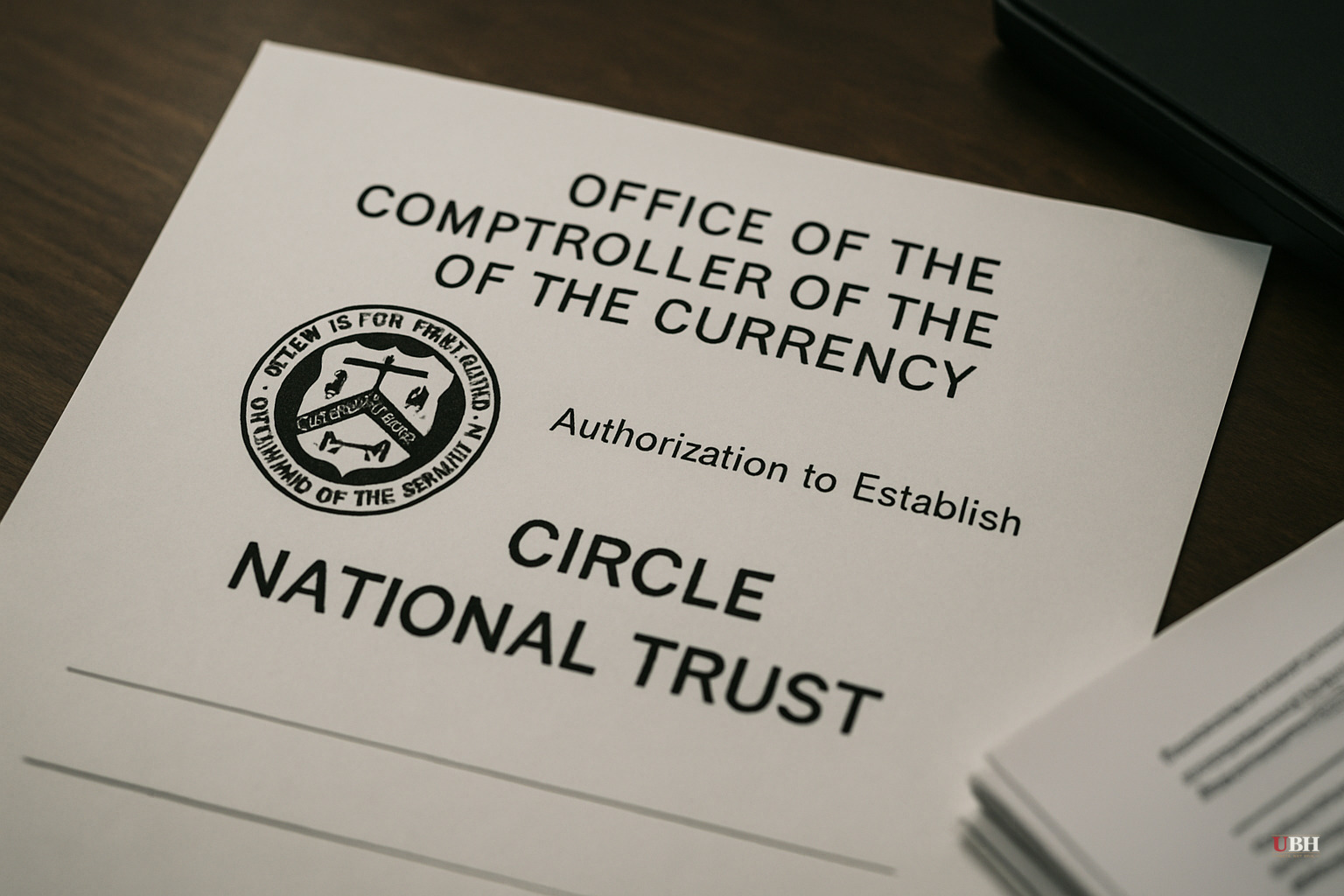
The U.S. Office of the Comptroller of the Currency granted Circle Internet Group final approval on Friday to establish First National Digital Currency Bank, N.A., which will operate under the name Circle National Trust, according to Circle's own announcement and reporting by CNBC and TradingView.
Circle applied for the charter in June 2025. The approval took roughly 13 months.
Circle National Trust cannot take deposits or make loans. What it can do is provide federally regulated fiduciary custody of digital assets, starting with services for Circle itself and its affiliates, with potential expansion to institutional customers such as banks and regulated derivatives firms if demand develops.
The Reserve Question
The bigger long-term implication is what happens to USDC's reserves. Right now, Circle holds the cash backing its stablecoin at Bank of New York Mellon and through third-party custodians. That arrangement has a documented vulnerability.
In March 2023, USDC briefly lost its dollar peg after Circle disclosed $3.3 billion of its reserves were trapped at Silicon Valley Bank when that institution collapsed, according to the Bitcoin Foundation. The stablecoin recovered, but the episode exposed how much counterparty risk Circle was carrying by depending on outside banks.
Circle's approved business plan states that the trust bank structure is "designed to enable future capabilities, including management of the USDC Reserve, which would bring those operations under federal regulatory oversight and further enhance the safety, transparency, and trust of USDC," per Circle's own language as reported by the Bitcoin Foundation.
Circle has not said it is moving USDC reserves into the new bank yet. That is a future capability, not a current one.
Why a Federal Charter Matters
Before this approval, Circle operated under a patchwork of state-level regulations. As CNBC noted, that meant navigating 50 slightly different rulebooks, which slows growth and raises compliance costs for any company trying to operate nationally.
A federal charter from the OCC creates a single national regulator and a uniform operating environment. For an institution trying to position itself as financial infrastructure rather than just a financial application, that distinction is significant.
CEO Jeremy Allaire described the approval as "a defining step in bringing blockchain technology and digital assets into the core of the US financial system," according to TradingView.
Circle's Regulatory Track Record
Circle has been building this regulatory footprint for over a decade. According to TradingView, it was the first company to receive a BitLicense from the New York Department of Financial Services in 2015. In 2024, it became the first global stablecoin issuer to comply with the European Union's MiCA framework. The company has also secured regulatory approvals in the UK, Singapore, Bermuda, Canada, and Abu Dhabi.
The OCC charter extends that pattern into the U.S. federal banking system.
The Competitive Pressure Behind the Move
This approval did not happen in isolation. The GENIUS Act, passed by Congress roughly a year ago, established a federal framework for payment stablecoins and opened the door for traditional financial institutions to issue their own digital dollars. Banks, payment companies, and asset managers are now moving to capture stablecoin market share that Circle currently holds.
According to CNBC, recent OCC actions have included approvals or applications from Coinbase, BitGo, Fidelity Digital Assets, Ripple, and Paxos. Circle is not the only crypto firm racing to own a larger slice of regulated financial infrastructure.
For Circle, the trust bank charter reinforces its pitch to institutional customers: USDC isn't just a crypto token, it's regulated infrastructure backed by a federally chartered entity.
The Skeptic's Case
Critics of stablecoin expansion raise a legitimate concern. Concentrating reserve management inside a proprietary trust bank owned by the stablecoin issuer could create a single point of failure, rather than distributing risk across established custodians. If Circle National Trust itself faces a stress event, USDC reserves and the bank's operations would be exposed simultaneously. The Silicon Valley Bank episode involved a third-party bank failing; a scenario where Circle's own bank is the weak link is structurally different and perhaps harder for regulators to manage from the outside.
The counter-argument, which Circle makes explicitly, is that bringing reserves under direct federal OCC oversight creates more transparency and regulatory accountability than the current custodian arrangement, where Circle relies on outside institutions that the OCC does not supervise on Circle's behalf.
Pre-Market Move
Circle shares rose roughly 12% to 16% in pre-market trading Friday, with various sources citing slightly different figures. CNBC reported 12%, the Bitcoin Foundation cited 13.8% to $71.70, and TradingView reported approximately 16%, with shares climbing above $73 from a prior close of $63. Pre-market levels are indications, not confirmed regular-session prices. U.S. markets had not opened as of this writing.
Coinbase, a major USDC distributor, also moved higher in sympathy, according to Ground News.
As of July 10, 2026, Circle has not announced a timeline for when, or whether, it will formally transfer USDC reserve management into Circle National Trust. That decision will determine how much of the institutional credibility this charter promises actually materializes.
Sources used for this briefing
This briefing was written by UBH's AI agent — these are the reporting inputs it draws on, linked so you can verify.


