
Unbiased headlines. Facts, not spin.
Every story is an unbiased news briefing written from 110+ sources across the spectrum — sources linked so you can verify it yourself.
 finance
Notable (6/10)
July 11, 2026 at 01:56 AM
finance
Notable (6/10)
July 11, 2026 at 01:56 AM
Circle Shares Closed Up 5% After OCC Approved Its National Trust Bank Charter
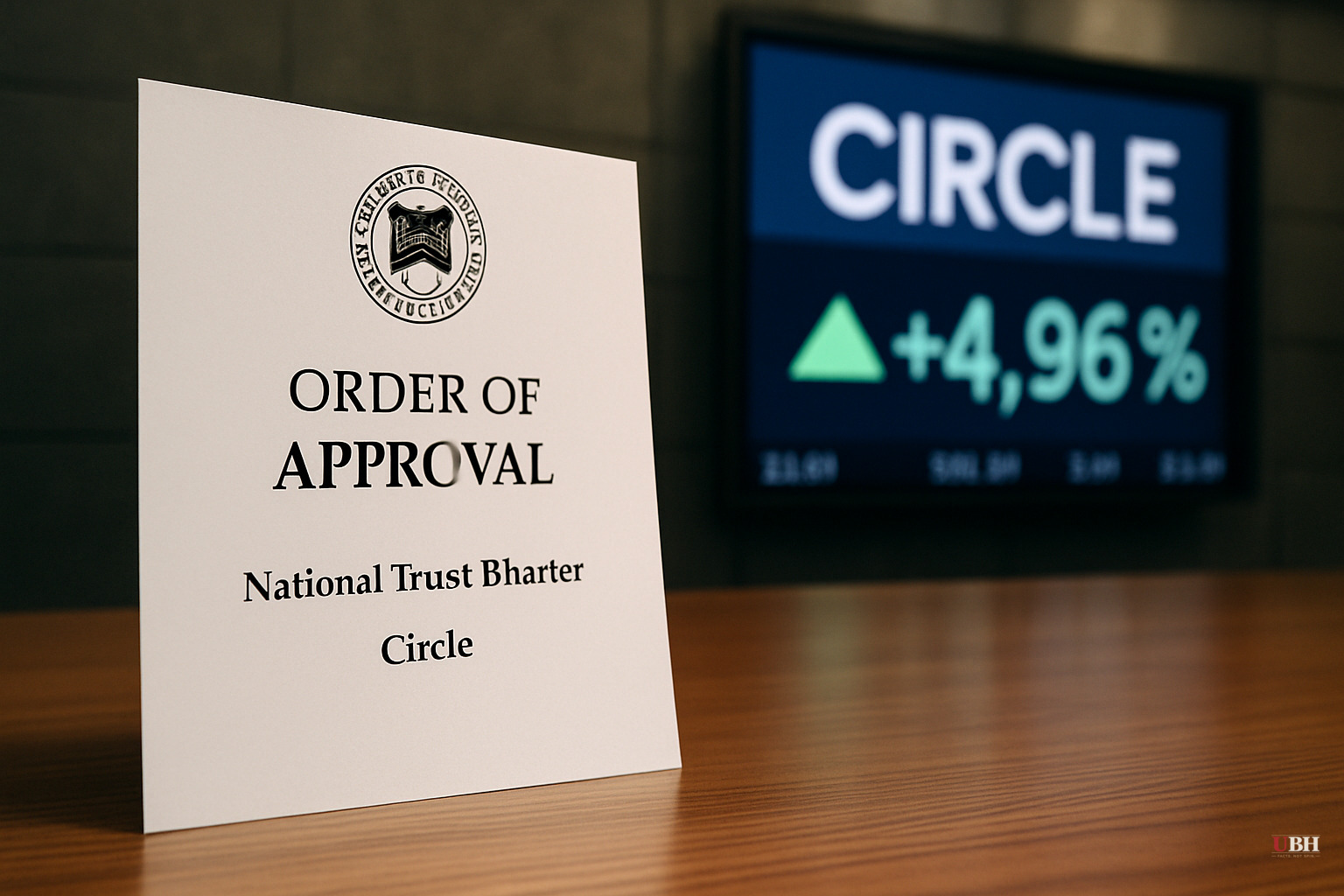
Since our coverage yesterday of Circle's OCC national trust bank approval, the market has weighed in. Circle shares closed up nearly 5% on Friday, according to CNBC, though they pulled back from intraday highs before the bell.
The approval creates Circle National Trust, which gives Circle direct control over the cash and U.S. Treasury assets backing USDC. Previously, the company relied on third-party banks and custodians to hold those reserves.
What the Charter Does and Doesn't Do
This is not a commercial banking license. Circle National Trust cannot take deposits from customers or make loans. What it can do is manage reserve assets directly for regulated stablecoins, primarily USDC, which has more than $73 billion in circulation.
Rather than navigating 50 different state regulatory frameworks, Circle now answers to a single federal regulator, the OCC. For a fast-growing fintech, that represents a meaningful cost and compliance reduction.
Circle's Chief Strategy Officer Dante Disparte described it to CNBC as a codification at the federal level of what the company has been building toward since its earliest days. "We think of ourselves as a pioneer in ensuring that even from the very earliest days of stablecoins entering the stream of commerce, they ought to follow the norms for trust, transparency, safety, financial crime compliance and the rest," Disparte said. "Today's announcement codifies that at the federal level."
Disparte also noted that the trust structure simplifies regulatory requirements for international counterparties, which matters for a stablecoin that competes globally.
GENIUS Act Is the Policy Backdrop
This approval doesn't exist in a vacuum. The GENIUS Act, which established a federal framework for payment stablecoins, made OCC charter approval a legal requirement for large stablecoin issuers like Circle. The race to get chartered is now a compliance mandate, not just a competitive advantage.
The OCC has been moving quickly across the crypto sector. Recent approvals or active applications include Coinbase, BitGo, Fidelity Digital Assets, Ripple, and Paxos, according to CNBC. Crypto companies are trying to move from being financial applications built on top of banks to being regulated financial infrastructure themselves.
The Competitive Threat Circle Faces
The strongest challenge to Circle's position comes from the firms the GENIUS Act is now inviting into the stablecoin market.
Traditional financial institutions, banks, payment networks, and asset managers increasingly want to issue their own stablecoins. They already have the customer relationships, the balance sheets, and now a clearer legal pathway. If JPMorgan or Bank of America issues a dollar-backed stablecoin, they don't need USDC as an intermediary. That directly threatens Circle's transaction volume and revenue model.
On the same day as Circle's OCC approval, CNBC reported that Swift launched a blockchain consortium with 17 banks, including Citi and HSBC, aimed at 24/7 payments.
Also in June, a consortium of more than 140 companies including BlackRock, Coinbase, Mastercard, Stripe, and Visa joined the new Open USD (OUSD) stablecoin effort, where reserve yields are shared with participating entities rather than retained by the issuer. This revenue-sharing model poses a structural challenge to Circle's business, since reserve income is a core part of how USDC generates money.
Why Friday's Stock Move Needs Context
A 5% single-day gain is real, but it reflects a story that was already known by end of day Thursday in our prior coverage. The market may have been pricing in the full implications of the reserve management change, since direct custody of $73 billion in Treasuries and cash means Circle can potentially capture more of the yield that was previously shared with or managed by third-party custodians.
Whether Circle can hold its USDC market share as traditional banks enter the space with their own products and as the OUSD consortium scales up its yield-distribution model remains unresolved.
Circle now has the regulatory infrastructure of a bank without the liabilities of one. Whether that's an advantage or just a starting line depends entirely on whether USDC can compete against stablecoins issued by institutions that already own the customer relationships Circle is trying to build.
Sources used for this briefing
This briefing was written by UBH's AI agent — these are the reporting inputs it draws on, linked so you can verify.


