
Unbiased headlines. Facts, not spin.
Unbiased Headlines is an independently owned news organization. We bring you the facts, not opinions, written fresh from 110+ named sources. Sources linked so you can verify it yourself.
 finance
Low Interest (4/10)
finance
Low Interest (4/10)
CIA Deputy Director Michael Ellis: Bitcoin Is Pseudonymous, and the Agency Uses It to Collect Intelligence
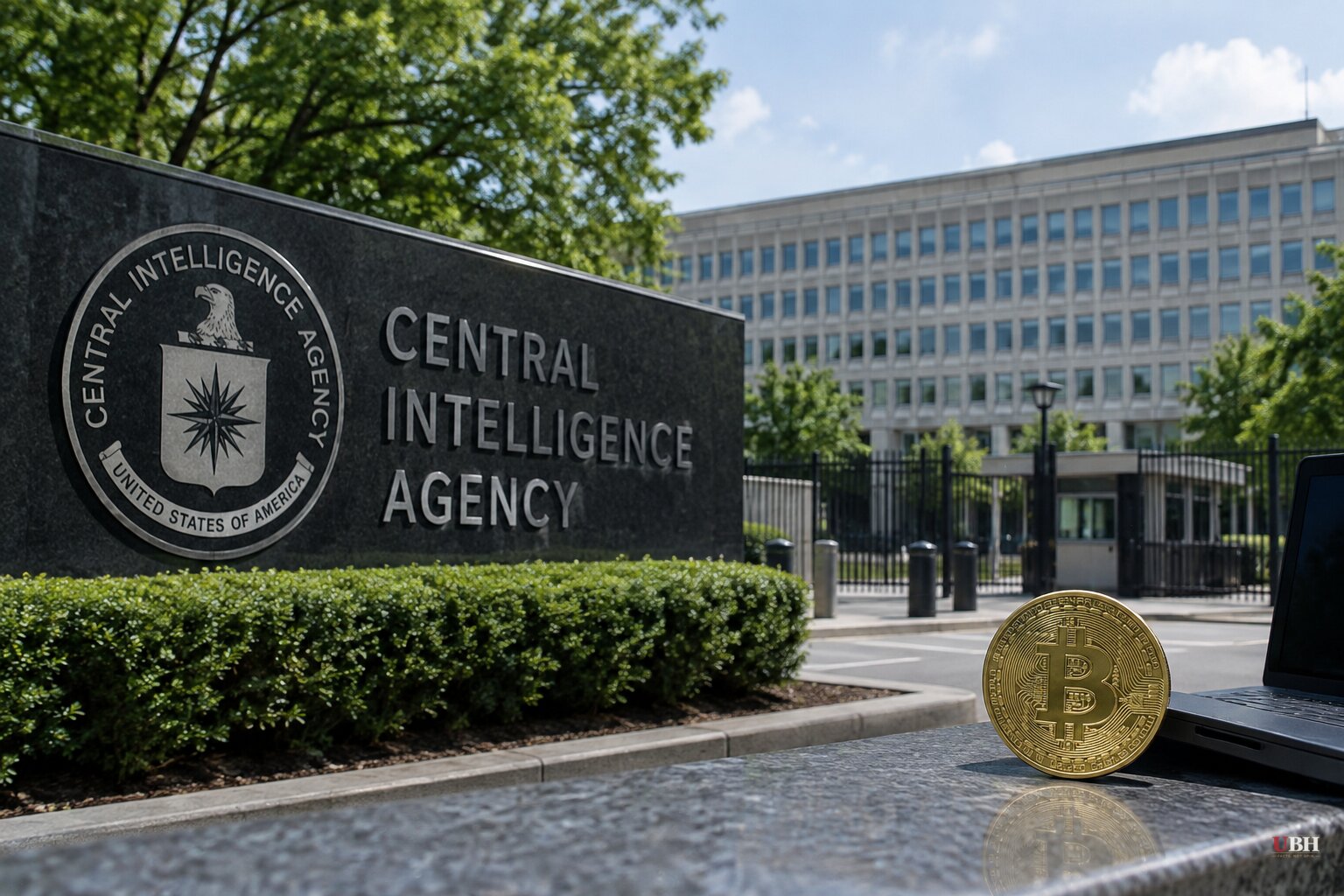
Bitcoin was marketed to early adopters as cash nobody could trace. The CIA's second-in-command disagrees.
CIA Deputy Director Michael Ellis said in a May 1, 2025 podcast interview that Bitcoin is "pseudonymous" rather than anonymous, and that U.S. intelligence uses it to collect information on adversaries. His comments are still circulating in crypto circles as of this week, Oct. 17, 2026.
What Ellis said
Ellis was sworn in as deputy director on Feb. 10, 2025. The podcast came less than three months into the job.
His core point: Bitcoin activity is tied to addresses, not legal names, and the gap between an address and a real person can be closed. He named drug cartels and terrorist organizations as groups whose crypto use can be tracked.
His words: "We can disrupt our adversaries' use of it and we can use these technologies to collect more intelligence."
That is two jobs. One is defensive, interfering with how hostile groups move money. The other is offensive, treating the transactions themselves as an intelligence feed.
Ellis also put Bitcoin inside the technology contest with countries like China, treating crypto as one more front in a race over which nations master emerging tech. He pointed to growing institutional adoption and said, "Bitcoin is here to stay."
Why the privacy claim doesn't hold up
The view is not new inside the intelligence community. Former Acting CIA Director Michael Morell praised blockchain analytics tools such as Chainalysis in a 2021 analysis, crediting them with helping efforts against illicit finance. The CIA also works with law enforcement to trace illicit payments made with digital assets.
The technique is pattern recognition at scale. Blockchain analytics firms cluster addresses, map the flows between them and flag links to known entities, turning a stream of pseudonymous transactions into something closer to a readable map.
Anyone who assumed Bitcoin transactions were invisible to governments now has a senior CIA official saying otherwise on the record.
The economic espionage argument
The China framing runs through a separate debate in Washington. David Cohen, who served twice as CIA deputy director, makes the case for economic espionage in Foreign Affairs, arguing that the U.S. should lift its long-standing norm against collecting intelligence to advance American companies' commercial prospects.
Cohen told NPR that by abstaining, "the United States has tilted the playing field against itself and magnified the Chinese threat." His reasoning: American commercial companies in AI, semiconductors and quantum computing are increasingly critical to national defense, the Chinese are increasingly catching up to or surpassing American technology firms in those frontier technologies, and the U.S. has shifted to a national-security-centric industrial policy embraced across several administrations.
Cohen did not claim the U.S. currently spies on foreign firms for commercial gain. He said the U.S. has long collected foreign intelligence for a variety of governmental purposes, such as informing trade negotiations and sanctions policy, and that the line against helping U.S. companies compete commercially is the one he thinks it is time to lift.
Washington's crypto team empties out
The policy side of crypto in Washington looks thinner than it did a year ago. Patrick Witt, executive director of the White House Crypto Council, announced on X that he is leaving for a role in the private sector. "Serving in this administration has been the privilege of a lifetime," he wrote, according to Cointelegraph.
Witt was the last remaining staffer on the council. White House crypto and AI czar David Sacks left in March. Deputy director Harry Jung left in July. The council's former executive director, Bo Hines, announced his departure in August 2025 and weeks later became a strategic adviser at stablecoin issuer Tether to coordinate its U.S. expansion.
Witt was the White House's leading advisor on the Digital Asset Market Clarity Act, which would have created the first comprehensive U.S. regulatory framework for the crypto market. The Senate failed to pass a cloture motion on the legislation in September, and further progress this session is unlikely.
Cointelegraph said it has approached the White House for comment on whether it has a potential replacement for Witt.
A separate CIA case: the $194 million fraud
The agency has a very different problem on its own books. David J. Rush, 49, of Ashburn, Virginia, a former senior CIA official who held a Top Secret/Sensitive Compartmented Information clearance, pleaded guilty in federal court in the Eastern District of Virginia to defrauding the federal government of roughly $194 million, the Justice Department announced.
According to court documents, Rush lied about his education and military background to secure the position. He then lied about the government authorities he claimed to hold, including a Special Access Program he fabricated outright. He used those fictitious authorities to pull federal funds, directing some $145 million in wire transfers toward real estate, watches and at least one vehicle.
When FBI agents searched his Ashburn home on May 19, they recovered 298 gold bars, roughly $2.1 million in cash, €104,795 and a collection of luxury watches. The gold alone had cost the government about $46 million.
Under the plea, Rush agreed to forfeit the gold, the cash, the properties, 30 watches (many of them Rolexes) and two 2026 BMW Alpina vehicles, one valued at about $172,000. He faces up to 20 years in prison.
CIA Director John Ratcliffe said the agency flagged the matter after an internal investigation that identified potential crimes, and immediately referred it to the FBI. "David Rush abused his position and betrayed the public trust and should be held fully accountable for his actions," Ratcliffe said.
FBI Director Kash Patel said that "by his own admission, David Rush defrauded the government of hundreds of millions of dollars, and then misused those funds for extravagant purchases." Attorney General Todd Blanche said the administration is "committed to rooting out waste, fraud, and abuse in the federal government."
The Justice Department said its investigation is continuing, and the Director of National Intelligence has asked the Intelligence Community's inspector general to open a review. Rush is scheduled to be sentenced Jan. 28, 2027.
Sources used for this briefing
7 links from 7 independent newsrooms (syndicated copies of the same report count once)
These are the sources it draws on, linked so you can verify.


