
Unbiased headlines. Facts, not spin.
Unbiased Headlines is an independently owned news organization. We bring you the facts, not opinions, written fresh from 110+ named sources. Sources linked so you can verify it yourself.
 finance
Notable (6/10)
finance
Notable (6/10)
Citi's Simon Yuen Says Chinese AI Supply-Chain IPOs in Hong Kong Should Hold Firm Despite Valuation Pullback
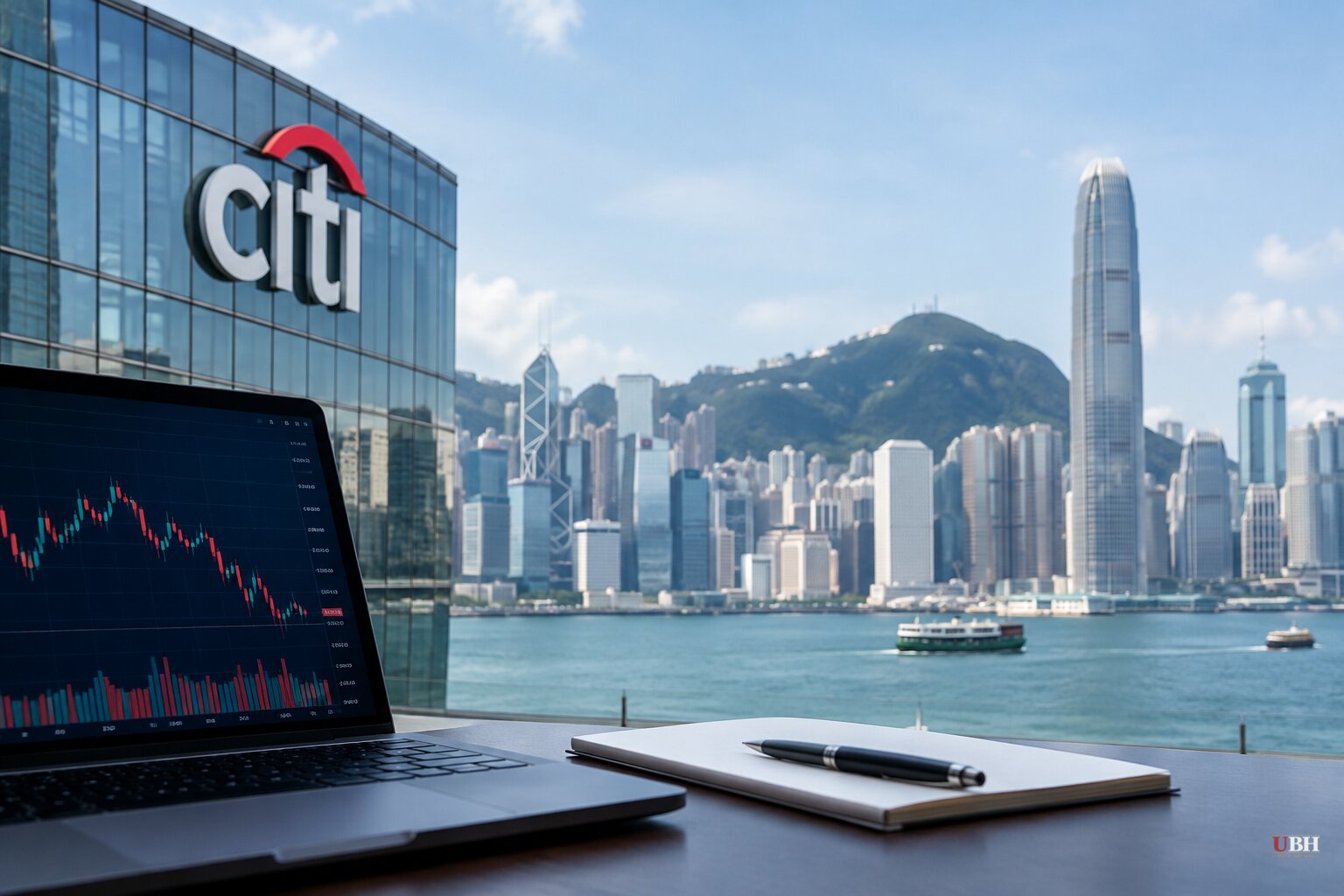
Since U.S. data center stocks began sliding this month, with CoreWeave falling 15% in a single session, one question has hung over the AI trade: does the damage cross the Pacific? Citi's Simon Yuen said on Saturday, October 17, that for Hong Kong IPOs it mostly has not.
Yuen, who heads China investment banking at Citi and also runs its financial institutions group for Asia-Pacific, spoke on the sidelines of the IMF meetings in Bangkok. His message: listings of Chinese AI supply-chain companies in Hong Kong "are expected to stand their ground" as valuation concerns and scrutiny rise.
The numbers behind Hong Kong's AI listing wave
Hong Kong hosted 118 IPOs in the first nine months of 2026, raising HK$388 billion ($49.4 billion). That is up 106% from the same period last year, driven by Chinese tech funding demand.
Citi Research, in commentary dated October 14, said it expects technology deals to push full-year Hong Kong proceeds to a record. The same note acknowledged that some tech stocks have dropped 10% or more, though Citi said core hardware names have not seen demand fade.
Yuen's explanation is about who buys. Chinese companies listing in Hong Kong draw a roughly even split between domestic Chinese and international demand, he said. Southbound capital from the mainland, money flowing into Hong Kong shares through the trading link, is "a key buying force."
He also said Chinese hardware suppliers have gained both sales volume and higher unit prices from the global AI infrastructure build-out. Many have set up manufacturing outside mainland China, which he said helps them serve global clients and soften geopolitical friction.
Biren as the test case
Shanghai Biren Technology, a GPU developer that the U.S. has blacklisted, listed in Hong Kong on January 2 at HK$19.6 a share. It was trading around HK$37 to HK$38 in early October, roughly double the issue price. That is well off its 52-week high of HK$70.75, a retreat tied to a fresh HK$4 billion share placement.
Bloomberg has reported that Biren is weighing a roughly $1 billion follow-on sale, its third capital raise since the January debut.
The pipeline is crowded. Baidu's AI chip unit Kunlunxin is pursuing a dual listing in Shanghai and Hong Kong at a reported $50 billion valuation, according to TrendForce. MiniMax has filed confidentially for a Hong Kong IPO, reportedly aiming for a valuation above $4 billion before year-end. Chip designer Kiwimoore is reportedly eyeing $2 billion. Those figures are reported targets, not completed pricings.
What Yuen did not claim
Yuen did not say Hong Kong is insulated. "If the whole AI cycle turns in the US, and we have seen some volatility in the last few weeks, you will see an impact everywhere, Hong Kong included," he said.
He also flagged a shift for 2026's successor year: Hong Kong's focus is expected to move from pure hardware toward Chinese AI model and application developers. Those companies, Yuen said, "need to show very strong growth and profitability."
He is also describing a market his own division works in, and the reasoning about southbound money is his explanation, not an audited finding.
The skeptics of how these listings work
Critics argue the structure itself deserves a harder look. Stu Cvrk, in an Epoch Times commentary updated October 13, argues that China's commercial space listings, though not AI chip deals, are "a state-directed financing mechanism" rather than a true IPO. In his telling, Beijing keeps a standing state presence on the cap table and strategic control, then "sells the remaining downside to domestic savers." He calls the result "fiscal laundering."
That is one commentator's argument about a different sector, and it is unproven as applied to AI chips. But it frames the question for any listing leaning on mainland capital as the buyer of last resort.
The U.S. side of the ledger
The U.S. picture is rougher. CoreWeave's 2031 bonds were trading around 79 cents on the dollar with yields near 16% in mid-October, according to StartupFortune, which put the company's debt and lease obligations at roughly $52 billion. Nebius, Applied Digital and Iren slid with it.
Citigroup's Heath Terry, head of AI investment research, told CNN that rising rates, the Iran war and a shakier non-AI economy are creating uncertainty for IPOs generally. Oura and Holtec Nuclear have delayed or suspended offerings, and OpenAI has pushed its IPO to next year.
Anthropic is still expected to list as soon as November. The Wall Street Journal reported it could raise as much as $100 billion at around a $2 trillion valuation. That would top SpaceX's roughly $86 billion raise at a $1.77 trillion debut valuation.
The next hard data points are Biren's reported $1 billion follow-on, MiniMax's targeted year-end listing and Anthropic's possible November debut. Together they will show whether Yuen's mainland-liquidity argument or his own warning about the U.S. AI cycle proves the stronger force.
Sources used for this briefing
7 links from 7 independent newsrooms (syndicated copies of the same report count once)
These are the sources it draws on, linked so you can verify.


