
Unbiased headlines. Facts, not spin.
Unbiased Headlines is an independently owned news organization. We bring you the facts, not opinions, written fresh from 110+ named sources. Sources linked so you can verify it yourself.
 finance
Major Story (8/10)
finance
Major Story (8/10)
VIX Tops 22 for First Time in Four Months as Nasdaq Posts Worst Week Since June
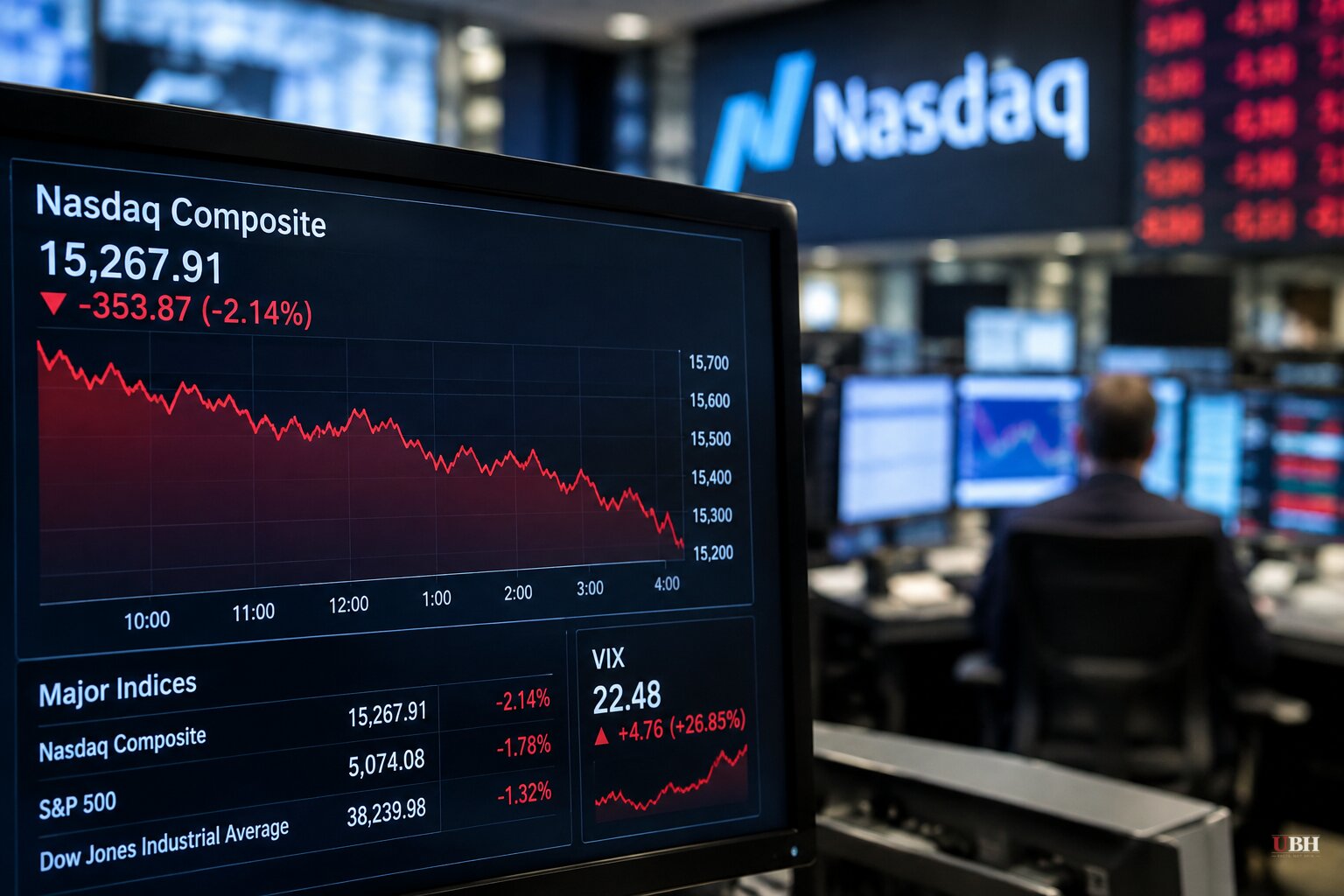
Wall Street's fear gauge jumped above 22 on Friday, Oct. 16, for the first time in four months. The move came as the AI trade took another beating.
The Nasdaq Composite fell 2.14% on the day. That put its weekly loss at roughly 4.5%, its worst week since June. The S&P 500 dropped 1.09% Friday and nearly 2% for the week, also its worst stretch since June.
Both indexes hit record highs only 10 days ago.
AI debt is the pressure point
The center of the anxiety is a small group of companies called neoclouds, which rent computing power to firms building AI. CoreWeave, backed by Nvidia and public since its March 2025 IPO, is the one traders are watching.
The company carries tens of billions of dollars in debt. Its bond yields recently surged to levels that signal distress, meaning a higher perceived risk of default.
"It's unclear that (CoreWeave is) going to get a sufficiently good return to pay down the debt that they borrowed," Gil Luria, head of technology research at D.A. Davidson, said. "They are the subprime tranche of the AI trade, and that's why they're selling off first."
Nvidia CEO Jensen Huang tried to calm things Thursday, telling Bloomberg he is optimistic about CoreWeave. The stock rallied. The relief lasted a day: shares fell roughly 12% to 13% Friday, depending on the tally. They lost about a quarter of their value this week and sit more than 65% below the post-IPO peak.
Luria himself says AI demand is real and growing. His point is that demand and a financing structure that can survive steep interest rates are two different things.
The pain was not confined to CoreWeave. On Wednesday, Oct. 14, Oracle fell 8.8% and Nebius dropped 10%, while CoreWeave shed 15%. The S&P 500 lost 1.11% and the Nasdaq 1.88% that day.
Chip stocks took a beating too. A closely watched semiconductor index fell 3.8% Friday, its eighth straight losing session. It dropped 11.4% on the week, its worst week since April 2025.
Inflation and oil pile on
September consumer prices rose 3.7% from a year earlier, above the 3.6% forecast. Core prices rose 0.3% on the month against a 0.2% consensus.
That revived talk of Fed rate hikes. According to Reuters, market-implied odds of an October hike rose to roughly 33% from about 20% before the report.
Oil added to the worry. Brent crude touched $110 a barrel Friday for the first time since May, which feeds inflation fears that could push the Fed higher.
Higher borrowing costs are exactly what hurts debt-funded AI builders most.
Traders are betting the fear lasts
The options market is positioning for more. Of the 10 most popular VIX contracts bought Friday, nine were calls, and six were struck above the level the VIX fell back to after its initial spike. Nearly $27 million in premium traded across those nine, about 36% of all VIX option premium that day.
One trader bought 9,200 November 18 calls at the 20 strike for $1.7 million. The same or another buyer took 12,500 November 18 calls at the 23 strike for $1.1 million. Those pay off if the VIX stays elevated into the third week of November.
"The speed at which VIX increased today, combined with elevated VIX options volume suggests traders are actively monetizing October VIX positions and rolling to hedge a larger market downturn," said Brent Kochuba, founder of SpotGamma and a CNBC contributor. "We note several +$1 million call VIX prints for November."
A caution on scale: the VIX is an index of expected S&P 500 volatility derived from options prices, not a forecast of a crash. A reading near 22 is elevated, but it is far below the August 2024 spike above 60, and by itself it does not signal a systemic crisis.
A quiet year until now
The turn is abrupt. Through September, the S&P 500 had returned 12.7% including dividends, according to figures cited by Breitbart's business newsletter. The average midterm year since 1950 returned just 0.9% over the same span, and BlackRock counted only four daily moves of 2% or more through August.
History also frames what comes next. Every midterm election since 1946 has been followed by a positive one-year S&P 500 return, averaging 14.4%. The midterms are Nov. 3.
The Breitbart analysis argues that the usual pre-election summer sell-off never came, so investors may have already pocketed part of the post-election rally. Longview Economics puts the average peak-to-trough drawdown in the year before a midterm at about 19%. This week's slide is nowhere near that, so the argument that the market is overdue for a reset stays open.
What comes next
Tesla, SpaceX and Meta report earnings next week, the first big test of whether AI spending plans survive the rate scare. Wall Street reopens Monday, Oct. 19.
The Nov. 18 options positions will show whether the traders who paid millions for VIX protection were early or just right. The Fed's next decision falls shortly before the Nov. 3 vote, and it is unclear what the central bank will do and whether debt-heavy AI names can refinance at the rates it brings.
Sources used for this briefing
7 links from 5 independent newsrooms (syndicated copies of the same report count once)
These are the sources it draws on, linked so you can verify.


