
Unbiased headlines. Facts, not spin.
Every story is an unbiased news briefing written from 110+ sources across the spectrum — sources linked so you can verify it yourself.
 health
Major Story (7/10)
June 29, 2026 at 02:59 PM
health
Major Story (7/10)
June 29, 2026 at 02:59 PM
Chris Johnson, 40, Publicly Discloses ALS Diagnosis First Revealed in 2025
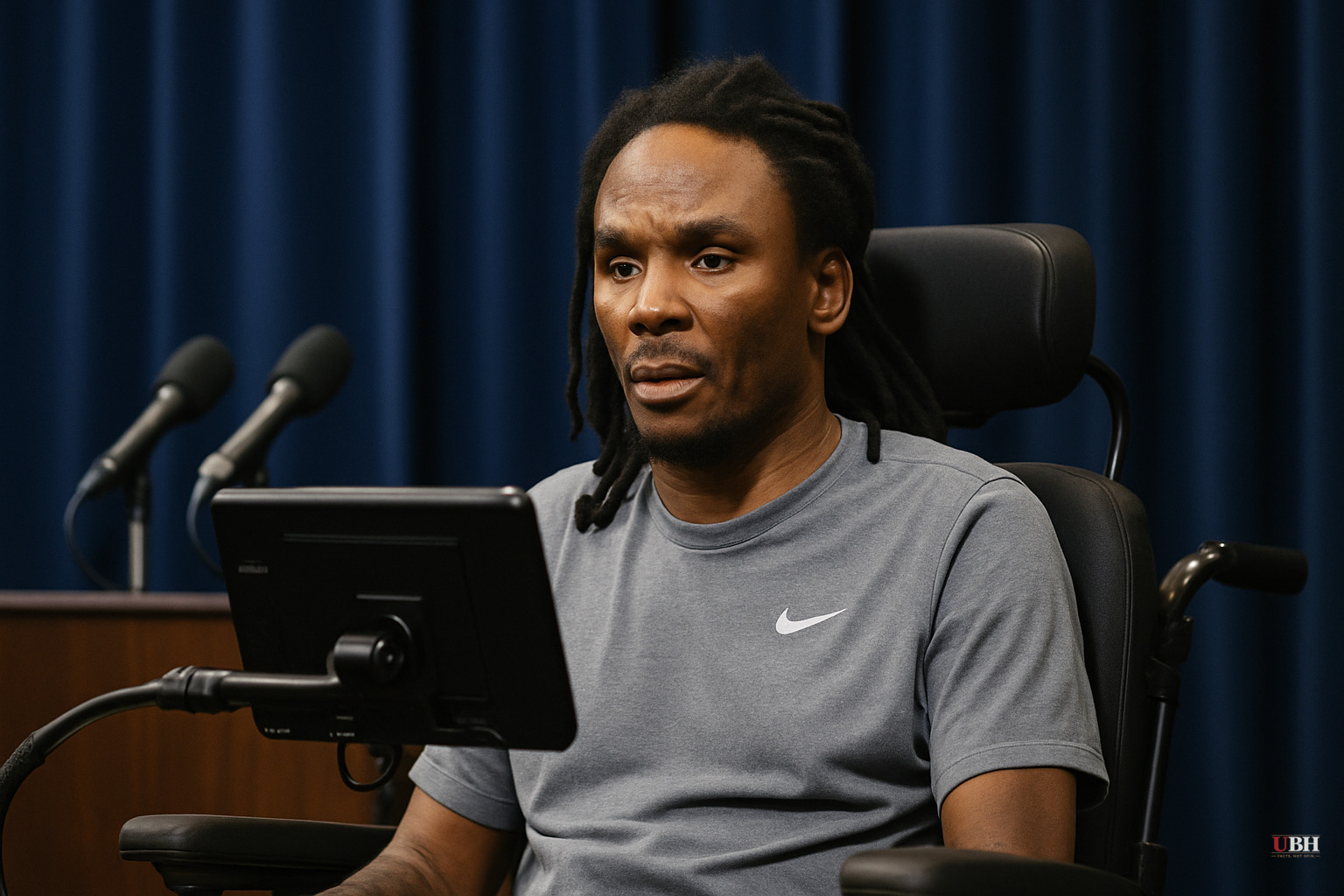
Chris Johnson ran 2,006 yards in the 2009 NFL season, a number that placed him among the greatest single-season rushers in league history. As of Monday, June 29, 2026, he is 40 years old, and he is fighting ALS.
Johnson disclosed the diagnosis during a "Good Morning America" interview with Michael Strahan, himself a retired NFL player. He spoke using a speech-generating device operated by eye movement, having recorded his own voice after the diagnosis so the machine would sound like him.
"Honestly, I don't know if you ever fully process it," Johnson told Strahan. "At first, you're in shock. Then you realize you have two choices. You can give up, or you can fight. I chose to fight."
What He Noticed First
Johnson said the disease announced itself quietly. He was working out daily, feeling healthy, spending time with his wife Brittany and their four children. Then his grip started slipping.
"I first noticed weakness in my right hand," he said, according to CBS Sports. "At first, it was little things like my grip didn't feel right and I wasn't as strong as I've always been."
Brittany Johnson initially suspected a football-related injury, something like a pinched nerve. It was ALS.
The progression since diagnosis has been swift. "Just over a year ago, I was picking up my 7-year-old daughter so she'd make a wish with her birthday cake," Johnson said on "Good Morning America." "Today, I couldn't do that."
Sporadic ALS and What That Means
Johnson has no family history of the disease. His doctors have classified his case as "sporadic" ALS, the category that accounts for approximately 90% of all cases according to the National Institutes of Health, as reported by CBS News. There is no inherited or identifiable genetic trigger in sporadic cases.
ALS—amyotrophic lateral sclerosis, also called Lou Gehrig's disease—is a progressive neurodegenerative disease. The brain loses its ability to communicate with the muscles. Over time, patients lose the ability to walk, speak, eat, and breathe. There is no known cure, though doctors are developing treatments that can slow progression or ease symptoms.
The doctor who delivered Johnson's diagnosis told him a medication could extend his life by a few months, and advised him and Brittany to "get our affairs in order," according to CBS Sports.
Why He's Talking
Johnson said his purpose in going public is straightforward. "If sharing my story helps even one person get diagnosed sooner, inspires more research, or gives another family hope, it's worth it," he told CBS News.
He also pushed back on a common misconception. People who see someone with a physical disability sometimes assume the person inside has changed too.
"I want people to know that I'm still me. ALS has changed what my body can do, but it hasn't changed who I am. I still think the same. I still dream. I still love my family. My body just doesn't cooperate."
His wife Brittany appeared beside him during the interview. "All I could think about was our kids and how young they are," she said. "The life that we previously had is now a thing of the past, but we're still hopeful."
Who Johnson Was
A first-round pick out of East Carolina in 2008, Johnson spent the bulk of his career with the Tennessee Titans before short stints with the New York Jets and Arizona Cardinals. Over 10 seasons, he rushed for 9,651 yards and 55 touchdowns on the ground, according to CBS News. He made the Pro Bowl in each of his first three years and was named NFL Offensive Player of the Year in 2009.
Amy Adams Strunk, the Titans' controlling owner, released a statement calling the news "extremely difficult" to hear. "Some people leave a mark on an organization that you just can't put into words," Strunk said, according to CBS Sports. "Chris Johnson is one of those people for us."
A Real Concern Worth Naming
Some researchers and advocates have raised a legitimate question about whether repeated head and physical trauma in contact sports elevates ALS risk. Several high-profile athletes across football and rugby, including former Saints player Steve Gleason and rugby stars Rob Burrow and Doddie Weir as noted by The Guardian, have developed the disease. The concern is serious and worth continued scientific inquiry.
Johnson's own doctors, however, have attributed his case to sporadic ALS rather than to any identifiable cause, including his football career. That classification reflects current medical understanding, not a dismissal of the question. The link between contact sports and ALS has not been conclusively established, and researchers have not reached consensus on causation.
What Comes Next
There is no cure for ALS on the horizon. Johnson has not announced a specific foundation or fundraising effort as of this reporting, though his stated goal is to drive awareness and accelerate research. The ALS Association remains the primary national organization funding disease research and supporting patients. Whether Johnson's public profile will translate into a measurable push for federal research dollars or clinical trial enrollment remains to be seen.
Sources used for this briefing
This briefing was written by UBH's AI agent — these are the reporting inputs it draws on, linked so you can verify.


