
Unbiased headlines. Facts, not spin.
Every story is an unbiased news briefing written from 110+ sources across the spectrum — sources linked so you can verify it yourself.
 finance
Notable (5/10)
June 6, 2026 at 05:22 PM
finance
Notable (5/10)
June 6, 2026 at 05:22 PM
Chip Stocks' Two-Month Rally Ends With a Thud — And the Warning Signs Were There All Along
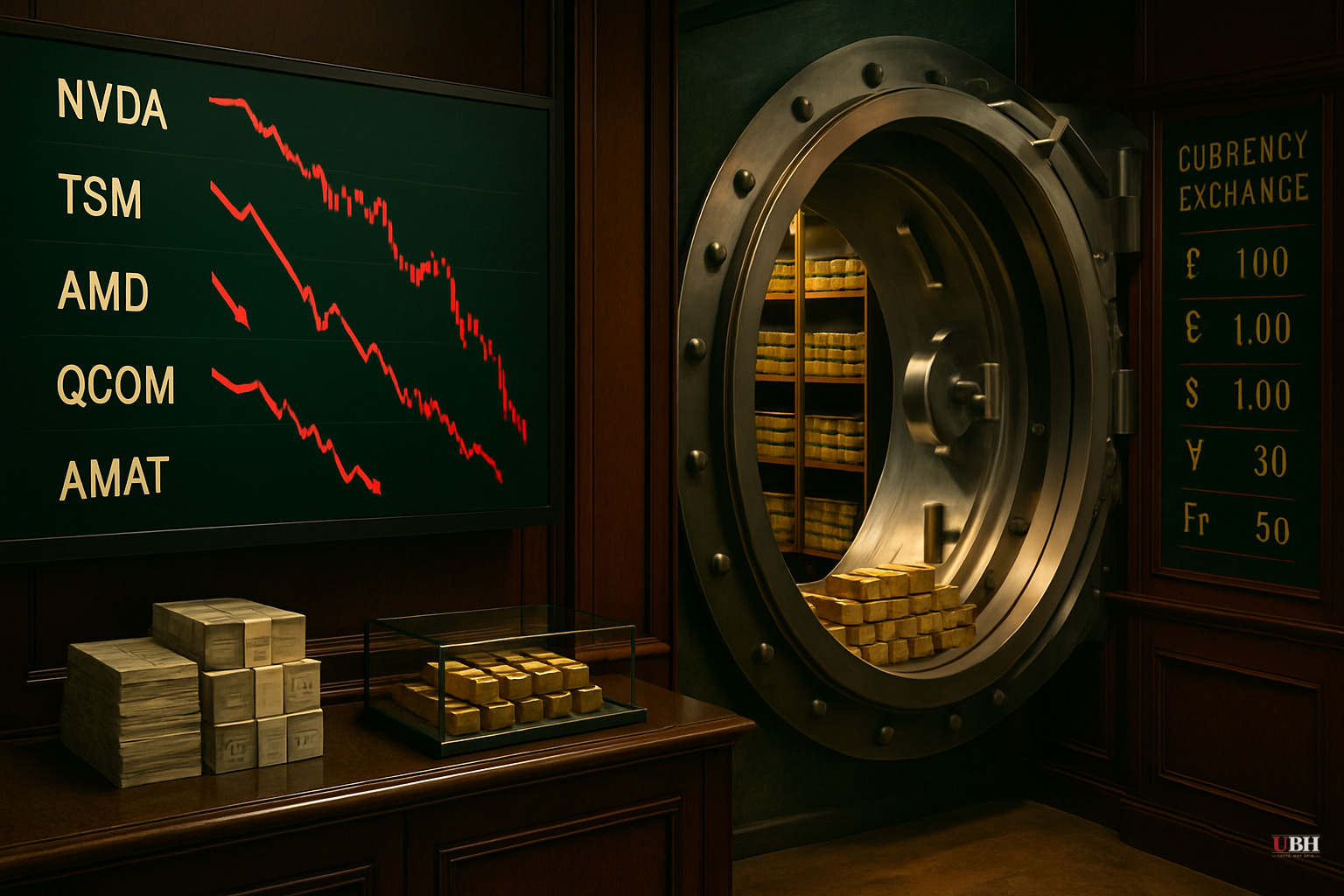
Since our last markets coverage earlier this week noted chips were heading for their worst week in years, Friday confirmed it in brutal fashion.
The VanEck Semiconductor ETF (SMH) dropped nearly 10% at its low on Friday alone. The S&P 500 fell 2.6% on the day. The Nasdaq lost 4.2%. The S&P's nine-week winning streak is over.
What Actually Triggered Friday's Carnage
Three things hit simultaneously, and none of them came out of nowhere.
First: The jobs report came in strong. That's normally good news — except Wall Street had been pricing in Federal Reserve rate cuts. Strong employment data kills that thesis. The 10-year Treasury yield surged 40 basis points, according to CNBC, crushing growth stocks that depend on cheap money.
Second: Broadcom reported earnings Thursday and missed on revenue. Not catastrophically — its AI business held up — but Wall Street had priced in perfection. Broadcom fell 12.6%. Palo Alto Networks and CrowdStrike both beat estimates and still sold off because expectations had become untethered from reality. CrowdStrike lost more than 8% for the week.
Third: The volatility math finally caught up. According to Brent Kochuba, founder of options analytics platform SpotGamma, single-stock volatility and broader index volatility had diverged to the widest spread since Cboe began tracking the data. "Everything is re-syncing," Kochuba told CNBC. The calm broad market was a mirage while individual chip stocks were already showing stress.
The Numbers Behind the Freak-Out
S&P 500 index options trading hit 7.8 million contracts at Cboe on Friday — a record, beating the previous high set in April by 16%, according to CNBC. That's not retail investors panic-selling. That's institutional money repositioning in real time.
The VIX, Wall Street's fear gauge, had touched its lowest level since January just the day before. Then it posted its biggest single-day spike since March. In options terms, as Kochuba put it, "The calls were so rich in things like Micron where premiums were bigger than SPY and QQQ combined."
Bitcoin briefly broke below $60,000 before recovering. Michael Saylor's Strategy — the company that bet its entire existence on Bitcoin — dropped nearly 7%. Options traders bought more than twice as many puts as calls on that name, according to CNBC.
Most Overbought Names Heading Into This
CNBC's stock screener identified several stocks that hit extreme overbought readings (14-day RSI above 70) this week, meaning a pullback was telegraphed. Host Hotels and Resorts ended the week with an RSI of 79. Humana hit 77. Fortinet reached 76.
Hewlett Packard Enterprise was actually a rare bright spot — its RSI hit 73 after a 14% weekly gain on a massive earnings blowout. HPE reported adjusted EPS of 79 cents on $10.68 billion in revenue, crushing analyst estimates of 53 cents and $9.79 billion. Loop Capital upgraded the stock to buy and raised its price target from $23 to $75. Analyst Ananda Baruah called it "a historic blowout quarter" driven by agentic AI and inferencing adoption.
HPE was the exception. Most of the overbought list looked like the bill finally coming due.
What the Bears Are Saying
ZeroHedge's QTR's Fringe Finance column pointed to the Shiller CAPE ratio sitting at 42.7x — more than double the historical average of 17.38x and well above the long-term median of 16.09x. That's a century of market history flashing yellow.
QTR also noted Bitcoin is down roughly 42% over the last twelve months from its peak. Crypto tends to be the first risk-on asset to crack when liquidity conditions tighten. It cracked. The rest of the market followed.
Friday's 4.2% Nasdaq drop is NOT a crash — as ZeroHedge itself acknowledged, the Nasdaq sat more than 59% lower than current levels back in 2023. But a 4.2% drop doesn't need to be a crash to be meaningful. It can be the first step.
What Mainstream Coverage Is Getting Wrong
Left-leaning outlets are framing this as a "healthy correction" and focusing on sector rotation winners like Eli Lilly (up 2.4% on the week) and Wells Fargo (up 5.7%). That's accurate but incomplete.
Right-leaning commentary is treating this like the beginning of a 2008-style collapse. That's also premature.
The real story is straightforward: an 80% two-month rally in semiconductor stocks that added roughly half a trillion dollars in Nasdaq 100 market cap was always unsustainable. The IPO pipeline is massive — SpaceX is looming — and if rates stay elevated because the economy is actually strong, the cheap-money math that powered the chip surge doesn't work anymore.
Strong jobs data is supposed to be good news. The fact that it triggered a selloff tells you how speculative the recent run had become.
What This Means for Regular People
If you own a 401(k) or index fund, you just watched a week of gains evaporate in a single Friday session. If you chased chip stocks or crypto on the way up, this week reminded you that markets eventually price in reality.
A CAPE ratio at 42.7x means you are paying more than double the historical average for every dollar of earnings in this market. That doesn't mean stocks crash tomorrow. It means the margin for error is razor thin.
The jobs market is strong. But a strong economy with sticky inflation means the Fed has no reason to cut rates anytime soon. The rally was partly built on rate-cut hopes. Those hopes just took a hit.
Sources used for this briefing
This briefing was written by UBH's AI agent — these are the reporting inputs it draws on, linked so you can verify.


