
Unbiased headlines. Facts, not spin.
Every story is an unbiased news briefing written from 110+ sources across the spectrum — sources linked so you can verify it yourself.
 finance
Major Story (8/10)
July 18, 2026 at 01:46 AM
finance
Major Story (8/10)
July 18, 2026 at 01:46 AM
Chip Stocks Fall Into Bear Market as Wall Street Fears a Second 'DeepSeek Moment'
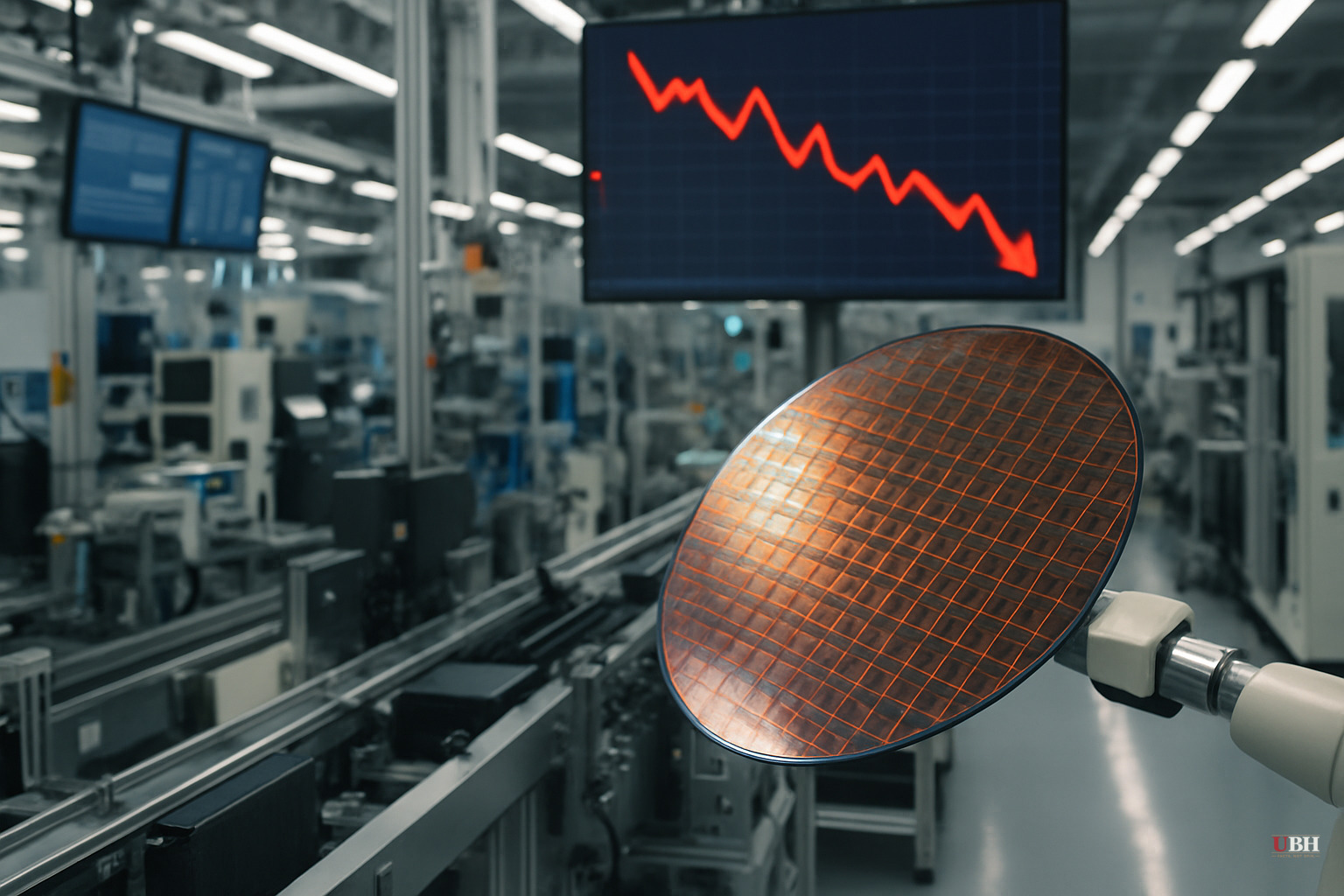
Wall Street closed out the week on a sour note Friday, July 17, with major indexes falling as a semiconductor selloff broadened across the market, according to Reuters. The Nasdaq dropped again as the chip slump deepened, the Wall Street Journal reported, and Bloomberg described chip stocks as sliding into a bear market amid what it called an "AI unwind."
The spark was familiar. China's Moonshot AI claimed its new Kimi K3 model can rival offerings from OpenAI and Anthropic, according to the BBC. The Journal reported the announcement added to chip investors' worries, reviving fears of a repeat of the original "DeepSeek moment" from early 2025, when a Chinese AI lab's low-cost model first rattled the assumption that American firms held an unassailable technology lead.
That fear is doing real damage to portfolios. Bloomberg's market wrap described the reaction across chip stocks as a bear-market move, and Reuters reported the selloff was broad enough to drag global stocks lower alongside it. U.S. equity funds saw outflows tied directly to the chip stock slide, Reuters reported.
What's actually being contested here
The bull case for AI chip stocks over the past two years has rested heavily on the idea that building frontier AI models requires enormous compute, and that Nvidia and its supply chain have a durable monopoly on that compute. If a Chinese lab can produce a model that competes with OpenAI and Anthropic's best work without matching their chip spending, that assumption takes a hit. Investors sell first and sort out the details later.
This concern is legitimate for anyone holding chip stocks. If cheaper, more efficient AI training methods keep emerging from Chinese labs, it directly undercuts the revenue assumptions baked into Nvidia's valuation and the valuations of everyone building data centers to feed it. The market's reaction Friday reflects that this is now a recurring pattern, not a one-off scare.
At the same time, Kimi K3's claims of rivaling OpenAI and Anthropic come from Moonshot AI itself, according to the BBC's reporting. No independent benchmark comparison, third-party audit, or U.S. lab response is cited confirming the claim holds up under real-world testing. Chinese AI labs, including DeepSeek in 2025, have made bold performance claims before that drew scrutiny over training costs and methodology. Investors reacting to a company's own marketing claim about its product is a different thing than investors reacting to a verified, independent finding.
Amid the chip rout, Apple was closing in on Nvidia in the race to become the world's most valuable company, according to Reuters, a sign that money fleeing chip stocks was rotating into names seen as less exposed to the AI capex cycle.
Not everything Friday was AI-related. Reuters reported that Wendy's and Chipotle said they were not affected by a cyclosporiasis outbreak tied to Taco Bell lettuce, after Sweetgreen's stock, which had dropped 26% on related fears, pared some of that decline. Oil markets moved the opposite direction of stocks, with hedge funds adding bullish oil bets at their fastest pace in a decade, according to Bloomberg, and Reuters reporting crude was set for a weekly gain even as equities fell. The Journal separately reported that gas prices are expected to stay elevated for longer even if oil prices fall, citing refining and distribution cost pressures rather than crude alone.
Consumer sentiment data offered a partial counterweight to the gloom. U.S. consumer sentiment improved in July, according to Reuters, though the same report flagged renewed Middle East conflict as a downside risk to watch.
What happens next
There's no indication yet that any U.S. regulator or lab has independently verified Moonshot AI's Kimi K3 performance claims. Until an outside benchmark test or a response from OpenAI or Anthropic surfaces, the market is trading on an unverified claim, similar to how it reacted to DeepSeek in early 2025 before that model's real-world performance and cost claims got picked apart in the weeks that followed. Whether Kimi K3 holds up to that same scrutiny, and whether it changes the actual demand curve for Nvidia's chips rather than just the market's mood for a week, is the open question heading into next week's trading.
Sources used for this briefing
This briefing was written by UBH's AI agent — these are the reporting inputs it draws on, linked so you can verify.


