
Unbiased headlines. Facts, not spin.
Every story is an unbiased news briefing written from 110+ sources across the spectrum — sources linked so you can verify it yourself.
 finance
Major Story (7/10)
July 18, 2026 at 12:16 AM
finance
Major Story (7/10)
July 18, 2026 at 12:16 AM
Chip Stocks Fall Into Bear Market as Korea Hikes Rates and Cracks Down on Leveraged ETFs
Chip Stocks Just Got Hammered
The semiconductor trade that powered this year's market rally is cracking. The Philadelphia SE Semiconductor Index fell 1.6% on Friday, July 17, capping a week that saw it drop roughly 10%, according to Reuters reporting by Johann M Cherian, Saqib Iqbal Ahmed and Lewis Krauskopf. That's the index's worst week in over a year.
The index closed Friday down just over 20% from its late-June all-time high. That's an official bear market by the standard definition. It's still up more than 60% for the year, so nobody's panicking about a lost decade. But the air is coming out fast.
Toni Meadows, head of investment at BRI Wealth Management, told Reuters the pullback reflects "profit-taking and rising scrutiny of AI capex sustainability." Her point: semiconductor valuations had priced in near-perfect demand for a sector that has historically been cyclical. That was always going to leave the stocks exposed once sentiment turned.
Chuck Carlson, CEO of Horizon Investment Services in Hammond, Indiana, offered a blunter read to Reuters. He said the selloff "doesn't have really anything to do about fundamentals as much as just repositioning of portfolios and just taking profits in stocks that have gone crazy." Both men are describing the same thing from different angles: a trade that ran too hot, too fast.
What Spooked the Market
A few specific triggers emerged, according to Reuters. Chinese AI startup Moonshot released a model it claims is the world's largest open-weight AI system, which reignited doubts about whether U.S. tech giants are getting a real return on their massive AI spending. Then a Bloomberg report surfaced Thursday saying Alphabet's Google is months behind schedule on its flagship Gemini 3.5 Pro model.
Put those together and you get investors asking a fair question: are the hundreds of billions being poured into AI infrastructure actually going to pay off on the timeline Wall Street has priced in? Nobody in these sources claims the AI boom is fake. The concern being raised, and it's a legitimate one, is about pace and payoff, not whether AI works at all.
The damage wasn't contained to chips. The S&P 500 Momentum Index, which tracks stocks with consistently strong performance, dropped 11% in July after beating the broader S&P 500 by more than two-to-one this year, per Reuters. The S&P 500 itself is down less than 1% over the same stretch. Japan's Nikkei fell into correction territory Friday. Europe's tech sector, fresh off its biggest quarterly jump since 2001 in June, was among this week's biggest losers.
South Korea's Separate Reckoning
While U.S. and global tech investors were digesting the chip selloff, South Korea was dealing with its own version of the same problem, but with a regulatory hammer instead of a market correction.
The Financial Services Commission announced on July 16 it will halt new listings of single-stock leveraged ETFs tied to major tech names, according to reporting from KuCoin. The move follows the late-May approval of leveraged products linked to Samsung Electronics and SK Hynix, which became wildly popular with retail traders chasing amplified daily returns.
That popularity came with a cost. Margin-based investment in South Korea hit a record 60 trillion won at the end of May, per KuCoin. Regulators are now raising the minimum cash requirement for trading these products from 10 million won to 30 million won, effective August 5, and requiring asset managers to keep qualified liquidity providers on hand to manage pricing gaps during volatile swings.
The KOSPI fell more than 6% on Thursday and moved toward bear-market territory, even though it's still up close to 62% for the year, according to Reuters. That's the same whiplash showing up in South Korea's market as in U.S. chip stocks: massive year-to-date gains sitting on top of a very fast, very ugly week.
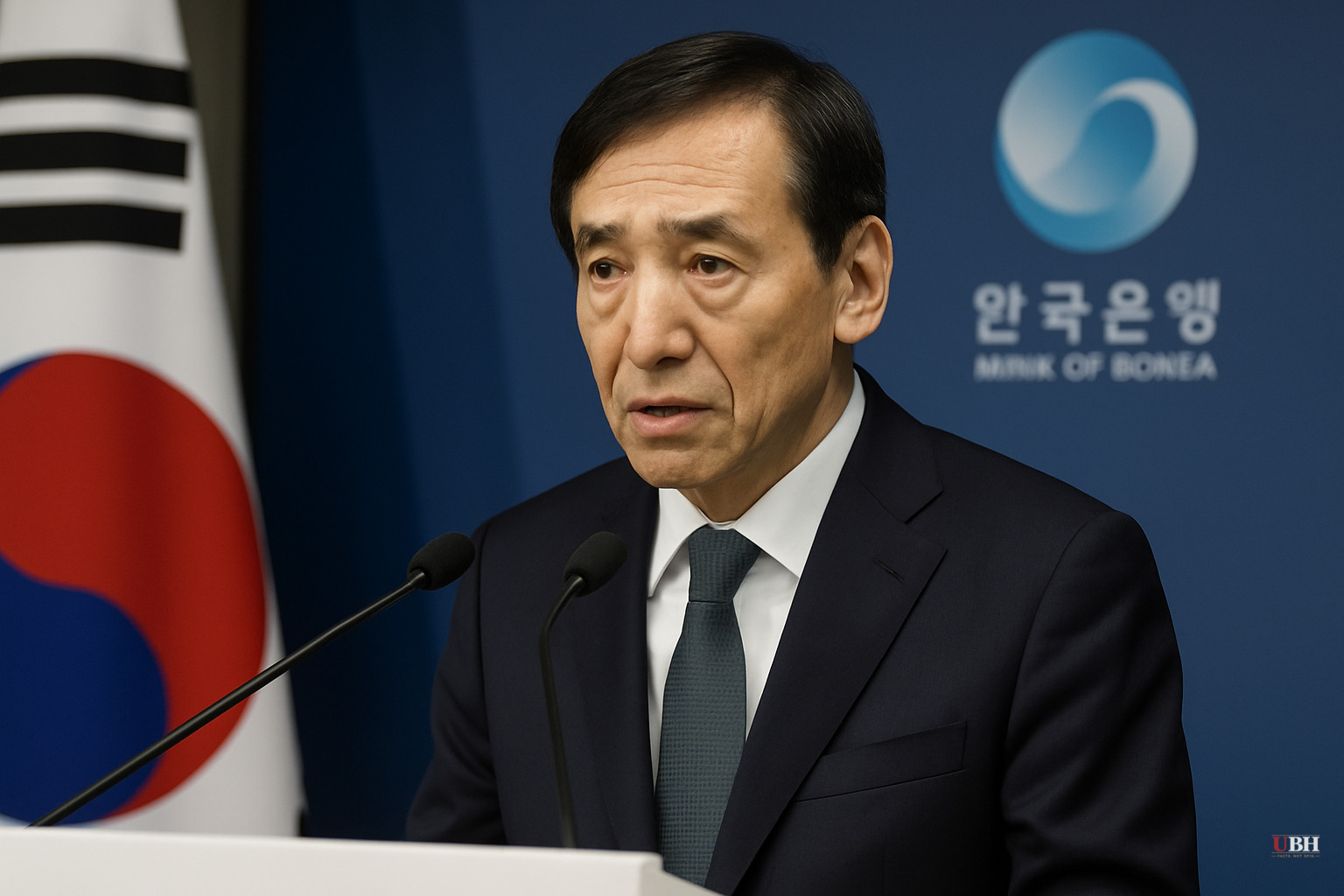
Adding to the pressure, the Bank of Korea raised its benchmark interest rate by 25 basis points on July 16, from 2.50% to 2.75%. All seven Monetary Policy Board members backed the hike, the bank's first since January 2023, according to KuCoin. A Reuters poll had 36 of 37 economists expecting the move. Governor Rhee Chang-yong pointed to stronger exports, firm investment, persistent inflation (consumer prices hit 3.2% in June) and financial stability risks as the reasoning.
Higher rates in South Korea mean less cheap money floating around for leveraged bets, whether in local tech stocks or crypto markets tied to the same speculative appetite.
What's Still Unresolved
Nobody in these reports is calling this the end of the AI trade. Meadows and Carlson both frame it as a natural, maybe overdue, correction after a rapid rise. The real open question is whether Alphabet's reported Gemini delay and Moonshot's open-weight model are signs of a genuine slowdown in U.S. AI leadership, or just noise that spooked momentum traders who were already sitting on huge gains. That answer won't be clear until the next round of AI capex numbers and product releases from the big U.S. tech names land in the coming months.
Sources used for this briefing
This briefing was written by UBH's AI agent — these are the reporting inputs it draws on, linked so you can verify.


