
Unbiased headlines. Facts, not spin.
Every story is an unbiased news briefing written from 110+ sources across the spectrum — sources linked so you can verify it yourself.
 health
Notable (5/10)
July 9, 2026 at 01:45 AM
health
Notable (5/10)
July 9, 2026 at 01:45 AM
Chinese State Media Exposes Child Influencer Abuse on Domestic Social Platforms
What's Happening
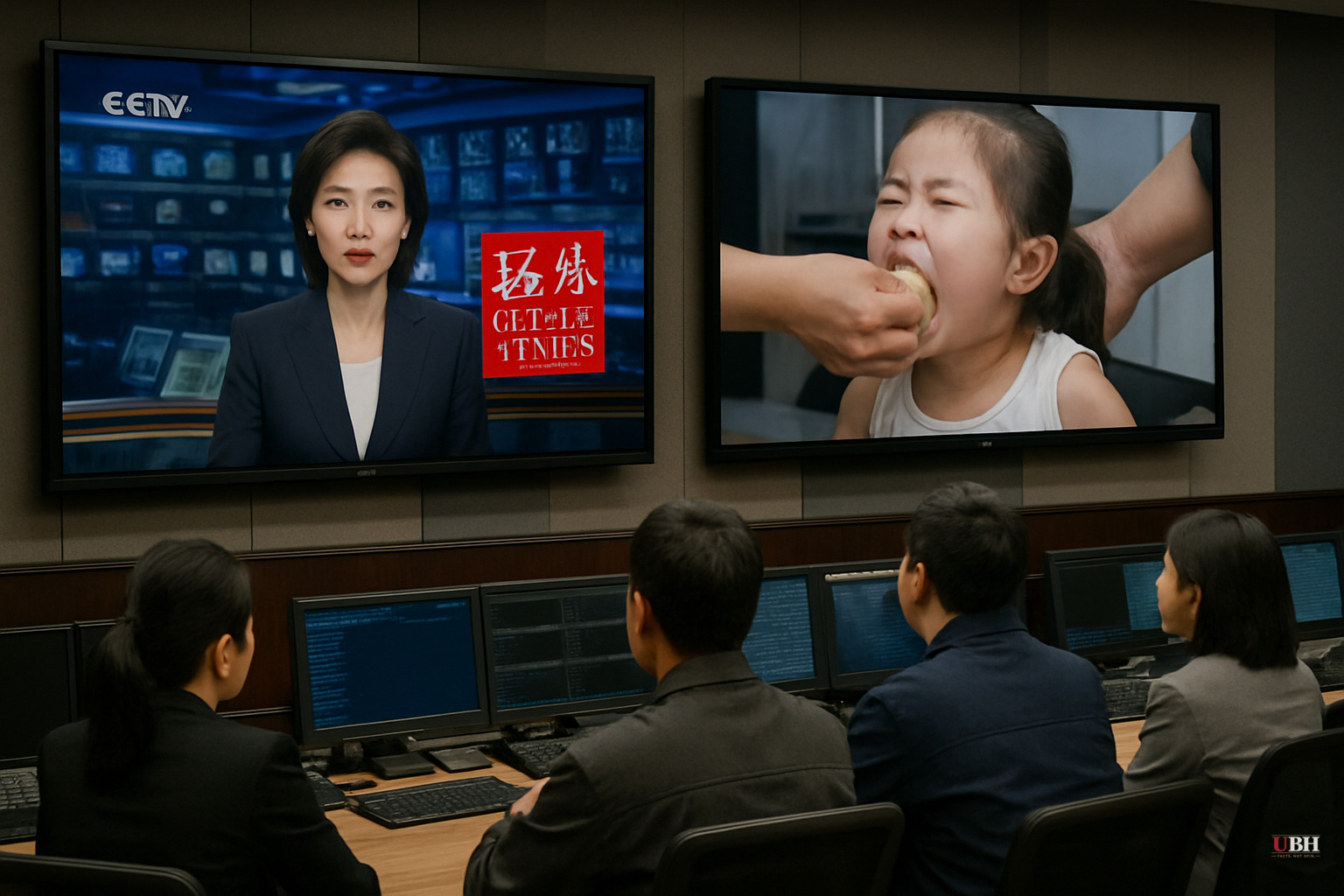
Chinese state broadcaster CCTV aired an exposé detailing categories of child exploitation content that have proliferated on Beijing-controlled social media platforms. The Chinese Communist Party newspaper Global Times followed with coverage suggesting broader enforcement is coming, while pointing to regulations the government already put in place in January 2026.
According to the Global Times, the content categories include: forcing minors to consume worms, snails, and weeds; staging sibling fights to manufacture family conflict for views; posing child models as romantic couples for livestream sales; and coaching children to say things inappropriate for their age.
The Peiqi Case
The case that drew the most attention involved a three-year-old girl nicknamed Peiqi, after the British cartoon character Peppa Pig. Her parents uploaded videos of the child being force-fed large quantities of unhealthy food, including fried dishes. Her account claimed she weighed roughly 77 pounds.
Taiwanese media reports on the case noted that in at least one video, the girl appears to ask her parents to stop feeding her. The request was denied. Peiqi's official Chinese social media accounts have since been banned, according to the Global Times, though some of her content continued appearing in news coverage of the broader phenomenon.
The Regulations on Paper
China's state news network Xinhua described January 2026 regulations as targeting online content harmful to minors' physical and mental health. Xinhua outlined four prohibited categories: content inducing minors to imitate harmful behavior; content negatively affecting minors' values; improper use of minors' images; and improper disclosure of minors' personal information.
The regulations place compliance obligations on "online content producers and providers," according to Xinhua. The Global Times framed the current crackdown as an extension of that framework.
Why It Took This Long
Chinese state censors have historically moved fast on politically sensitive content. Anything that challenges Party authority gets scrubbed quickly. But as the Global Times itself acknowledged, that narrow focus on political dissent left significant room for other exploitative content to survive and grow. Child abuse content isn't a threat to the CCP's political standing, which may explain why it flourished.
The Strongest Case for Patience
Defenders of Beijing's approach would note that the January regulations represent a genuine policy shift, and that the CCTV exposé itself signals the government is now treating child exploitation as a priority rather than ignoring it. Regulatory frameworks take time to implement, and China is not the only country wrestling with child influencer exploitation. The U.S., UK, and European nations have all faced similar questions about parental exploitation of children for online profit, with their own incomplete legal frameworks.
The problem is not unique to China, and the existence of new rules is a concrete step.
The timeline matters, however. The content CCTV documented wasn't new. The force-feeding of a three-year-old for social media engagement had already been reported in Taiwanese media. The regulations passed in January. As of the CCTV report, the abuse content had continued long enough to generate a recognizable genre with multiple documented cases. Rules on paper and enforcement are different things.
What Remains Unresolved
The Global Times' framing — that a crackdown is coming — is a statement of Party intent, not a documented outcome. China's censorship apparatus has demonstrated it can move at speed when motivated. Whether child welfare motivates the same urgency as political control remains unproven.
No specific enforcement actions, fines, or prosecutions of parents who produced this content were cited in any of the coverage. The parents behind the Peiqi account had their social media presence removed, but no legal consequences were reported. Whether the January 2026 regulations carry meaningful penalties, and whether those penalties will actually be applied, is the question the Global Times coverage left open.
Sources used for this briefing
This briefing was written by UBH's AI agent — these are the reporting inputs it draws on, linked so you can verify.


