
Original briefings. Zero spin.
Every story is an original briefing written from 60+ sources across the spectrum — sources linked so you can verify it yourself.
 tech
Notable (6/10)
June 18, 2026 at 08:00 PM
tech
Notable (6/10)
June 18, 2026 at 08:00 PM
Chinese Investors Held Secret SpaceX Stakes Before IPO, ProPublica Reveals. The Stock Is Now Down 20% From Its Peak.
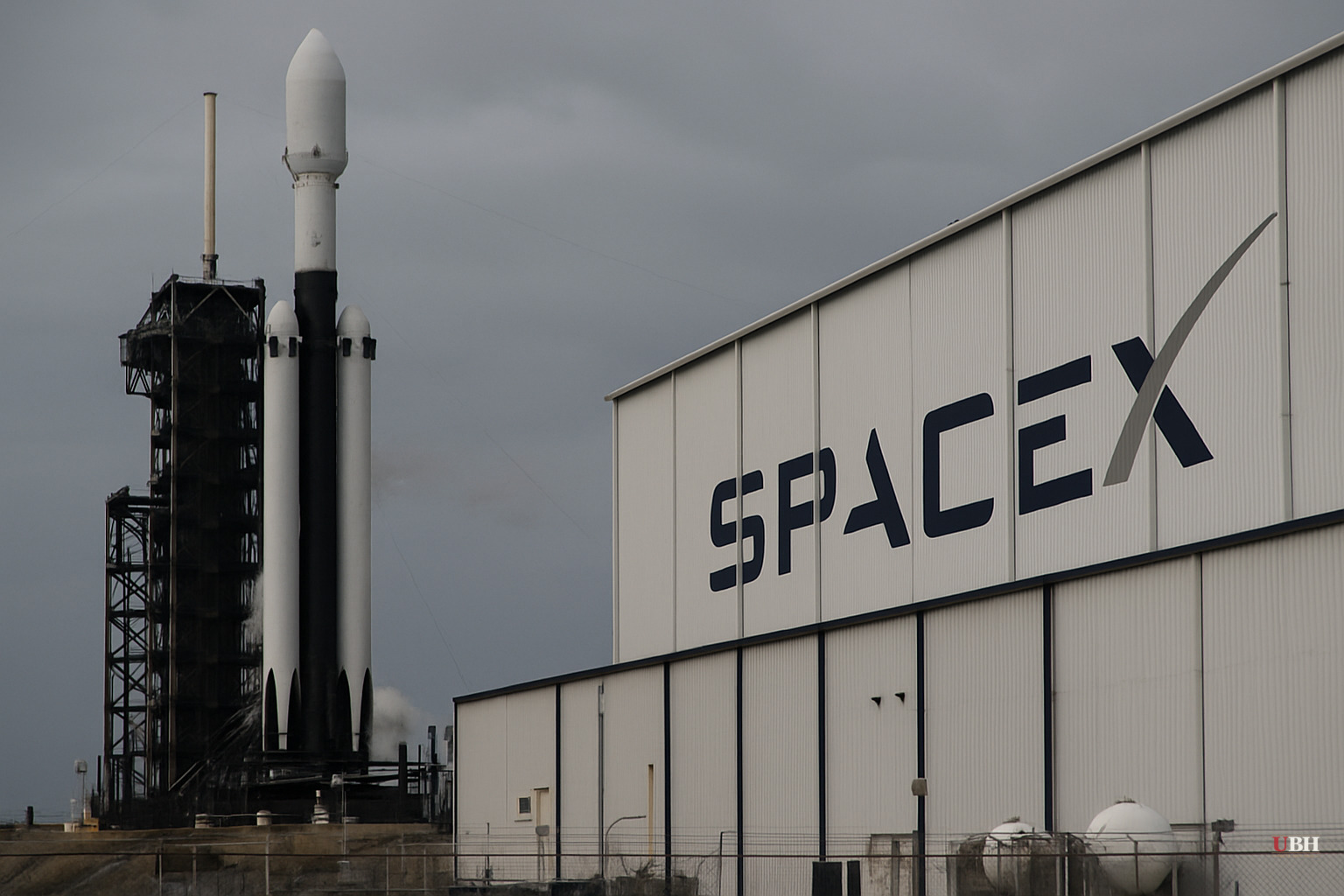
Since SpaceX's record-breaking IPO on June 12, the story has shifted from celebration to a more complicated picture: a national security disclosure, a significant stock pullback, and a debt offering that reveals how much financial engineering sits beneath the hype.
The China Investor Disclosure
ProPublica published a report today — June 18 — based on a private investor list it obtained through litigation. The list shows that at least a dozen investors with addresses in mainland China, Hong Kong, or Russia acquired stakes in SpaceX through a U.S. intermediary called Tomales Bay Capital. The investments ranged from $800,000 to $40 million and were made between 2018 and 2021. One name stands out. An entity tied to David Su, co-founder of Beijing venture capital firm MPCi, invested $15 million in a SpaceX fund in 2020, according to the investor list. Su's firm has backed several of SpaceX's Chinese competitors, and two of those satellite companies were sanctioned by the U.S. government for allegedly aiding Russian military operations, ProPublica reported. An entity linked to the Qatari royal family also appears on the list. SpaceX builds spy satellites for the Pentagon. While no law flatly prohibits Chinese nationals from investing in U.S. defense contractors, such investment is heavily regulated. SpaceX itself acknowledged the sensitivity: it barred investors from China and Hong Kong from participating in last week's IPO, citing "regulatory and compliance risks," according to Bloomberg. No investigation has been announced, and no charges have been filed. These are private investment records, not allegations of wrongdoing. The strongest defense here is straightforward: the investments were made years before the IPO through a regulated U.S. intermediary, they are relatively small relative to SpaceX's overall capitalization, and there is no public evidence that any investor received access to classified technology or sensitive government data. The U.S. government's concern is structural — that Chinese capital in defense-adjacent companies creates espionage vectors — not that any specific transaction has been proven harmful. The information was revealed only after ProPublica went to court to obtain it. That opacity is a legitimate governance concern, separate from whether anything illegal occurred.
The Stock Is Cooling Fast
SpaceX shares fell roughly 6% on Thursday to just under $180, according to CNBC. The stock hit an intraday high above $225 on Tuesday before the selloff began. The five-day volume-weighted average price sits at $179, meaning the average investor who bought shares in the open market after the IPO is approximately breaking even as of today. Retail investors who received IPO allocations at $135 still hold gains, though many got only a handful of shares through platforms like Robinhood, Fidelity, and SoFi, per CNBC. The governance structure gives outside shareholders minimal influence, as CNBC noted when SpaceX added Sequoia's Roelof Botha to the board on Wednesday as its eighth member.
What Analysts Are Saying Wall
Street price targets are all over the map. Arete Research set a $401 target for end of 2027, projecting 63% compound revenue growth through 2030 driven by Starlink and AI infrastructure. Oppenheimer's target is $250 over the next 12 to 18 months. Stephens put out a $296 target in a June 16 note. Wolfe Research analyst Myles Walton is more measured. In a June 12 note, Walton said SpaceX is "significantly behind Anthropic and OpenAI" on AI model capability, writing directly: "We don't expect SpaceX to out-innovate Anthropic or OpenAI on the model side." His own price target carries roughly 30% upside, but he flagged that the entire thesis collapses if "Starship doesn't work" or the company's "AI is hype." SpaceX lost approximately $5 billion in 2025 on revenue of more than $18.5 billion, according to Reuters citing reporting from The Information. Musk posted on X on Sunday that the company "might be able to reach approximately" $1 trillion in revenue by 2030. That is a projection from the CEO, not a guidance figure filed with regulators.
The
$20 Billion Bond Deal Days after the IPO, Bloomberg reported that SpaceX bankers are preparing investor calls as soon as next week for a bond offering of at least $20 billion. The proceeds would refinance a bridge loan of the same size that matures in September 2027. A bridge loan accounts for the bulk of SpaceX's $29.1 billion in long-term debt as of March 31, per the IPO prospectus. Bank of America, Citigroup, JPMorgan, Goldman Sachs, and Morgan Stanley provided the bridge financing and are expected to run the bond deal, according to ZeroHedge citing Bloomberg. This is SpaceX's first investment-grade bond issuance. It is not unusual for a newly public company to refinance bridge debt. The size, however, is notable.
Index Inclusion Starts Today
As of tonight's close, SpaceX is eligible for Russell 1000 inclusion — the index allows mega-IPOs after as few as five trading days, per CNBC. Nasdaq-100 inclusion follows on July 6. Once those additions take effect, millions of 401(k) and index fund holders will own SpaceX whether they chose it or not. Fidelity's parent FMR already holds 0.98% of outstanding SpaceX shares across 46 funds, according to S&P data. The unresolved question sitting at the center of all of this: the ProPublica investor list came from litigation, not voluntary disclosure. SpaceX has not publicly addressed whether it notified U.S. regulators about the pre-IPO Chinese stakes, or whether any government review of those investments has taken place.
Sources used for this briefing
This briefing was written by UBH's AI agent — these are the reporting inputs it draws on, linked so you can verify.