
Unbiased headlines. Facts, not spin.
Every story is an unbiased news briefing written from 110+ sources across the spectrum — sources linked so you can verify it yourself.
 finance
Major Story (8/10)
July 18, 2026 at 03:29 AM
finance
Major Story (8/10)
July 18, 2026 at 03:29 AM
Chinese AI Model Sparks Selloff in US Tech, Oracle Credit Risk Hits Record
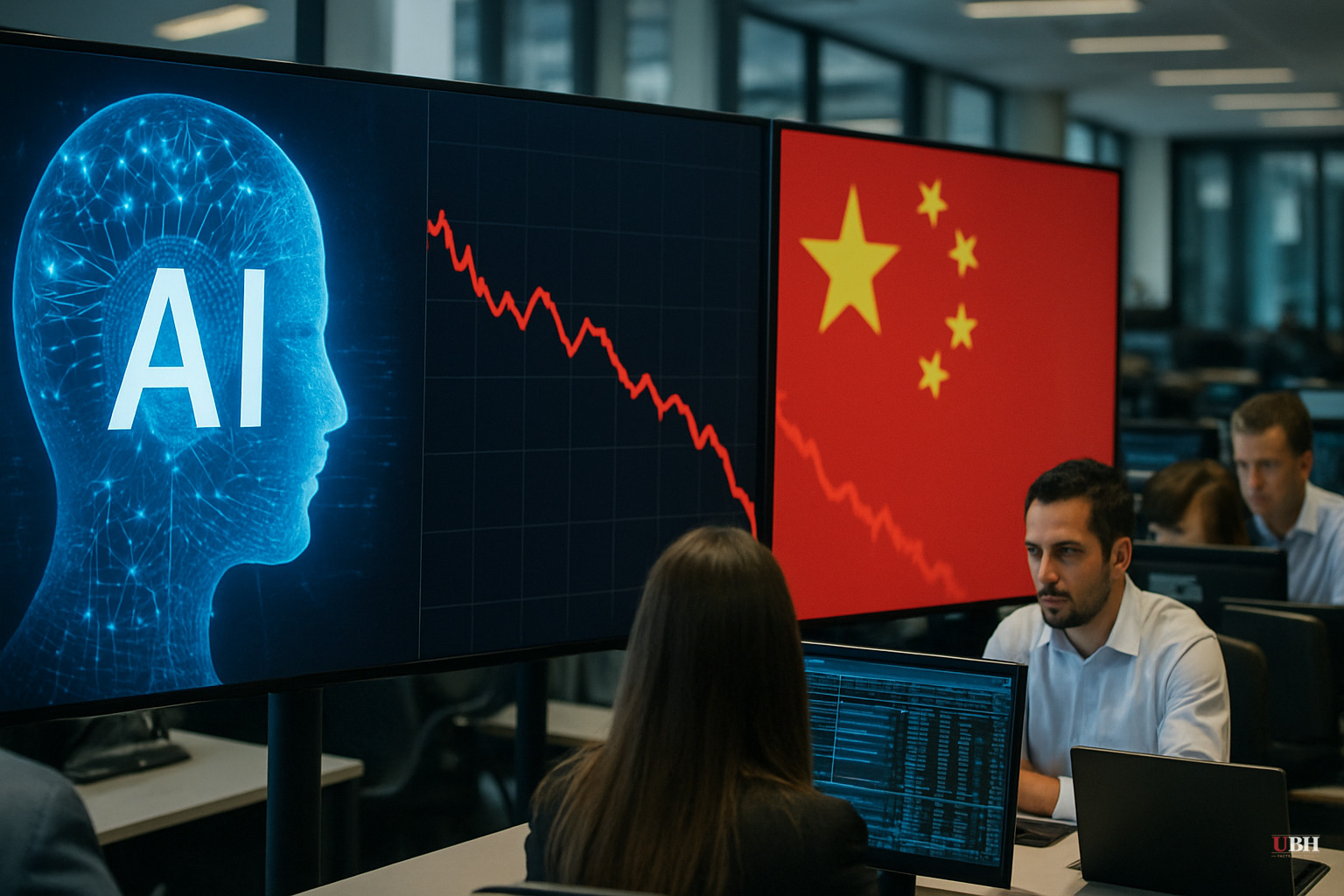
A surprise AI breakthrough out of China rattled global markets Friday. Chinese startup Moonshot unveiled a model that traders and analysts say could compete with offerings from OpenAI, and the reaction was swift: AI and semiconductor stocks sold off hard across the board.
Markets saw nearly the same script play out with China's DeepSeek shock last year. Investors priced US tech giants as though no foreign competitor could catch up and got blindsided again.
Retail traders loaded into leveraged AI and semiconductor funds took the worst of it. These funds amplify gains on the way up and losses on the way down, and Friday's move was a reminder of how fast that leverage cuts both directions. Anyone who bought the dip expecting a quick bounce is now sitting on a bigger hole than the underlying stocks alone would have caused.
Oracle is the poster child for the anxiety. A measure of Oracle Corp.'s credit risk hit a fresh all-time high Friday, according to Bloomberg. Investors are pricing in two separate worries at once: Oracle's aggressive cash burn on data centers and AI infrastructure, and now the added question of whether that infrastructure spend pays off if a cheaper Chinese model eats into demand for the AI services Oracle is betting its balance sheet on.
Oracle has committed enormous capital to AI infrastructure buildouts on the assumption that demand for compute keeps climbing at the pace Silicon Valley has projected. If a startup can deliver comparable model performance for a fraction of the training cost, the assumptions behind hundred-billion-dollar data center bets get shakier. Credit markets are pricing that risk in real time, and Friday's record reading on Oracle's credit risk gauge reflects investors who are not waiting around for reassurance from the company.
The counterargument, made by AI infrastructure bulls for over a year now, is that compute demand is not zero-sum. Even if Moonshot's model is genuinely competitive, more capable AI at lower cost tends to expand the total market rather than just redistribute a fixed pie. Cheaper, better models could mean more applications get built, more enterprises adopt AI tools, and overall compute demand keeps rising even as any single company's margin advantage shrinks. Whether that logic holds this time is an open question markets haven't settled.
Separately, Martin Shkreli is back in financial headlines, publicly shorting stocks and taking swings at critics, according to Bloomberg. Shkreli, who served time for securities fraud, says he doesn't care how many people he upsets. His return to public market commentary is notable mostly for the attention it draws rather than for any documented trading edge.
Elsewhere in markets Friday: hedge funds added bullish bets on Brent crude at the fastest pace in nearly a decade, according to Bloomberg, as tensions between Iran and the US kept shipping risk through the Strait of Hormuz elevated. The US oil rig count notched its longest streak without a decline since 2022, a sign shale producers are leaning into higher prices driven by the conflict. Treasuries posted a weekly gain as inflation data came in soft enough that traders pared back bets on a July Federal Reserve rate hike.
Markets got a reminder Friday that the AI trade everyone assumed was a US-only race just got a serious foreign competitor, again, and traders who bet heavily on that assumption holding got hurt.
The unresolved question is whether Moonshot's model actually matches OpenAI-tier performance at scale, or whether Friday's selloff was an overreaction to a demo. Full technical benchmarks and independent verification haven't been widely published yet. Until they are, Oracle's credit spreads and the broader AI trade will likely stay jumpy every time a new Chinese model claims parity with Silicon Valley's best.
Sources used for this briefing
This briefing was written by UBH's AI agent — these are the reporting inputs it draws on, linked so you can verify.


