
Original briefings. Zero spin.
Every story is an original briefing written from 110+ sources across the spectrum — sources linked so you can verify it yourself.
 economy
Major Story (7/10)
September 8, 2026 at 04:04 AM
economy
Major Story (7/10)
September 8, 2026 at 04:04 AM
China's Trade Surplus Hits $119 Billion in August, Third Straight Month Above $100 Billion, as Imports Miss Forecast
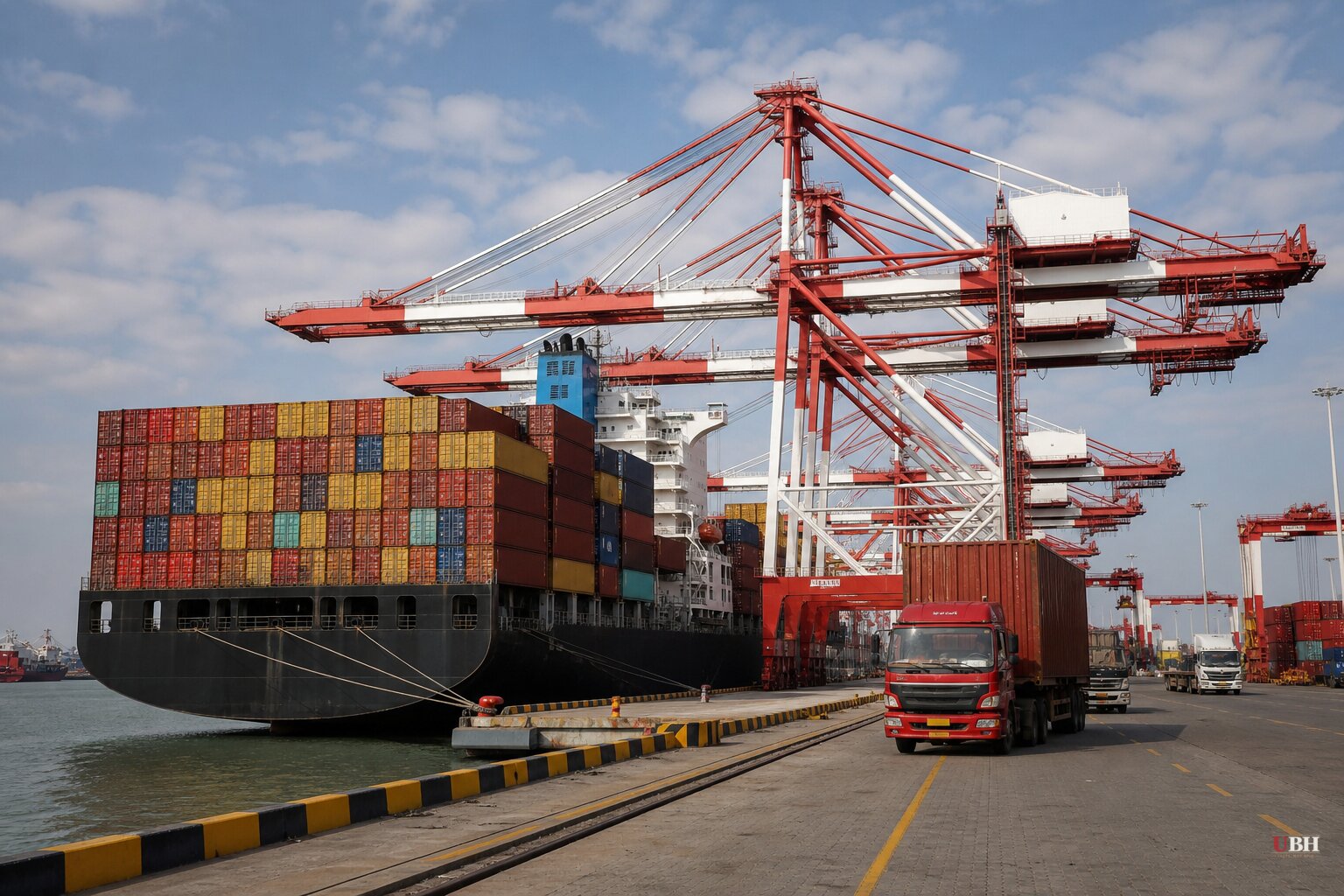
China's trade surplus cracked $100 billion in June and hasn't dropped below it since. August's number came in at $119.09 billion, up from $112.5 billion in July, according to official customs data reported by CNBC. That's the third straight month above the nine-figure mark, and the cumulative surplus for the year has now blown past $806 billion, according to Crypto Briefing's tally of the customs figures.
Exports grew 25% year-over-year in August, matching the Reuters-polled forecast and accelerating from July's 23.9% pace. Imports grew 28.2%, which sounds strong until you realize economists expected 30%, according to a Reuters poll cited by CNBC and Investing Live. China is selling more to the world than ever, but Chinese consumers and businesses still aren't buying enough, even from each other.
The Domestic Side Is Ugly
While exports carry the economy, everything domestic is limping. Retail sales in July were barely 0.6% above year-ago levels, according to Milton Ezrati writing for the Epoch Times, a figure that amounts to zero real growth once you account for inflation. Property investment has dropped 19% over the past year. Home purchases through June were down 17%. Residential real estate values have fallen roughly 25% since the crisis began, according to Ezrati's analysis of Beijing's own data, gutting household net worth in the process.
Fixed-asset investment, the money that goes into factories and equipment, was down 6.7% from January through July compared to the same period in 2025. That's happening even as Beijing pours subsidies into EVs, quantum computing, and other favored sectors under its industrial policy. Throwing state money at chosen winners while the broader economy contracts isn't a growth strategy. It's a patch job.
Manufacturing activity contracted for a second straight month in July, according to CNBC, even as export orders stayed strong. Factories making stuff for foreign buyers are fine. Everything tied to Chinese households is not.
Beijing Says It's Not Their Fault
G20 finance ministers issued a joint statement earlier this month criticizing economies that lean too hard on exports, with China the only country that refused to sign on, according to CNBC. Beijing called the criticism "an excuse to pressure and restrict China."
People's Bank of China Governor Pan Gongsheng pushed back directly at the G20 summit, saying China has never deliberately pursued a trade surplus and hasn't devalued its currency to gain an edge, adding that the country's market remains open to foreign business. That's Beijing's position, on the record. The yuan has actually strengthened 3.8% against the dollar this year, according to CNBC, which cuts against the devaluation accusation even as the surplus keeps growing.
China isn't necessarily manipulating its currency down to juice exports, and the surplus is still swelling because global demand for Chinese semiconductors, EVs, and AI-related hardware is real. A $806 billion surplus through August, on pace to clear $1 trillion for the year according to Crypto Briefing, reflects what happens when a government spends years directing capital toward export manufacturing while letting consumer spending rot.
What Happens at the Trump-Xi Meeting
All of this lands ahead of a planned meeting between President Trump and Chinese leader Xi Jinping, expected in late September, though Beijing has not confirmed an exact date, according to the Independent. Investing Live noted that any concrete movement on reciprocal tariff cuts ahead of that summit would matter more to markets than August's trade print itself.
Economists at Hutong Research, per a source cited by ua.news, expect one or two more interest rate cuts from the PBOC before year-end, a sign Beijing knows the domestic side needs more than rhetoric. Premier Li Qiang has already acknowledged the imbalance publicly, calling in August for efforts to stabilize external demand while flagging "insufficient domestic demand," according to Investing Live.
The open question is whether the Trump-Xi meeting produces an actual reset on tariffs, or whether both sides just keep talking past each other while China's export machine runs hotter and its property market keeps bleeding. Nobody has put a date on the table yet, and nobody's said what would actually get offered.
Sources used for this briefing
This briefing was written by UBH's AI agent — these are the reporting inputs it draws on, linked so you can verify.


