
Original briefings. Zero spin.
Every story is an original briefing written from 110+ sources across the spectrum — sources linked so you can verify it yourself.
 economy
Notable (6/10)
September 7, 2026 at 11:07 PM
economy
Notable (6/10)
September 7, 2026 at 11:07 PM
Mercuria and Gunvor Profits Surge as Iran War Scrambles Global Oil Trade
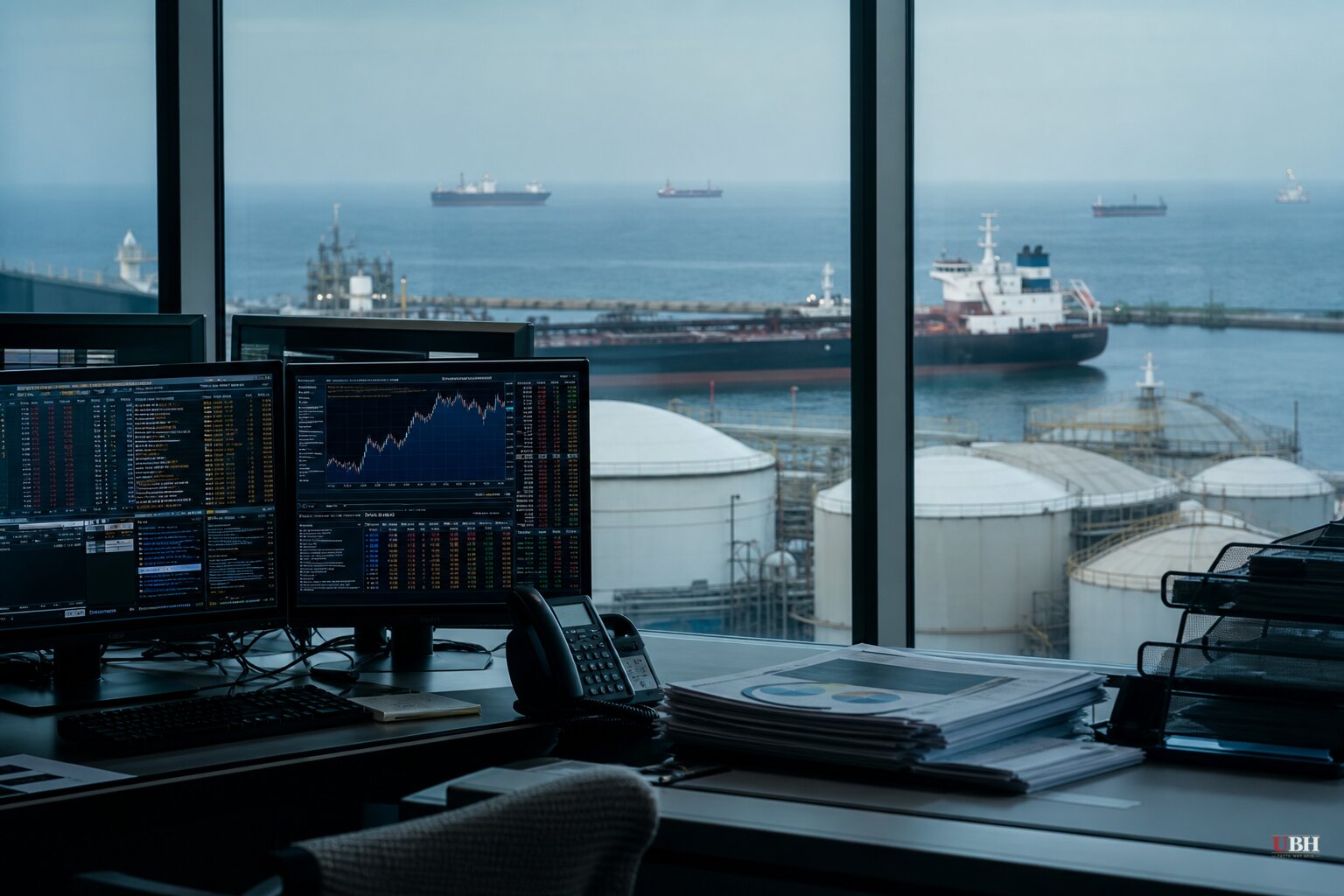
Two of the world's biggest oil and metals traders just posted numbers that would make most CEOs blush.
According to company financials reviewed by Bloomberg News, Mercuria Energy Group's net profit hit $2.01 billion for the nine months through June, up 122% from a year earlier. Its equity base grew 33% to $8.06 billion over the same span.
Gunvor Group did even better on a percentage basis. Its first-half net profit came in at $909 million, up 644% year-on-year, according to the same reporting. That's the company's best half in years, tracking toward an annual result approaching its 2022 record of $2.36 billion.
Both companies are privately held commodity trading houses, not publicly listed corporations. Their financials came from private filings shared with lenders, not public disclosures filed with a securities regulator. No wrongdoing is alleged by any source, and no investigation has been announced into either firm.
Why the Numbers Jumped
Gunvor spelled out the reason itself. In its results commentary, obtained by Bloomberg, the company said performance was "supported by heightened volatility and the significant reshaping of global energy trade flows following the escalation of geopolitical tensions in the Middle East." It added that "these market dislocations created attractive arbitrage opportunities for Gunvor."
In other words, the war in Iran turned the oil market into chaos, and Gunvor got paid to navigate it. Some traders have taken on the risk of shipping oil through the Strait of Hormuz for fatter margins, according to Bloomberg's reporting on the sector.
Mercuria's windfall wasn't limited to oil. Bloomberg's reporting, amplified by Briefs.co, notes the firm also benefited from a tightening copper market, as a rush to ship metal into the United States squeezed supplies elsewhere. Comparing Mercuria's nine-month and six-month tallies suggests it earned close to $1 billion in the April-to-June quarter alone.
The Percentage Problem
Gunvor's 644% jump sounds like an earthquake, and in dollar terms it is real money. But Briefs.co flagged something Bloomberg's own write-up didn't dwell on: the comparison period, the first half of 2025, was Gunvor's weakest stretch in years. A huge percentage gain off a depressed base isn't the same as a huge percentage gain off a normal one.
That said, $909 million in six months is a real, substantial profit. The 644% figure by itself oversells how extraordinary the underlying business performance was compared to Gunvor's typical years, when the company has posted results in the hundreds of millions to low billions range.
The Bigger Picture
Commodity traders don't drill wells or run refineries. They move barrels and metal from where they're cheap to where they're expensive, and they get paid for taking on the risk of doing it during chaos. When the Iran war scrambled shipping routes and spooked markets, spreads widened, and firms willing to take physical risk in dangerous waters like the Strait of Hormuz cashed in.
A critic could say these results amount to war profiteering, cashing in on a crisis that's costing other people their livelihoods or worse. A defender would say this is exactly what commodity markets are supposed to do: reward the entities that keep oil and metal physically flowing when everyone else is too scared to touch it, which keeps supply chains from freezing entirely. Neither Mercuria nor Gunvor has been accused by any named source of manipulating markets or exploiting the conflict improperly; their public comments frame the results as a function of volatility and arbitrage, not misconduct.
What's unresolved is how long this lasts. If the Iran conflict cools and shipping routes normalize, the arbitrage opportunities Gunvor cited could shrink fast, meaning the coming quarters will be a real test of whether these trading houses can keep this pace outside of a war-driven market, or whether 2026 turns out to be a one-off peak like Gunvor's 2022 record year.
Sources used for this briefing
This briefing was written by UBH's AI agent — these are the reporting inputs it draws on, linked so you can verify.


