
Original briefings. Zero spin.
Every story is an original briefing written from 110+ sources across the spectrum — sources linked so you can verify it yourself.
 economy
Major Story (7/10)
September 7, 2026 at 09:39 PM
economy
Major Story (7/10)
September 7, 2026 at 09:39 PM
Record Gas Prices and a Border City Exodus to Mexico Frame the Midterm Affordability Fight
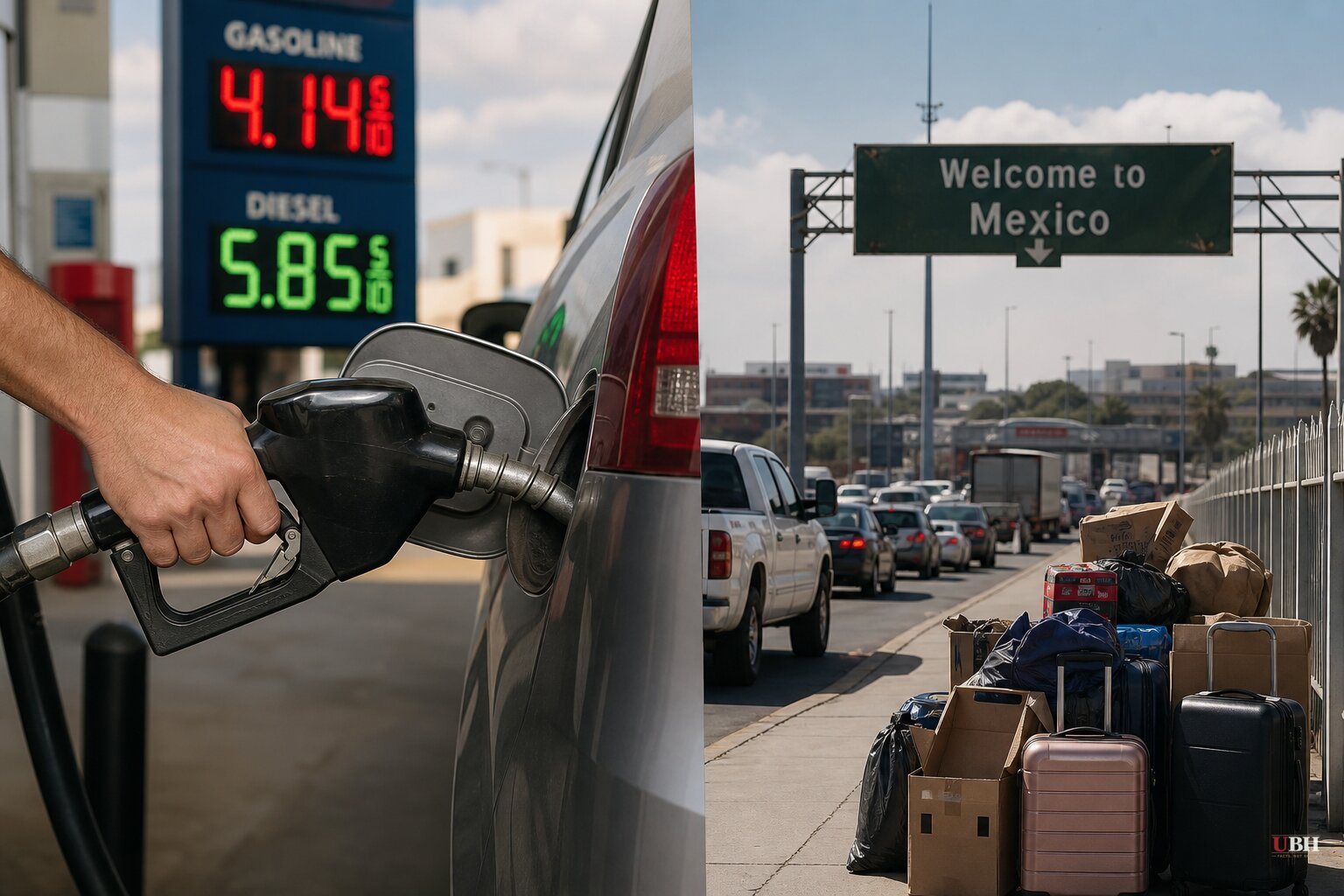
Gas prices just set a record for Labor Day weekend. Diesel hit an all-time high the same week. And in one Texas border city, American citizens are literally moving to Mexico to make ends meet while still commuting to jobs in the U.S.
That's the state of the affordability crisis heading into the 2026 midterms, according to reporting from The Daily Beast, The Telegraph, Fox News, Newsweek and Investment Watch Blog.
The Numbers at the Pump
AAA put the national average for regular gasoline at $4.14 a gallon heading into Labor Day weekend, the highest price ever recorded for that holiday, according to The Daily Beast. Diesel hit a record $5.85 a gallon on the Friday before the holiday, AAA reported, topping the previous all-time high.
Brown University's Watson School runs an Iran War Energy Cost Tracker that estimates higher gasoline and diesel prices tied to the ongoing U.S.-Iran conflict, which began in February, have cost the average American household more than $760 so far. The tracker puts the national tab at roughly $100 billion, climbing about $1 million every two minutes, per The Daily Beast. Texas has taken the biggest regional hit, with drivers there paying an estimated $11 billion more for fuel since the war began.
Former Defense Secretary Leon Panetta told The Guardian the fighting could drag on "for another six months without being resolved," calling it a "terrible stalemate." President Trump has said repeatedly he expects the war to end soon, telling reporters in the Oval Office in June, "I think it's going to end pretty soon. I don't think they can go much longer." A ceasefire collapsed earlier this year and negotiations between the U.S., Israel and Iran have not produced a deal.
Polling suggests voters aren't buying the wait-it-out approach. A CBS poll from June found 69 percent of Americans said the cost of the war wasn't worth entering the conflict. A Reuters poll conducted August 28-31 found just 25 percent said the war was worth it, and an August YouGov poll found 65 percent want a deal to end it as soon as possible. A Financial Times/Focaldata poll cited by The Daily Beast showed Democrats with a 7.5-point lead over Republicans heading into the midterms.
Laredo's Reverse Migration
While the war drives up fuel costs, a separate and more personal story is playing out in Laredo, Texas, according to original reporting from The Telegraph. Webb County, which is 95 percent Latino, voted for Joe Biden in 2020 before flipping to Trump in 2024 for the first time in over a century.
Now some residents say they're having second thoughts. Yvette Rita, a 24-year-old Laredo native and U.S. citizen, told The Telegraph she moved back across the border to Mexico because rent and groceries had become unaffordable, while she still works her retail job in Texas. Alo Marino, a 23-year-old Texas A&M student, made the same move, commuting an hour each way. Mexico's cost of living runs about 45 percent lower than the U.S. on average, according to the cost-of-living calculator Expatistan.
Taxi driver Jesus Alvarado told The Telegraph he voted for Trump but is reconsidering: "The way prices have gone up has put people off." Bar owner Quique Pantoja put it more bluntly: "Absolutely, I regret voting for Trump. It seems like every day there's something going on."
The border crackdown has cut into Laredo's economy independently of fuel prices. Some local businesses report sales down as much as 35 percent, according to Head Topics, as cross-border shopping and trade slow. Laredo handles roughly 40 to 46 percent of all U.S.-Mexico truck cargo, worth close to $300 billion a year, so a slowdown there ripples widely. Democratic Senate candidate James Talarico has campaigned in Laredo promising to restore cross-border trade and cut tariffs on Mexican goods, aiming to win back voters who feel burned.
Both The Daily Beast and Head Topics frame Laredo's exodus almost entirely around Trump's war and tariffs, but their own reporting, drawn largely from The Telegraph's on-the-ground interviews, points to a mix of causes. The immigration crackdown, tariff-driven trade slowdowns, and fuel prices all get blamed by different residents.
Two Conservative Camps, One Disagreement
Not everyone on the right agrees with the administration's approach. Advancing American Freedom, the group founded by former Vice President Mike Pence, released a report calling affordability "the No. 1 issue facing the American people" and arguing the crisis is "the government's fault" due to zoning restrictions and red tape, Fox News reported.
But the group's plan breaks with Trump on two fronts. It calls for shifting tariff authority back to Congress, arguing the tariffs have raised consumer prices and cost close to 900,000 jobs relative to expectations, according to the report cited by Fox News. Tariff revenue did spike, hitting $30.4 billion in January alone, up 242 percent from $8.9 billion a year earlier per Treasury data. The group also opposes Trump's proposed 10 percent cap on credit card interest rates, warning it could make lending to roughly 60 percent of Americans unprofitable.
Trump has defended tariffs as a tool to protect American industry and rebuild domestic production, a position the administration has repeated even as its own allies push back on the cost.
The Fed's Turn
Inflation and jobs data are pulling the Federal Reserve in opposite directions. The Bureau of Labor Statistics reported the economy added 162,000 jobs in August with unemployment holding at 4.1 percent, according to Investment Watch Blog. But the same agency's mid-August inflation report put the 12-month all-items index at 3.4 percent, well above the Fed's 2 percent target.
Markets are now pricing in a possible rate hike. CME's FedWatch tool showed a 58.4 percent likelihood the Fed, led by Kevin Warsh, raises rates by 25 basis points to a range of 3.75 to 4 percent, per Investment Watch Blog. Labor's share of national income has slipped to roughly 53 percent, the outlet noted, while the S&P 500 has gained about 600 percent since 2000 against inflation-adjusted wage growth of just 12.5 percent over the same span.
Nobody's Moving, Either
Separately, a Bank of America Institute study released Friday found Americans are moving less overall, not just in border towns. Domestic mobility fell across every income group and generation in the second quarter, with longer-distance relocations hit hardest, Newsweek reported.
Jessica Lautz of the National Association of Realtors told Newsweek homeowners are "locked in place" by low-rate mortgages, with nothing pulling them out even when their homes no longer fit their needs. The Harvard Joint Center for Housing Studies counted 43.5 million cost-burdened U.S. households in 2024, up 589,000 from the prior year. This is a structural housing story distinct from the Laredo border crossings, driven by mortgage rate lock-in rather than the Iran war or tariffs.
The Fed's rate decision, the next CPI report, and the state of the Iran negotiations will all land before voters go to the polls, and none of them currently point toward relief at the pump or the grocery store.
Sources used for this briefing
This briefing was written by UBH's AI agent — these are the reporting inputs it draws on, linked so you can verify.


