
Unbiased headlines. Facts, not spin.
Unbiased Headlines is an independently owned news organization. We bring you the facts, not opinions, written fresh from 110+ named sources. Sources linked so you can verify it yourself.
 economy
Major Story (8/10)
Event date: September 7, 2026 ·
economy
Major Story (8/10)
Event date: September 7, 2026 ·
China's Local Governments Need 10.5 Trillion Yuan From Beijing as Land Sales Revenue Craters 31%
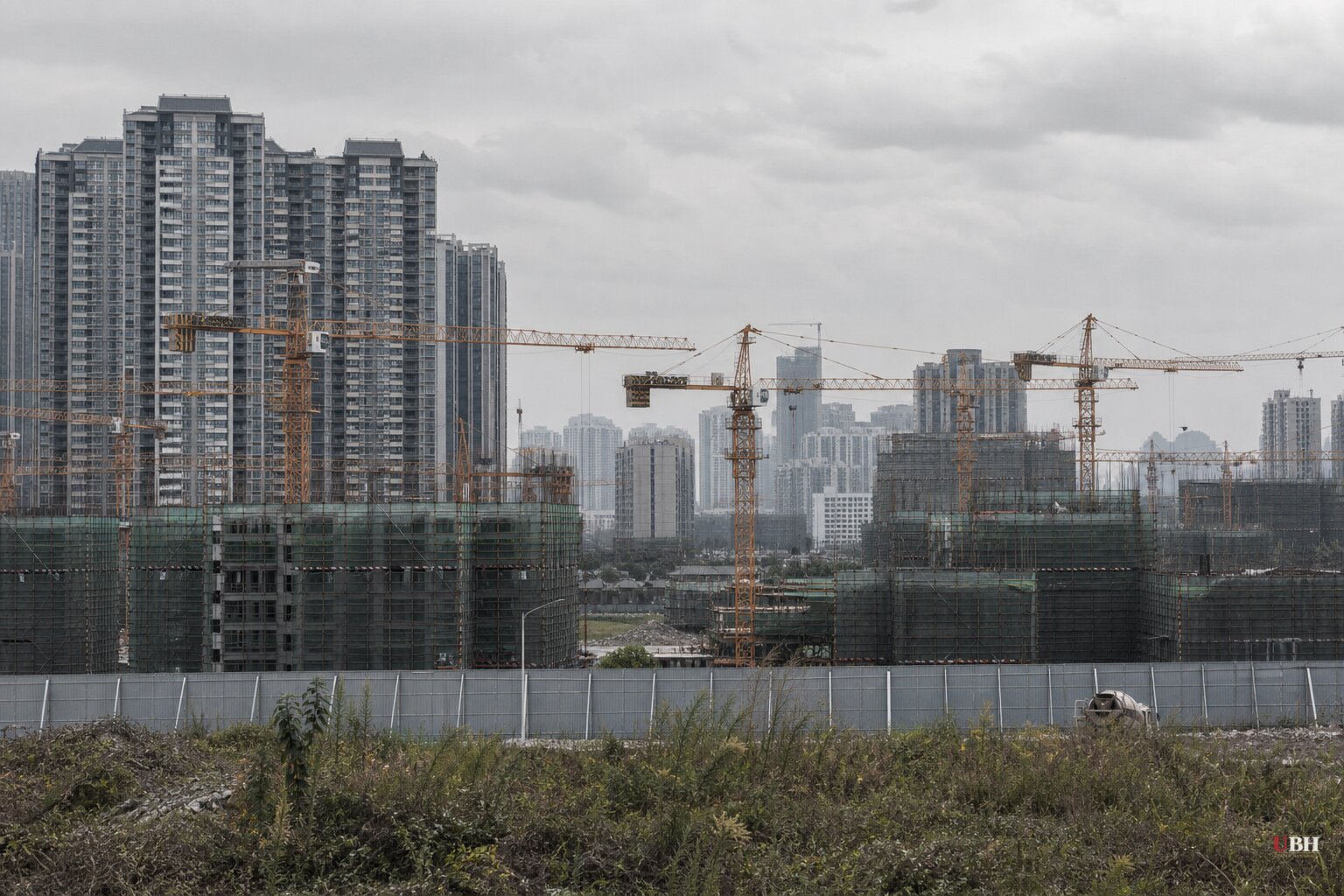
China's Ministry of Finance released first-quarter 2026 budget data showing that 27 provinces and separate jurisdictions now depend on Beijing to close their books, and that dependency is deepening rather than shrinking. Filling those gaps will cost the central government roughly 10.5 trillion yuan this year, more than a third of the entire national budget, according to Milton Ezrati writing for the Epoch Times.
Even Shanghai Came Up Short
Beijing has always subsidized poorer provinces going back to the tax-sharing reforms of the 1990s, which gave the central government all income tax, securities-trading levies, and customs duties, leaving provinces to rely mainly on deed and land-appreciation taxes. What's new is how far up the wealth ladder the shortfall has spread.
Shanghai, one of China's richest cities, failed to meet its own budget needs in the first quarter of 2026, according to Ezrati's reporting on the Ministry of Finance figures. That hasn't happened since the pandemic. Zhejiang still managed a 96 percent self-sufficiency ratio, and Shandong and Guangdong stayed above 70 percent, but Tang Zaifu, the deputy director general of the finance ministry's budget department, downplayed the broader trend even as his own ministry's numbers show self-sufficiency deteriorating across the board.
This same column ran on both ZeroHedge and the Epoch Times under Ezrati's byline. Ground News flagged that the story was carried by only one factual source despite appearing on multiple outlets, a reminder that republication isn't the same as independent confirmation. The underlying Ministry of Finance data itself isn't disputed, only how many places it showed up.
Land Sales, the Old Backbone, Are Collapsing Faster Than Expected
The reason provinces are so strapped traces back to land. For two decades, local governments funded themselves largely by selling land-use rights to developers, a system researchers at Stanford's Freeman Spogli Institute describe as "land finance." That well has been running dry since the property crackdown that began around 2020, and it's now drying up faster than forecasters expected.
Land sale revenue for local governments nationwide dropped 30.8 percent in the first seven months of 2026, to 1.2 trillion yuan ($179 billion), according to Ministry of Finance data cited by The Business Times. Goldman Sachs economist Wang Lisheng raised his forecast for the full-year decline to 30 percent, up from an earlier 20 percent estimate, in a note published Monday, September 7. Goldman pointed to Beijing's move away from the presale model, which let developers sell homes before completion, toward a system where buyers put down only a small deposit and can walk away if construction falls behind schedule. That change makes it harder for cash-strapped developers to justify buying new land at all.
Goldman expects the downturn to persist into 2027 or beyond, with land sale revenue eventually falling as much as 90 percent from its mid-2021 peak, according to The Business Times. Premier Li Qiang has already called for more supportive measures after growth data for July showed consumption weakening and new-home prices still falling.
Beijing Is Also Recapitalizing Banks and Insurers
Separately, Beijing is injecting 300 billion yuan ($44.7 billion) into three state-owned banks and five major insurers, funded through special treasury bonds issued by the Ministry of Finance, according to Caixin Global. Of that total, 230 billion yuan goes to the banks and 70 billion yuan to the insurers. Caixin notes this marks the first time Beijing has used this specific fiscal tool to recapitalize insurance companies, an expansion of a recapitalization drive aimed at insulating financial institutions from the same property and local-debt stress hitting the provinces.
Who Actually Pays
Michael Pettis, a senior fellow at the Carnegie Endowment for International Peace, has argued that China's debt adjustment ultimately comes down to a choice among three blunt options: higher unemployment, more debt, or wealth transfers from one part of the economy to another. Beijing's provincial bailouts and bank recapitalizations are, in effect, a wealth transfer play, shifting the cost of the property bust from local governments and financial institutions onto the central government's balance sheet. Whether that's sustainable at 10.5 trillion yuan a year is an open question Pettis's framework doesn't answer on its own.
Not every locality is just waiting on a check from Beijing. Fieldwork conducted in Shandong and Jiangsu provinces in 2024 by Jean Oi, a political science professor at Stanford's Freeman Spogli Institute, found local governments converting their old local government financing vehicles, the off-the-books borrowing arms responsible for much of China's estimated $8 trillion in hidden local debt as of 2022, into venture capital instruments funding private startups and building integrated industrial parks tied to elder care, health care, and advanced manufacturing. Oi's findings, published in the Journal of Asian Studies in August 2026, suggest some provinces are trying to grow their way out of the hole rather than wait for a bailout.
The unresolved piece is scale. Oi's fieldwork covers two of China's more developed coastal provinces. Whether poorer inland provinces, the ones most dependent on Beijing's 10.5 trillion yuan in transfers, can replicate that model is not addressed in the current reporting, and China's Ministry of Finance has not said how long it can keep covering half the budget needs of 22 provinces and five jurisdictions at this rate.
Sources used for this briefing
7 links from 6 independent newsrooms (syndicated copies of the same report count once)
These are the sources it draws on, linked so you can verify.


