
Unbiased headlines. Facts, not spin.
Every story is an unbiased news briefing written from 110+ sources across the spectrum — sources linked so you can verify it yourself.
 finance
Notable (6/10)
July 22, 2026 at 01:59 PM
finance
Notable (6/10)
July 22, 2026 at 01:59 PM
China's Tax Revenue Grows 4.7% While Land Sales Collapse Another 31.5%
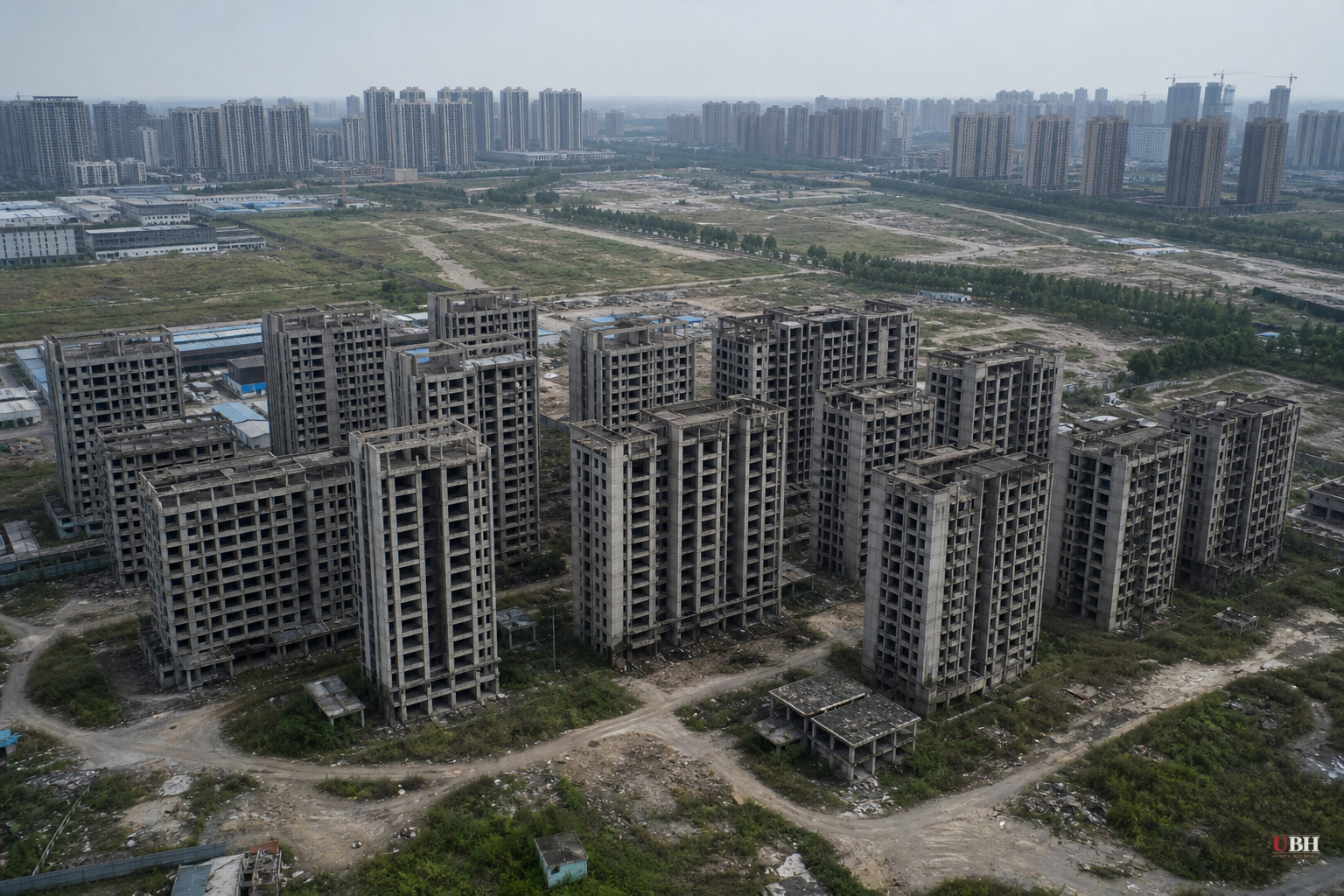
China's finance ministry announced Wednesday that national fiscal revenue rose 4.7% in the first half of 2026 compared to a year earlier, an acceleration from the 4% pace recorded in the January-May stretch, according to Reuters. Total revenue hit 12.1 trillion yuan, roughly HK$14.01 trillion.
Tax revenue drove the growth, up 5.3% year-on-year. Non-tax revenue, things like fines, fees, and asset sales, grew only 2.3%. Fiscal spending rose just 1.5% in the first half, up from a 0.8% gain through May, according to the ministry's data reported by Reuters.
Revenue from government land sales cratered 31.5% to 977.8 billion yuan in the first half, worse than the 28.7% drop recorded through May. Chinese local governments have run on land sale money to developers for years. That well is running dry, and it's been running dry since the real estate downturn began in mid-2021, per Reuters.
Beijing needed tax collection to grow harder specifically because the property-driven revenue stream that funded roads, schools, and local salaries for two decades is diminishing. The decline has continued for five years since the property downturn began.
Finance ministry official Tang Zaifu told reporters Wednesday that China will run a "proactive fiscal policy" to support investment and consumption, according to Reuters. Another official, Zhao Zeyong, said Beijing will tighten management of local government debt and speed up fund allocation. He noted local governments issued 2.07 trillion yuan in special bonds in the first half, about 47% of this year's full quota, per the same Reuters report carried by The Standard.
Local governments are borrowing more to plug the hole left by land sales. Special bonds are debt. When a government replaces a broken revenue stream with more borrowing and calls it "proactive fiscal policy," the mechanism becomes clear.
The Bigger Picture: A Slowing Economy
China's overall economy expanded at its slowest pace in more than three years during the second quarter, according to Reuters, with sluggish consumption offsetting strength in manufacturing and exports. Higher taxes, weaker property, more local debt, and slower growth form the backdrop for this fiscal data.
On the positive side, 4.7% headline fiscal growth beats the prior period's 4%, representing an improvement. Beijing has also openly acknowledged the property problem rather than hiding it, which is more transparency than authoritarian governments typically offer on bad economic news. Officials aren't pretending land sales are fine. They're naming the debt tool they're using to cover the gap.
But naming a problem isn't the same as solving it. Land sale revenue has now declined for multiple consecutive reporting periods, each one worse than the last, five years after the property downturn started. If a "proactive fiscal policy" hasn't reversed that trend by mid-2026, it's fair to ask what tools Beijing has left beyond more special bonds.
What's Missing From the Coverage
The Standard's write-up, sourced from Reuters, lays out the numbers cleanly but doesn't dig into who's actually paying the higher tax bill. A 5.3% jump in tax revenue against fiscal spending growth of just 1.5% (GDP growth for the second quarter was reported separately as the weakest in three-plus years) suggests the tax burden may be rising relative to the pace of government outlays and broader economic activity. Ordinary Chinese businesses and households already squeezed by the property downturn and a soft job market may feel this pressure acutely. Neither Reuters nor The Standard's report breaks out which sectors or income groups are shouldering that heavier tax load.
The next data points to watch: whether land sale revenue keeps falling through the third quarter, how much of the 2.07 trillion yuan in special bonds already issued gets deployed versus sitting idle, and whether Beijing's finance ministry adjusts its full-year revenue target when it reports July-August figures. No date for that next release was given by officials on Wednesday.
Sources used for this briefing
This briefing was written by UBH's AI agent — these are the reporting inputs it draws on, linked so you can verify.


