
Original briefings. Zero spin.
Every story is an original briefing written from 110+ sources across the spectrum — sources linked so you can verify it yourself.
 economy
Major Story (7/10)
Event date: August 18, 2026 at 12:00 AM
economy
Major Story (7/10)
Event date: August 18, 2026 at 12:00 AM
China's State Funds Dump Moutai Stock as Liquor Giant Posts First Profit Drop in Over a Decade
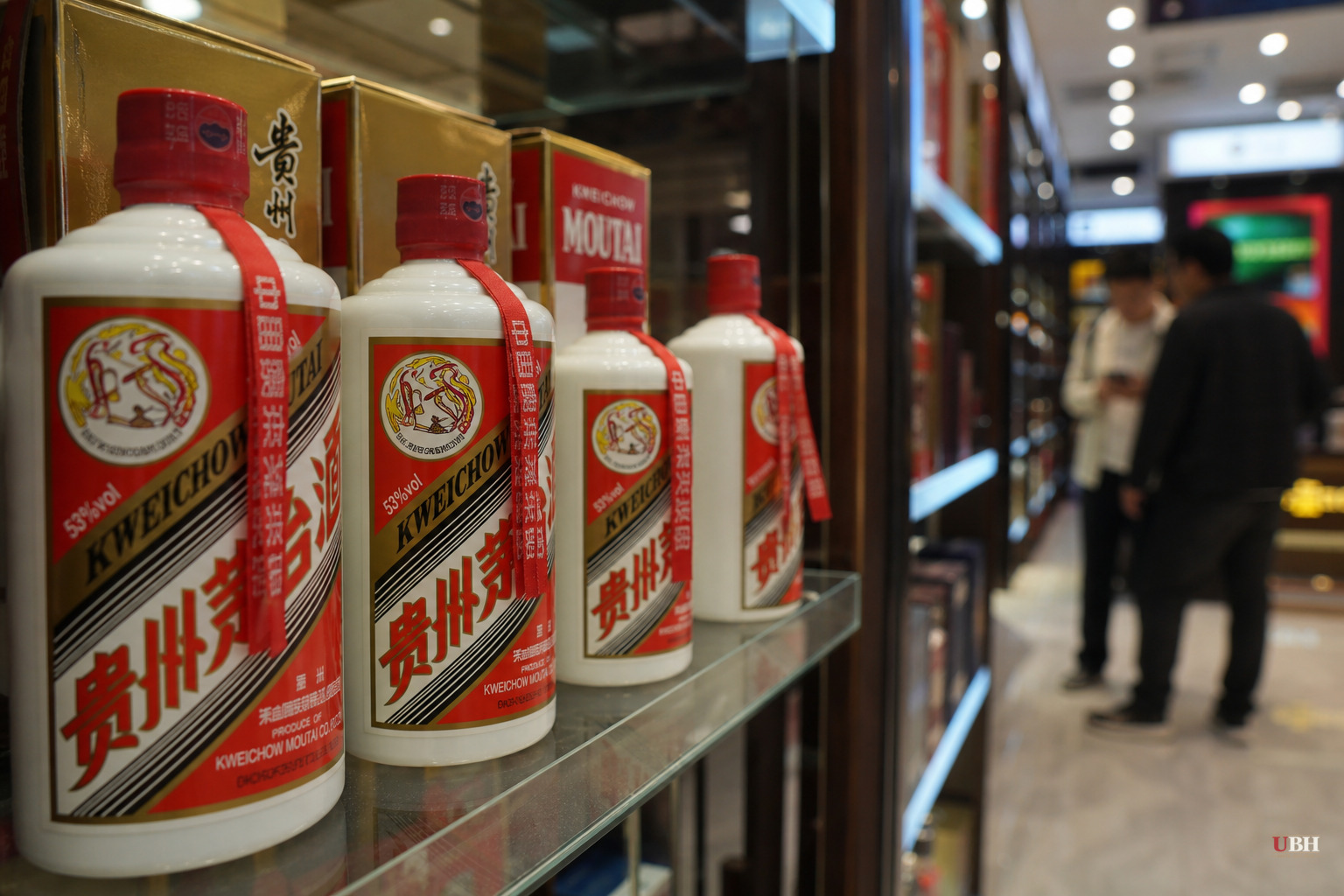
Kweichow Moutai spent two decades as the most reliable stock in China. That streak is over.
The maker of China's iconic 53%-alcohol baijiu reported net profit of 44.5 billion yuan ($6.6 billion) for the first half of 2026, down 1.95% from a year earlier, according to CNBC. That's the first first-half profit decline since 2014 and only the second one in company data going back to 2002, per Wind Information figures cited by CNBC. Revenue actually rose 1.47% to 90.7 billion yuan, according to WEEX Crypto News, but costs and shifting demand ate into the bottom line anyway.
It's not a one-quarter blip. Moutai's full-year 2025 net profit fell 4.5%, the first annual decline on record, CNBC reported. The stock has now lost money on an annual basis for four straight years and is down more than 40% from its peak five years ago, according to the South China Morning Post.
Beijing's Own Investors Are Bailing
The government's own "national team" is heading for the exits.
Central Huijin Investment and China Securities Finance, both state-backed funds that intervene to prop up Chinese markets during rough patches, dropped out of Moutai's top 10 shareholders in the second quarter, according to the SCMP and confirmed by CNBC. Central Huijin held 10.4 million shares as of the first quarter, making it the fifth-largest shareholder. China Securities Finance held 4 million shares, good for 10th place. By the end of the second quarter, both had fallen below the roughly 3.5 million share threshold needed to crack the top 10, per SCMP.
Dropping out of the top 10 doesn't mean a total sell-off. SCMP notes the funds may still hold smaller stakes. But when the entities created specifically to stabilize Chinese stocks are quietly reducing their footprint in the country's most iconic company, that signals something significant. Citi told CNBC that institutional investor sentiment on Moutai likely "troughed" around this shareholder exit.
Shares fell 3.9% on August 17, dropping below 1,300 yuan, according to WEEX Crypto News. The stock's year-to-date loss stood at 5.7% as of August 18, per CNBC.
Why Nobody's Drinking Baijiu at the Office Anymore
Ye Yuhua, a fund manager at Ba Luo Fund, told CNBC this is structural, not cyclical. Baijiu was the drink of China's real-estate-and-infrastructure boom years, the stuff poured at government banquets and business dinners to seal deals. As that economy shifts toward tech, the new crowd of AI and semiconductor dealmakers just isn't drinking the stuff. "It's an irreversible trend," Ye said. "Baijiu has become a saturated market."
There's also the corruption angle. Xi Jinping's anti-corruption campaign, launched in 2012, specifically targeted premium baijiu because bottles had become a favored bribery currency for Communist Party officials, according to Breitbart. That crackdown hit home hard in April 2026 when a court sentenced Yuan Renguo, Moutai's former chairman, to life in prison for accepting more than $17.5 million in bribes between 1994 and 2018, Breitbart reported. Yuan was expelled from the party in 2019 after investigators found he'd engaged in "family-style corruption" and helped illegal resellers move Moutai product. The stock barely reacted to the sentencing, ticking up 0.92% the day it was announced, a sign the market had already priced in Yuan's fall years ago, Breitbart reported.
The Bigger Economic Picture
Moutai's slump reflects broader economic weakness. China's National Bureau of Statistics data released August 17 showed industrial production growing just 4.5% year-over-year in July, the first slowdown in three months, according to the Straits Times. Retail sales grew only 0.6%, missing forecasts, per the Epoch Times, which noted analysts surveyed by Reuters had expected a much stronger 4.8% rise in a related metric. Fixed-asset investment shrank 6.7% in the first seven months of 2026, worse than economists expected and a sharper drop than the first half's 5.7% contraction, the Epoch Times reported.
The property sector, which economists estimate makes up more than half of Chinese household wealth, remains in its fifth year of decline. New home prices fell 3.2% year-over-year in July, and only 17 of 70 tracked cities saw month-on-month price gains, according to the Epoch Times. Real estate investment plunged 19.2% in the first seven months of 2026.
Jacqueline Rong, chief China economist at BNP Paribas, told the Straits Times the July data suggests GDP growth likely slowed to around 4.1%, below the 4.3% pace Beijing needs in the second half to hit its annual growth target of 4.5% to 5%. The surveyed urban jobless rate climbed to 5.2% in July from 5% in June, per the Straits Times.
China's National Bureau of Statistics chief economist Fu Linghui blamed part of the weakness on extreme weather, including typhoons and heavy rainfall that shut down factories and ports and forced evacuations, the Straits Times reported. Weather disruptions can genuinely dent a month's output without reflecting deeper structural problems. But Lynn Song, chief economist for Greater China at ING, told the Epoch Times the weather explanation doesn't cover the whole story: "China's K-shaped divergence continues to widen, and risks to the growth outlook remain balanced to the downside."
China is leaning harder on exports to fill the gap. The country posted a trade surplus exceeding $100 billion in July and is on pace to hit $1 trillion for a second straight year, according to the Epoch Times. Roughly 30% of that surplus came from shipments to the European Union, with exports to Germany alone outpacing imports by more than $4 billion, an 87% jump from a year earlier. That kind of export dependence is exactly what's fueling talk in Washington and Brussels about new tariffs on Chinese overcapacity.
Song told the Straits Times the deteriorating data raises "higher odds for some support in the coming weeks and months to help stabilise growth." No new stimulus has been announced as of this writing. Whether Beijing moves before the next round of economic data lands is the open question hanging over both Moutai's stock and the broader Chinese economy.
Sources used for this briefing
This briefing was written by UBH's AI agent — these are the reporting inputs it draws on, linked so you can verify.


