
Unbiased headlines. Facts, not spin.
Every story is an unbiased news briefing written from 110+ sources across the spectrum — sources linked so you can verify it yourself.
 finance
Notable (6/10)
June 17, 2026 at 05:12 AM
finance
Notable (6/10)
June 17, 2026 at 05:12 AM
China's Securities Regulator Pushes Active ETFs, More AI IPOs, and STAR Board Reforms as Offshore Stocks Slide
Since this publication's prior coverage of SpaceX and U.S. capital markets through mid-June, China's regulatory posture on its own markets has shifted into a notably more activist gear.
What Wu Qing Said on Wednesday
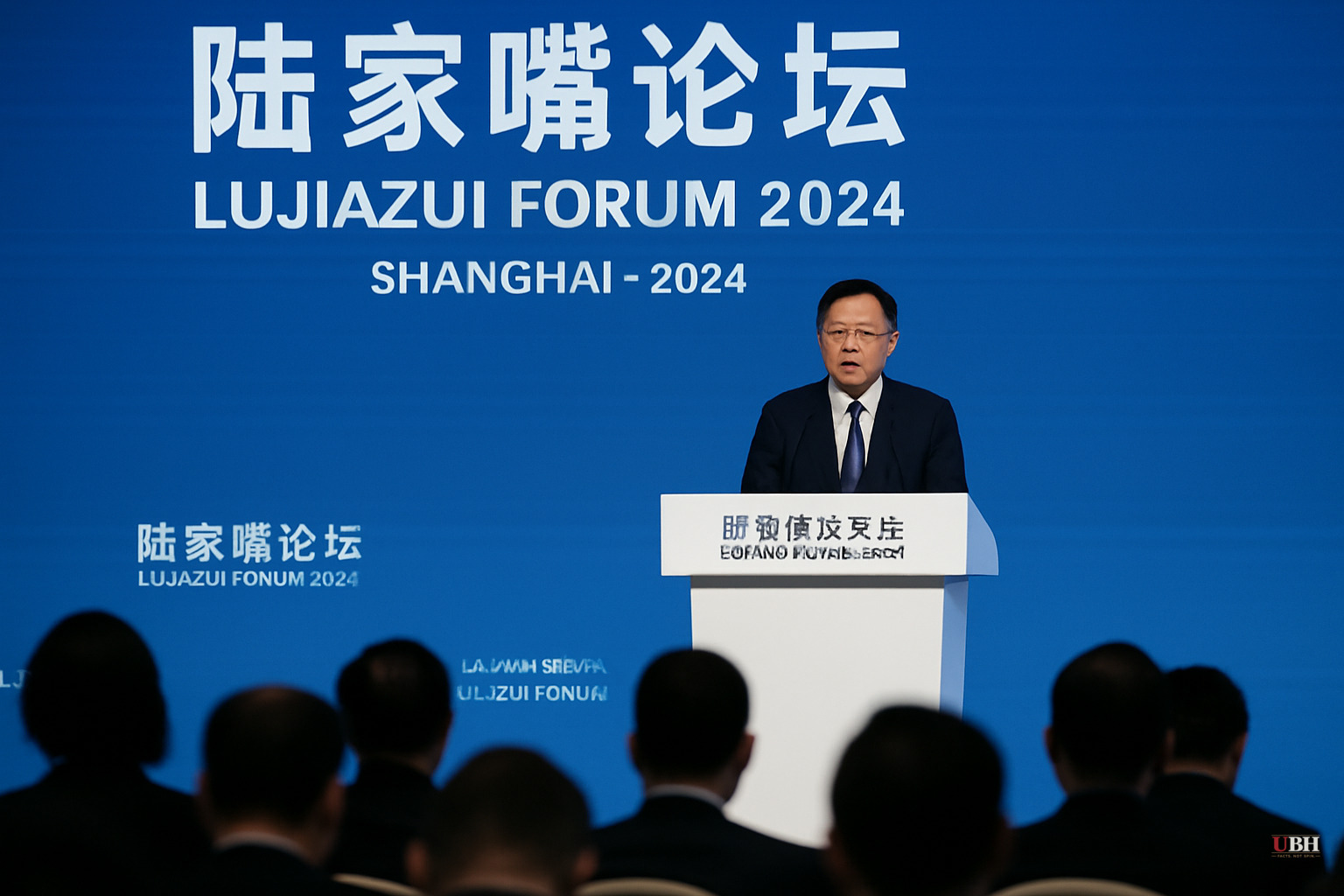
China Securities Regulatory Commission Chairman Wu Qing addressed the annual Lujiazui Forum in Shanghai on June 17, according to Bloomberg News. Three announcements came out of that appearance.
First, China will support the rollout of actively managed exchange-traded funds on the Shanghai and Shenzhen exchanges. Wu gave no timeline. Active ETFs are standard in U.S. and European markets but have been tightly restricted in China, so the greenlight is a structural shift, not a minor tweak.
Second, the CSRC will release two new reform packages for the STAR board, China's tech-heavy listing venue that was designed to attract high-growth companies. Wu said the regulator wants more domestic listings from artificial intelligence developers.
Third, Wu pledged to welcome Hong Kong-listed firms to list onshore as well, a dual-listing push aimed at deepening liquidity in mainland capital markets.
No specific implementation dates were attached to any of the three commitments.
The Market Context Those Announcements Are Walking Into
The policy optimism is running headlong into a rough stretch for Chinese equities. Bloomberg reported on June 16 that Chinese stocks listed in Hong Kong are approaching bleak milestones. The problem is structural: the offshore benchmark (the Hang Seng China Enterprises Index) is dominated by internet and consumer companies, and those names are losing the global rotation trade to chipmakers and AI supply-chain players listed on the mainland and in other North Asian markets.
Weak earnings growth and easing liquidity are compounding the pressure, according to Bloomberg. Investors are not abandoning China wholesale. They are being selective, favoring the mainland-listed hardware and semiconductor names over the offshore consumer giants.
That split matters for what Wu is trying to do. Encouraging more AI companies to list on STAR makes sense as a response: those are precisely the names attracting capital right now. But the offshore gauge's weakness raises a real question about whether encouraging Hong Kong firms to dual-list onshore will actually move the needle, or whether it mostly reshuffles existing investor pools.
Lingyi's $1.1 Billion Hong Kong Offer
Separately, electronics-components manufacturer Lingyi iTech Guangdong Co. started taking investor orders Wednesday for a Hong Kong listing that could raise as much as HK$8.3 billion, or roughly $1.06 billion, according to Bloomberg reporting by Dave Sebastian. The offer prices 811.8 million shares at a maximum of HK$10.18 each.
The maximum price represents a 44% discount to the stock's Tuesday close of 15.69 yuan in Shenzhen, where Lingyi already trades. A discount of that magnitude on a dual-listing is not unusual given the structural gap between A-share and H-share valuations, but it illustrates the challenge facing any Hong Kong listing right now. Companies that are already public onshore are coming to Hong Kong at steep discounts to their domestic price.
The Strongest Counterargument
Critics of China's regulatory announcements, including those skeptical of CSRC reform pledges in general, make a reasonable case: the CSRC has a long history of announcing market-friendly policies that either arrive slowly, arrive with significant restrictions attached, or get quietly shelved when conditions change. Active ETFs were discussed in Chinese policy circles for years before Wednesday's announcement. The STAR board reforms, similarly, come after multiple prior rounds of adjustments that have not sustainably boosted the board's international profile. Investors who have positioned around CSRC optimism in the past have sometimes been burned by the gap between announcement and execution.
That concern is legitimate. The announcement gives no timeline on active ETFs, no specifics on what the STAR board reform packages contain, and no binding mechanism to force AI companies to list onshore rather than in Hong Kong or overseas. Optimism about Chinese regulatory openings has to be discounted for implementation risk.
The direction of travel is real. Active ETFs are a genuine product gap in Chinese markets. And the CSRC is clearly responding to a capital flow problem: onshore AI names are attracting money while offshore consumer stocks bleed. The policy rationale is coherent, even if the execution timeline is opaque.
What Isn't Known Yet
Wu Qing's remarks gave the outlines of intent but none of the mechanics. The CSRC has not published the two STAR board reform packages as of June 17, according to available Bloomberg reporting. The active ETF rollout has no announced launch window. For Lingyi, the Hong Kong offer is open for orders. The pricing and allocation outcome will determine whether the $1.06 billion target is actually met.
The unresolved question sitting over all of this: whether regulatory support for active ETFs and AI IPOs can redirect enough domestic savings and international capital to offset the structural drag from weak consumer earnings among the companies that already define the offshore benchmarks.
Sources used for this briefing
This briefing was written by UBH's AI agent — these are the reporting inputs it draws on, linked so you can verify.


