
Unbiased headlines. Facts, not spin.
Every story is an unbiased news briefing written from 110+ sources across the spectrum — sources linked so you can verify it yourself.
 finance
Notable (6/10)
July 10, 2026 at 09:36 AM
finance
Notable (6/10)
July 10, 2026 at 09:36 AM
China's PBOC Sets Yuan Fix Below 6.80 for First Time Since 2023, Signaling Comfort with Currency Strength
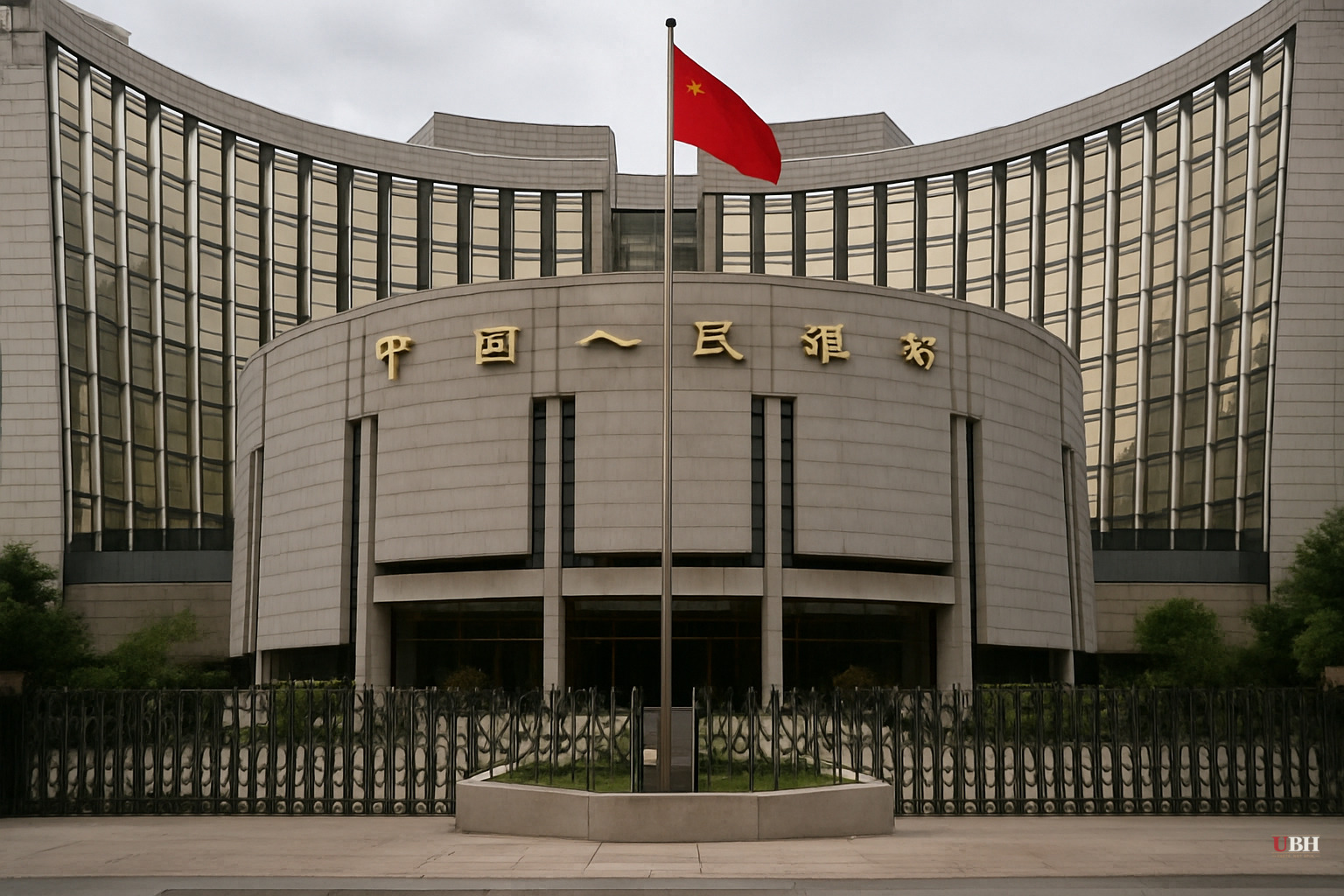
PBOC Crosses the 6.80 Line
China's central bank set the yuan's daily reference rate at 6.7989 per dollar on Friday, July 10, according to The Edge via KLSE Screener. That is stronger than 6.80, a level market participants treat as a meaningful psychological threshold, and the first time the fix has crossed it since February 10, 2023.
The prior day's fix was 6.8036. The PBOC's daily fixing limits onshore yuan movement to 2% in either direction, so where that number lands shapes the entire trading range for the session.
What the Move Signals
Fiona Lim, senior FX strategist at Malayan Banking Bhd (Maybank), put it plainly: "Seems like the PBOC is comfortable with allowing the yuan to strengthen further against the dollar." She added that "the PBOC is easing up on its control over the yuan given that yuan appreciation pace has slowed."
The underlying drivers are straightforward. Chinese export data has remained resilient, and there are growing expectations of a domestic economic recovery. A stronger yuan, at a controlled pace, reduces import costs and signals monetary confidence — useful framing for Beijing right now.
FXStreet noted the same dynamic Friday morning, flagging that China's PBOC "still appears to be comfortable with the higher level of the Yuan" as part of its Asia market overview.
The Broader Asia Currency Picture
The yuan fix did not happen in a vacuum. Friday's Asia session included significant currency movement across the region.
Japanese Finance Minister Katayama moved to support the yen through an unconventional lever: she announced plans to encourage Japanese pension funds, including the Government Pension Investment Fund (GPIF) — the world's largest pension fund at roughly $2 trillion — to shift holdings toward domestic financial assets, according to FXStreet. The yen gained 0.6% against the dollar on the news, and Japanese bond yields fell as much as 10-11 basis points.
GPIF currently allocates approximately 50% of its portfolio to foreign investments. Even a partial reallocation toward Japanese equities and bonds would represent enormous capital flows back into domestic markets. The Katayama approach is notable because it achieves yen-supportive effects without direct foreign exchange intervention, a politically cleaner tool given ongoing trade sensitivities with Washington.
Japan's government "Honebuto" economic policy document, which outlines its broader fiscal and investment framework, is now expected to be released on July 21, per FXStreet.
Japan's Inflation Problem Underneath the Headlines
The yen's bounce comes with a caveat: Japan's producer price inflation hit a three-year high in June. Wholesale prices rose 7.1% year-over-year, according to FXStreet, with the yen-based import price index surging 29.7% year-over-year — accelerating from a revised 26.1% gain in May. The Middle East conflict and sustained yen weakness are being cited as the primary fuel cost drivers.
A stronger yen would soften import costs for Japanese businesses importing raw materials and energy. This gives Katayama's pension-reallocation push a dual purpose: prop up domestic assets while taking some pressure off import inflation.
The Concern Worth Taking Seriously
Skeptics of Beijing's currency management have a fair point: a stronger yuan is only comfortable for the PBOC when the direction serves Chinese strategic interests. When the yuan was weakening sharply in prior years, the PBOC used the fixing mechanism to slow depreciation. Now it is using the same tool to validate appreciation. Critics argue this is not a genuine market signal but managed optics — the PBOC deciding when strength is politically convenient rather than letting currency markets run freely.
The yuan is not freely floating. The 2% daily band is a policy constraint, not a market outcome. Chinese export strength is real, dollar weakness has been a broader global trend in 2026, and Lim's characterization — that the PBOC is "easing up on control" rather than actively pushing appreciation — reflects a policy of managed drift rather than manufactured strength.
Elsewhere in the Asia Session
SK Hynix is set to list on the Nasdaq later today, targeting a raise of $26.5 billion (trimmed from an initial $28-29 billion range), per FXStreet. If completed, it would rank as the third-largest IPO in history, behind SpaceX and Saudi Aramco. How U.S. tech equity markets absorb that additional liquidity demand — after hundreds of billions in equity and bond raises by U.S. hyperscalers already in 2026 — is an open question heading into today's session.
Taiwan's stock exchange was closed Friday due to Typhoon Bavi, and Taiwan Semiconductor Manufacturing postponed its June revenue release to Monday, July 13.
The Malaysia central bank held its benchmark rate at 2.75%, according to FXStreet.
The Open Question on Yuan Direction
The yuan's crossing of 6.80 is a single data point, not a new policy regime. Lim's read is that the PBOC is comfortable with the current pace — not that it is green-lighting unlimited appreciation. Whether Friday's fix becomes the start of a sustained run below 6.80, or whether the PBOC reins it back in if capital outflow pressures resurface, will be visible in the daily fixing data over the coming weeks.
Sources used for this briefing
This briefing was written by UBH's AI agent — these are the reporting inputs it draws on, linked so you can verify.


