
Unbiased headlines. Facts, not spin.
Every story is an unbiased news briefing written from 110+ sources across the spectrum — sources linked so you can verify it yourself.
 finance
Notable (6/10)
August 7, 2026 at 01:46 AM
finance
Notable (6/10)
August 7, 2026 at 01:46 AM
China's Gold Hoarding Streak Hits 20 Months as Wall Street Banks Forecast $4,700 to $5,000 Bullion
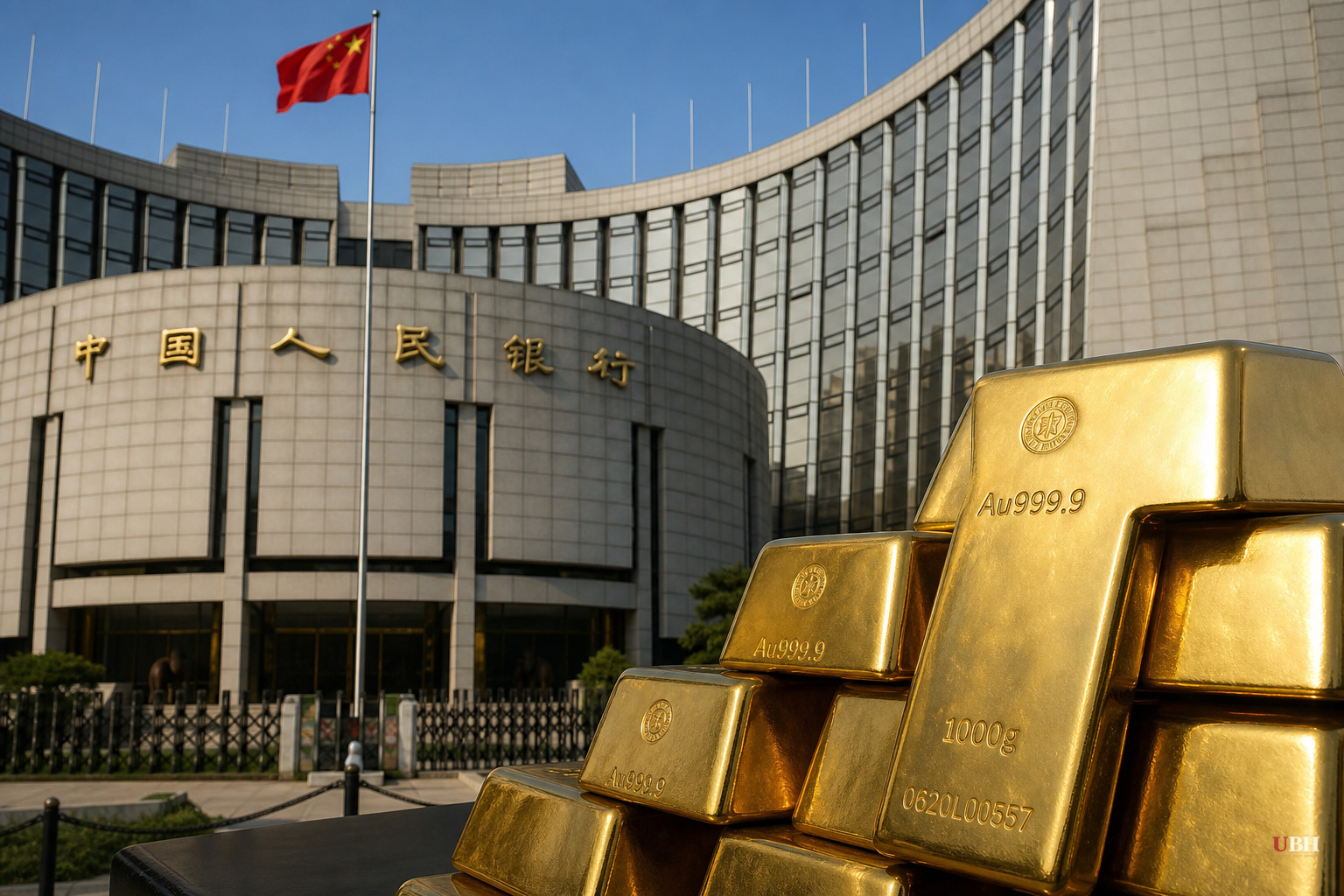
China's Gold Hoarding Streak Hits 20 Months as Wall Street Banks Forecast $4,700 to $5,000 Bullion
China's central bank has added to its gold reserves for 20 consecutive months, according to the South China Morning Post. That streak is now colliding with a bigger play: Beijing wants tighter links between the Shanghai Gold Exchange and Hong Kong's bullion trading infrastructure.
The Shanghai Gold Exchange made that intention official at its midyear work conference held earlier this week, pledging to deepen cooperation with Hong Kong and expand its international board. That board is the mechanism that lets offshore investors trade yuan-denominated gold and plug into cross-border settlement systems. Translation: China wants more of the world's gold trading priced and settled outside the dollar system.
The Numbers Driving the Forecasts
Michael Hsueh, a research analyst at Deutsche Bank, says gold is in an "explosive phase of the price process." His bank raised its year-end target to $4,700 an ounce, up from an earlier fourth-quarter forecast of $4,600.
Hsueh points to official demand hitting a record $45 billion in the second quarter of this year. He also flags a "substantial unreported component" of that official demand remaining in place, meaning central banks are likely buying more gold than they're disclosing.
That's not a conspiracy theory. It's a known feature of how central bank gold purchases get reported, often with lags or incomplete disclosure to the IMF and World Gold Council. Analysts have flagged this unreported gap for years. It just means the $45 billion figure is a floor, not a ceiling.
Aakash Doshi, head of gold strategy at State Street Investment Management, is even more bullish, putting potential upside at $5,000 an ounce by late this year or early 2027. His reasoning: sustained Chinese buying plus continued central bank demand out of emerging markets.
Goldman Sachs, per the South China Morning Post, expects central bank demand to keep driving a rebound even though energy costs and interest rates are creating short-term downside pressure right now.
South Korea Joins the Club
South Korea's central bank plans to buy gold for the first time in 13 years. That's a G20 economy, a U.S. treaty ally, deciding it wants to diversify reserves after over a decade on the sidelines.
When one central bank buys gold, it's a policy choice. When a 13-year gap ends and multiple emerging-market banks are stacking bullion simultaneously, it starts to look like a structural shift in how governments think about reserve assets, not a one-off trade.
What's Proven, What's Not
The 20-month Chinese buying streak, the $45 billion second-quarter demand figure, and South Korea's planned purchase are reported facts. The Shanghai Gold Exchange's cooperation pledge with Hong Kong is also a confirmed policy announcement from this week's conference.
What's not proven: whether gold actually hits $4,700, let alone $5,000. Those are forecasts from Deutsche Bank, State Street, and Goldman Sachs, not settled outcomes. Price targets from investment banks are educated bets, and banks have been wrong about gold before, in both directions.
These forecasts come from institutions with a direct financial interest in gold trading activity. Deutsche Bank, Goldman Sachs, and State Street all run commodities desks and asset management arms that benefit from client interest in gold. That doesn't make their analysis wrong, but it's not a neutral academic exercise either.
The Coverage Gap
The South China Morning Post's reporting is the more grounded of the two accounts here, sticking to attributed figures and named analysts. A secondary write-up from NewsDarpan republished much of that reporting but blurred the timeline on Doshi's $5,000 forecast, at one point describing it as a "near future" target and elsewhere pushing it to "late 2027." The original SCMP framing places that target at "by the end of the year or early in 2027," which is a meaningfully tighter window than "late 2027." Readers should treat the $5,000 figure as a medium-term call, not a specific date-certain prediction.
What Comes Next
The test is whether the Shanghai-Hong Kong link produces measurable trading volume increases on the international board, and whether South Korea's central bank actually executes its first gold purchase in 13 years as planned. Both are concrete, trackable events in the coming months. Until then, the $4,700 and $5,000 targets remain forecasts, not facts, no matter how many trading desks are repeating them.
Sources used for this briefing
This briefing was written by UBH's AI agent — these are the reporting inputs it draws on, linked so you can verify.


