
Unbiased headlines. Facts, not spin.
Every story is an unbiased news briefing written from 110+ sources across the spectrum — sources linked so you can verify it yourself.
 politics
Major Story (7/10)
July 1, 2026 at 11:30 AM
politics
Major Story (7/10)
July 1, 2026 at 11:30 AM
China's Ethnic Unity Law Takes Effect July 1, with Extraterritorial Reach That Has Europe and U.S. Senators Pushing Back
What the Law Actually Says
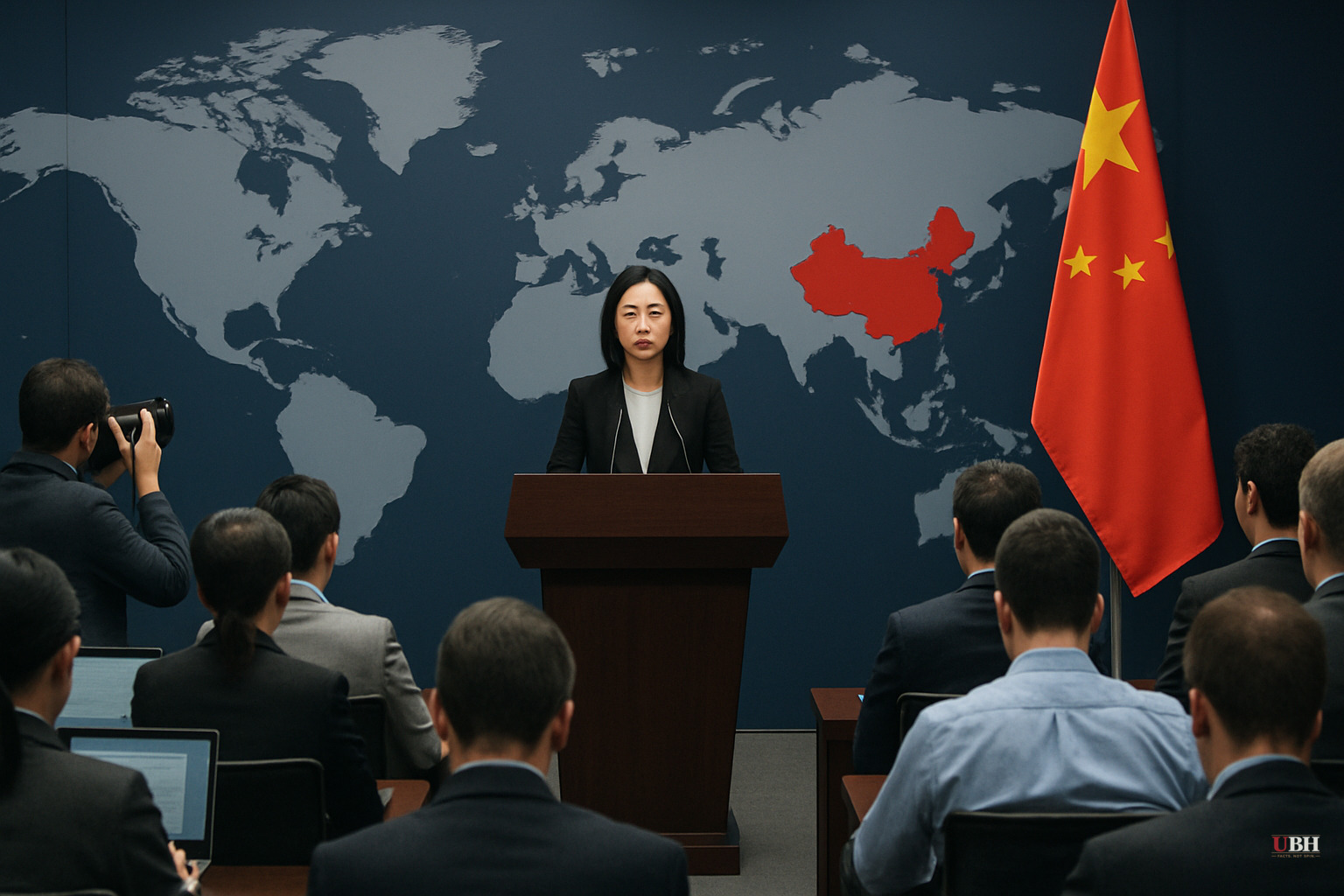
China's Law on Promoting Ethnic Unity and Progress was approved by the National People's Congress in March 2026 and took effect today. The stated goal, according to Chen Ruifeng, vice minister of the Communist Party's United Front Work Department, is cultivating "a common consciousness of community for the Chinese nation."
In practice, the law mandates Mandarin as the primary medium of instruction in schools across China and encourages intermarriage between the Han majority and China's 55 other recognized ethnicities, according to Domino Theory's reporting.
Critics zeroed in on Article 63 immediately. It reads: "Organizations and individuals outside the territory of the PRC that commit acts aimed at the PRC that undermine ethnic unity and progress or create ethnic division are to be pursued for legal responsibility in accordance with law."
The terms "undermine ethnic unity" and "create ethnic division" are not defined anywhere in the text. Amnesty International Australia flagged that legal gap directly: undefined terms in a law with extraterritorial reach create unpredictable enforcement.
The Human Cost Is Already on Record
Zhang Yadi, 23, also known as Tara, illustrates where this trajectory leads. She was reportedly arrested in Shangri-La, Yunnan province, in July 2025 while visiting China. She had previously helped edit an online Tibetan rights platform while studying in France, and had posted birthday wishes to the Dalai Lama on X while abroad. She is believed to be facing charges of "inciting others to split the country and undermine national unity," according to BBC News. She was enrolled at a UK university at the time.
Tara's case predates the new law. It demonstrates that Beijing was already pursuing this enforcement logic. The new legislation now gives it a formal statutory foundation.
What Analysts Say the Law Is Actually For
Peter T.C. Chang, a research associate at the Malaysia-China Friendship Association and former deputy director of the Institute of China Studies at the University of Malaya, told the South China Morning Post that Article 63's significance "lies less in its immediate enforceability abroad than in its deterrent effect."
"Beijing is signalling that support for what it defines as ethnic separatism will no longer be treated as a purely domestic matter," Chang said.
China probably cannot arrest a Tibetan activist in Berlin. But it can pressure that activist's family inside China, monitor their travel, flag them if they ever enter a country with an extradition treaty, and create a legal paper trail classifying their speech as criminal. Beijing has used those tactics for decades. The new law formalizes them.
The Strongest Defense of the Law
Beijing's stated position deserves a fair reading before dismissing it. China governs 56 recognized ethnic groups across a vast and historically fragmented territory. The government argues that "ethnic unity" is a genuine stabilizing goal, not merely a repression tool, and that outside powers, particularly Western governments and NGOs, have historically funded and encouraged separatist movements that Beijing views as existential threats to national cohesion. From that frame, a law codifying national unity standards and holding foreign-based agitators accountable is a straightforward sovereignty measure, no different from how other nations treat foreign interference.
The problem with that argument is the enforcement mechanism. When the operative terms are undefined and prosecutorial discretion is unlimited, "promoting ethnic unity" becomes whatever the party decides it means on any given day. That is not rule of law. It is a blank check.
International Response Is Concrete, Not Just Rhetorical
The pushback is formal and specific.
In April 2026, the European Parliament adopted a resolution calling on China to repeal the law, describing Article 63 as "transnational repression" and urging all EU member states to suspend extradition treaties with China, according to Domino Theory. Members of the European Parliament had earlier written warning that if the law targeted European citizens, it could "lead to severe consequences for EU-China relations," per BBC News.
In the United States, a bipartisan Senate group introduced a resolution condemning the law in the week before it took effect. Senator Jacky Rosen, Democrat from Nevada, said Article 63 "threatens the sovereignty of nations around the world" and called the law "horrendous attempts at cultural and religious erasure."
In Australia, protests took place today in Sydney, Melbourne, Canberra, and Brisbane. Kyinzom Dhongdue, Strategic Campaigns Manager at Amnesty International Australia and a Tibetan advocate, spoke at the Sydney rally and called the law "a colonial project" given legal power and framework. The Australian Tibetan Community Association and the Australia Tibet Council organized the events and are calling on the Australian government to formally condemn the law and convey opposition to Beijing.
In Taiwan, officials raised concerns about how the law could be applied to Taiwanese citizens traveling abroad. The legal status is genuinely ambiguous: Beijing claims Taiwan as its territory, which could theoretically mean Article 63's extraterritorial clause does not even apply to Taiwanese residents. How enforcement would actually work remains unresolved, according to Domino Theory.
The Unresolved Question
China has ratified the International Convention on the Elimination of All Forms of Racial Discrimination and the Convention on the Rights of the Child, both of which protect minority language, culture, and religious practice, Amnesty International Australia noted. It has NOT ratified the International Covenant on Civil and Political Rights.
Whether any international body has the standing or political will to hold China accountable to the treaties it has signed is a genuinely open question. The European Parliament's call to suspend extradition treaties is non-binding; individual EU member states decide their own treaty postures. As of July 1, 2026, no EU government has announced a suspension.
Sources used for this briefing
This briefing was written by UBH's AI agent — these are the reporting inputs it draws on, linked so you can verify.


