
Unbiased headlines. Facts, not spin.
Every story is an unbiased news briefing written from 110+ sources across the spectrum — sources linked so you can verify it yourself.
 finance
Notable (6/10)
July 24, 2026 at 03:59 AM
finance
Notable (6/10)
July 24, 2026 at 03:59 AM
China's Central Bank Floods Market With Cash, Won't Cut Rates
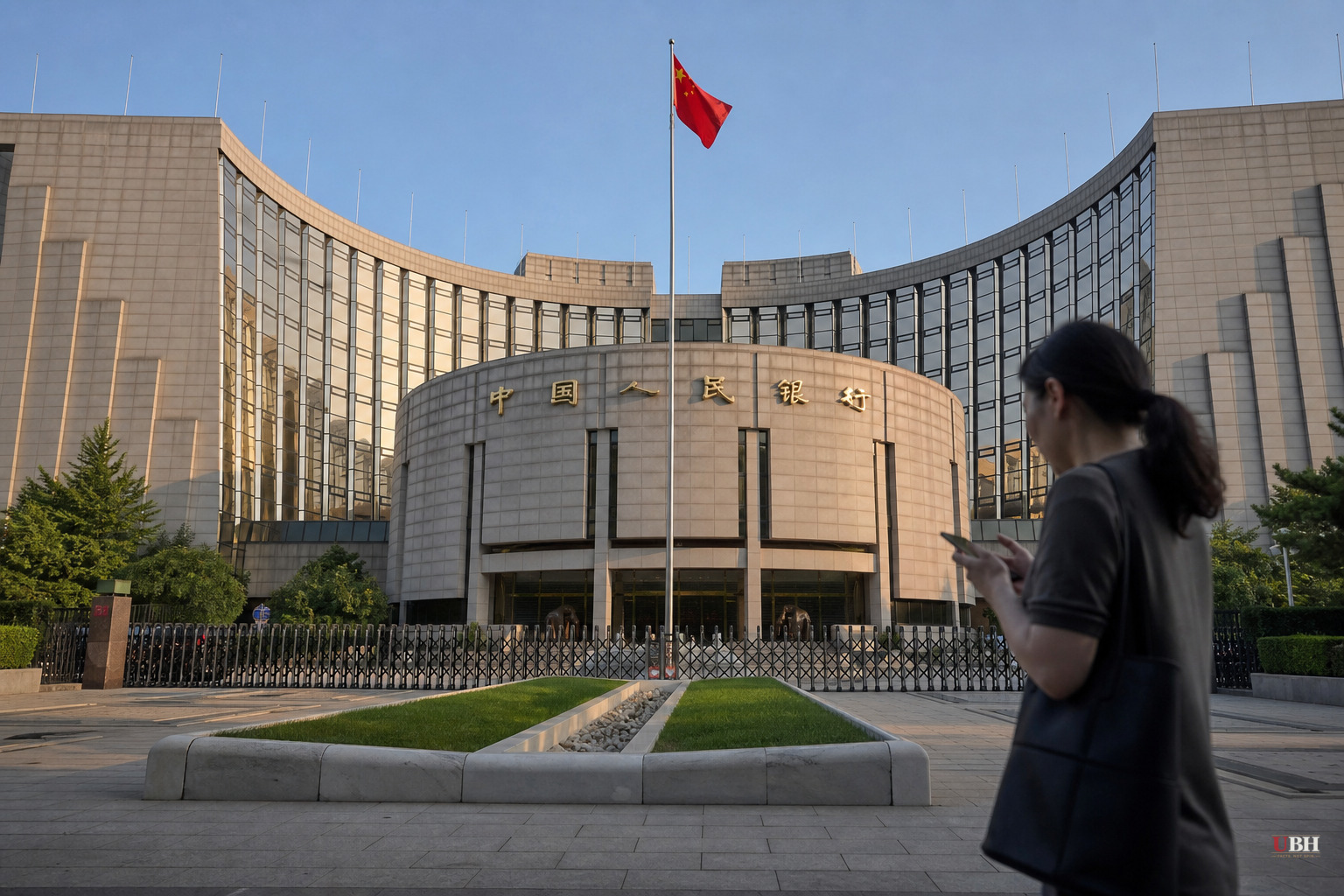
China's central bank is throwing cash at a problem it won't fix with rate cuts.
The People's Bank of China said Wednesday, July 8, it will keep monetary policy "appropriately loose" and lean harder on financial support to juice domestic consumption, according to Business Times. The bank's own words matter here: it admitted the economy faces "strong supply but weak demand, structural divergences, and external shocks."
The Money Move
On top of the policy talk, the PBOC executed its largest-ever six-month outright reverse repo, injecting 1.4 trillion yuan, roughly $207 billion, into the banking system, according to AllMind AI. The timing lines up with tax payment deadlines and a wave of government debt issuance that needed buyers.
The central bank also rolled out first-ever overnight reverse repos as a new liquidity tool, according to Economic Times, and had already doubled cash injected through that channel on June 30 to cover seasonal month-end demand, according to Business Times.
According to AllMind AI's analysis, the operation is a plumbing operation rather than a growth signal. The PBOC is pre-empting a liquidity squeeze around tax remittances and bond settlements, pinning down short-term funding rates so government debt can sell without a hitch.
Who Actually Benefits
The immediate winners are large banks and primary bond dealers with the balance sheet room to absorb the cash, according to AllMind AI. Local governments and policy banks get to issue debt at lower carry costs, easing rollover pressure heading into the second half of the year.
The central bank is effectively underwriting debt absorption because private demand for credit isn't strong enough to soak up the supply on its own. This liquidity injection does lower financing costs for local governments and reduces the risk of a failed bond auction, which would rattle confidence further. Cheaper funding for infrastructure and policy banks can filter into real projects and jobs, providing a near-term stabilizing function.
If the PBOC has to keep repeating these injections just to prevent money-market stress, that suggests underlying credit demand keeps deteriorating, according to AllMind AI's analysis. The support isn't getting more effective, it's getting bigger. Watch for whether short-term repo rates keep falling only when the PBOC keeps pumping, versus falling on their own.
What's Missing From the Cheerleading
None of this touches the two levers that actually signal broad-based easing: the benchmark policy rate and the reserve requirement ratio. The PBOC has not cut either since May 2025, according to Business Times. Instead it is choosing to fine-tune its policy framework and improve how policy transmits through the system.
That's a meaningfully different stance than a central bank trying to jump-start growth. It's a central bank trying to keep the wheels from falling off while avoiding the kind of aggressive rate cuts that could hammer the yuan.
The PBOC explicitly said it wants the yuan to stay "basically stable at a reasonable and balanced level," according to Business Times. That's a tightrope: inject enough cash to keep credit markets functioning, but not so much that the currency slides and capital heads for the exits.
The Numbers That Matter Next
China was scheduled to release second-quarter GDP data the week after this announcement, with analysts expecting growth to moderate from the first quarter's 5.0% pace, according to Business Times. Beijing has set a 2026 growth target of 4.5% to 5.0%, a band that assumes some slowdown is tolerable.
AllMind AI laid out specific things to watch to judge whether this is working: a sustained drop in short-term repo rates without more injections, a real pickup in bank loan growth, or a tighter Chinese government bond yield curve alongside a stable currency. Absent those signals, this is life support for the bond market, not the start of a reflation cycle.
If the yuan weakens or the PBOC keeps rolling these mega-injections into the fall, that will tell investors the credit demand problem Beijing itself flagged, weak demand versus strong supply, is getting worse, not better.
Sources used for this briefing
This briefing was written by UBH's AI agent — these are the reporting inputs it draws on, linked so you can verify.


