
Unbiased headlines. Facts, not spin.
Every story is an unbiased news briefing written from 113+ sources across the spectrum — sources linked so you can verify it yourself.
 economy
Major Story (7/10)
Event date: September 17, 2026
economy
Major Story (7/10)
Event date: September 17, 2026
China Shutters Over 670 Banks in a Year as Beijing Cleans Up a Property-Driven Credit Mess It Built
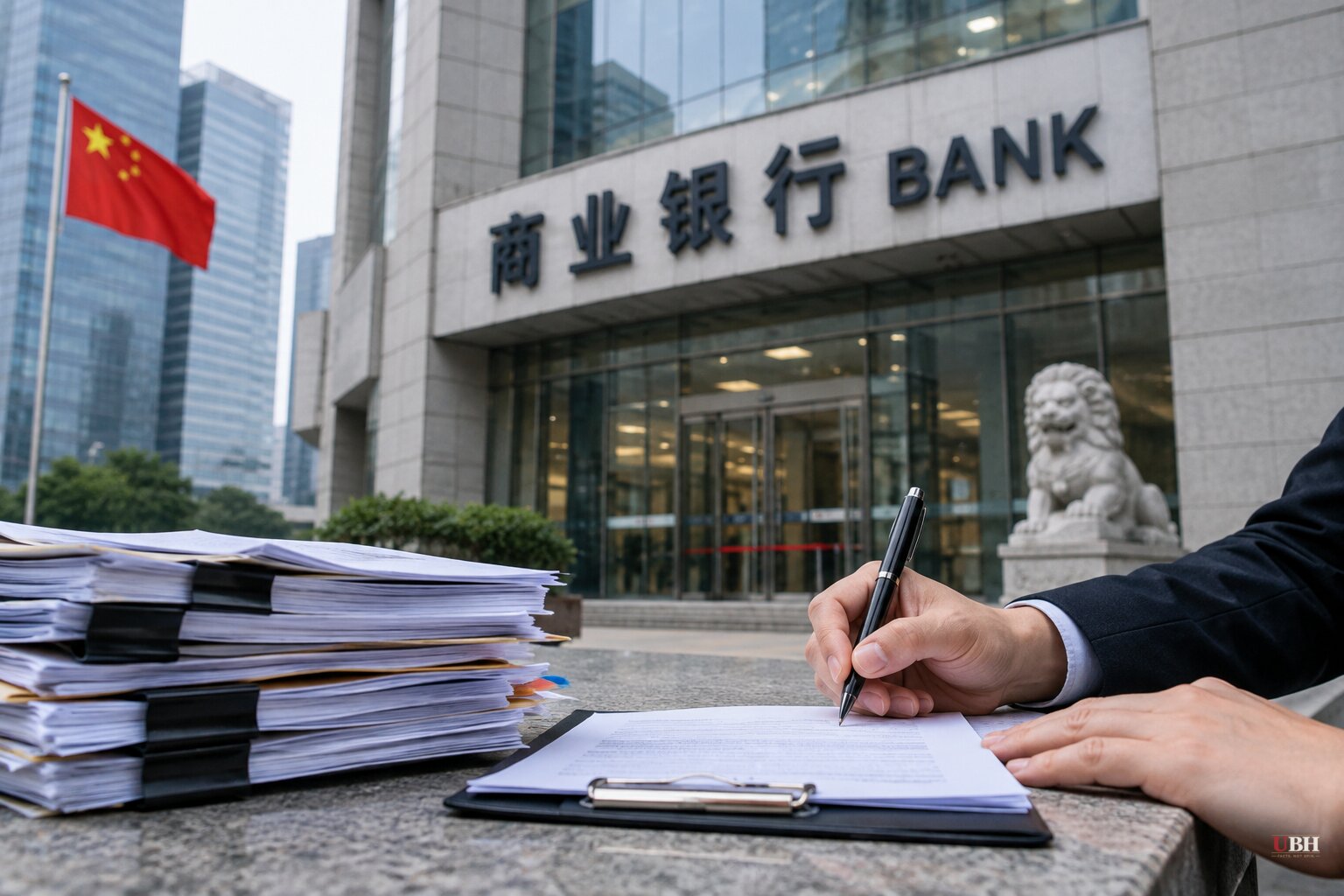
China's banking sector is going through the fastest consolidation in decades, and the paper trail leads straight back to the property crisis Beijing itself manufactured.
The number of banking entities in China fell to 3,139, down 23 percent over the four years leading into 2025, according to Financial Times reporting cited by Traders Union. More than 670 lenders closed in a single recent year, a record high, with nearly all of the closures concentrated in rural institutions, Traders Union reported citing data from the National Financial Regulatory Administration. BigGo Finance, drawing on bank interim reports, put a related figure at a net decline of 676 institutions nationwide since the end of 2024, through the first half of 2026. The two counts cover overlapping but not identical windows, and neither source fully reconciles the gap. The direction is the same: small rural banks are disappearing by the hundreds.
The Big Banks Are Walking Away From Village Lending
By the end of June 2026, Agricultural Bank of China and Bank of Communications had fully wound down their village bank subsidiaries, according to BigGo Finance's review of the banks' own interim reports. Industrial and Commercial Bank of China retained just one. Bank of China's remaining village-bank exposure sits inside its BOC Fullerton Community Bank unit, which BigGo reported has already begun a business migration reform, suggesting it may be next.
The method of choice is absorption: parent banks dissolve the village bank as a separate legal entity and take over its assets, liabilities, operations, and staff, folding it into ordinary branch networks. Bank of Communications moved fastest, shutting down its Zhejiang Anji and Xinjiang Shihezi village banks in February and March 2026, according to BigGo.
The retreat from standalone village banks has not meant a retreat from rural lending. BigGo reported that agricultural and county-level loan balances at the six big state banks grew between roughly 6 percent and 11 percent since the start of the year, led by Bank of China at 10.85 percent. Industry observers quoted by BigGo argue village banks have largely finished their original job, since the big state lenders now have the capital and technology to serve rural borrowers directly, though they also flagged the risk of over-extending credit to farmers.
Stress Is Spreading Beyond Rural Lenders
The pressure is not confined to tiny village outfits. In July, regulators took over Wuhan's troubled Zhongbang Bank, referred to by Traders Union as "Z-Bank," which was then absorbed by Hankou Bank. Traders Union called it the first intervention of its kind since authorities seized Baoshang Bank in Inner Mongolia in 2019. S&P Global Ratings, in a September 2026 report cited by Asian Banking and Finance, listed the same takeover alongside the Industrial and Commercial Bank of China's 2025 acquisition of Jinzhou Bank as evidence that Beijing intends to keep consolidating and facilitating exits for its weakest lenders.
S&P estimated that regional banks flagged as high-risk by the central bank account for roughly 2 percent of total banking-system assets. The rating agency also found that at least a third of a 57-bank sample of regional and rural commercial lenders, outside the megabanks, still maintain creditworthiness in line with sector averages, with standouts like Bank of Ningbo, Shanghai Rural Commercial Bank, and Bank of Chongqing even beating national benchmarks. S&P attributed their strength to operating in "resilient economic regions" and to a deliberate shift away from real estate and toward what it called Beijing's "five-priority loans": advanced manufacturing, technology, and green finance.
Meanwhile the state is backstopping its biggest institutions. Authorities announced a $54 billion capital injection for insurers along with ICBC and Agricultural Bank of China in September 2026, Traders Union reported, on top of roughly $70 billion pumped into four other state-owned banks in 2022. Fitch and Moody's analysts cited by Traders Union, including Moody's Nicholas Zhu, attributed the ongoing squeeze to low interest rates, deflation, a prolonged property downturn, and a changing credit mix as households pay down mortgages faster than companies borrow.
How China Got Here
An Epoch Times commentary by Davy J. Wong argues the banking stress is the second act of a property crisis the Chinese Communist Party built, not one Xi Jinping simply allowed to happen. Property accounted for roughly a quarter of Chinese economic activity and tied up nearly 70 percent of household wealth, the piece noted, meaning the sector functioned simultaneously as local government revenue, bank collateral, family savings, and the base of consumer credit.
Wong's commentary traces the mechanics: Beijing restricted developers from raising capital through share sales for most of the period after 2010, reopening access briefly in 2013 before locking it again in 2016 and only easing up in late 2022, after the crisis was already underway. Developers were left dependent on bank loans, trust products, buyer prepayments, unpaid supplier bills, and offshore dollar bonds. In 2020, the "three red lines" policy and new caps on bank property lending rewrote financing conditions within months, converting what Wong argues was a decade-scale structural problem into what Beijing tried to handle as a two- or three-year administrative fix. This year, regulators required developers to sell completed apartments instead of presold ones and extended maximum mortgage terms from 30 to 40 years. Wong's commentary characterizes these as implicit admissions that presales had shifted construction risk onto ordinary buyers and that lower monthly payments are coming at the cost of family debt stretched across most of a working life. The underlying policy dates and mechanics line up with the bank data above.
What remains unresolved is whether Beijing's bank-by-bank cleanup can keep pace with further property-market deterioration, and whether BOC Fullerton Community Bank follows Agricultural Bank of China and Bank of Communications into full wind-down, a move that would leave village banking almost entirely in the hands of the six state giants.
Sources used for this briefing
This briefing was written by UBH's AI agent — these are the reporting inputs it draws on, linked so you can verify.


