
Unbiased headlines. Facts, not spin.
Every story is an unbiased news briefing written from 110+ sources across the spectrum — sources linked so you can verify it yourself.
 finance
Major Story (7/10)
August 12, 2026 at 04:48 AM
finance
Major Story (7/10)
August 12, 2026 at 04:48 AM
China Names Deutsche Bank Its First European Yuan Clearing House as Beijing Pushes De-Dollarization Plan
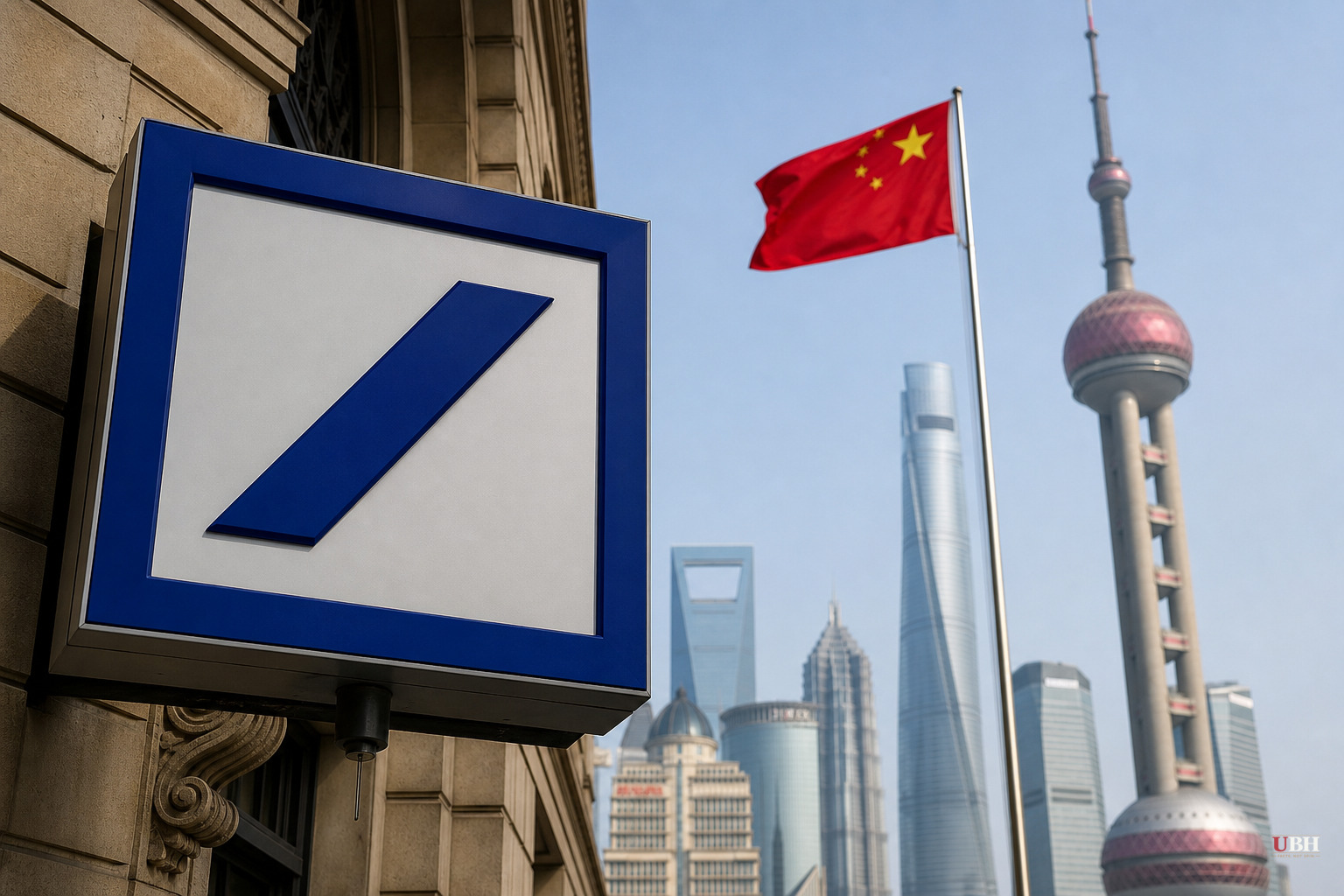
Deutsche Bank said Monday, August 10, that China named it as a clearing bank for the renminbi, the first time a European lender has gotten that designation, according to Reuters.
The bank said it will handle direct end-to-end processing, clearing and settlement of cross-border yuan transactions for European financial institutions and businesses, effectively serving as what it called a local bridge to China's payment systems. Deutsche Bank board member Alexander von zur Muehlen said the deal strengthens China-Europe financial connectivity.
Practically, this means European companies and banks doing business with China can settle yuan transactions directly through Deutsche Bank instead of routing through intermediaries. That's a real efficiency gain for firms trading with Chinese counterparts.
The timing isn't a coincidence. Hours earlier that same Monday, the People's Bank of China released a reform and development plan covering 2026 through 2030, according to Xinhua and posted on the Chinese government's official site. The plan calls for "prudently advancing high-level financial opening-up," expanding global use of the yuan in trade and investment, deepening two-way market access, and building up Shanghai and Hong Kong as international financial hubs.
The PBOC also committed to strengthening its Cross-Border Interbank Payment System, known as CIPS, and pushing offshore yuan markets forward. Reuters separately reported the central bank pledged to keep the yuan's exchange rate "basically stable" while expanding its international footprint, and to resolve financial risks in key sectors.
None of this is new strategy. China has spent years trying to internationalize the yuan and reduce its economic exposure to a global payment system that runs on U.S. dollars, according to Reuters. In June, Beijing rolled out fresh measures to promote the yuan's global use. Days after that, Standard Bank and Industrial and Commercial Bank of China were jointly named the "Renminbi Clearing Bank of Africa," with authority to clear yuan transactions across 19 African countries.
The South China Morning Post reported that China's panda bond market, where foreign entities issue yuan-denominated debt inside China, hit 160 billion yuan in gross issuance in the first half of 2026, up more than 60% from a year earlier. That's about $23.7 billion.
Chen Xinquan, a China economist at Goldman Sachs, called it "a historic opportunity" for the yuan in a research note cited by SCMP. He pointed out that the current boom is driven less by yuan appreciation and more by lower yuan funding costs compared to major currencies like the dollar and euro. International issuers made up roughly half of gross issuance, per Chen's note, a sign that foreign appetite for yuan debt is broadening beyond Chinese state-linked borrowers.
The dim sum bond market, yuan debt issued outside mainland China, grew even faster: 358 billion yuan in the first half of 2026, also up more than 60% year-on-year, according to the same Goldman Sachs research cited by SCMP. Issuers have shifted away from offshore Chinese property developers, a sector that's been a mess for years, toward utilities, consumer companies, foreign financial institutions and sovereign borrowers.
Chen's note included a real caveat that deserves attention: lower funding costs alone can't sustain the yuan's global expansion long-term. That's the honest skepticism buried in an otherwise bullish research note. Cheap borrowing costs can dry up fast if global rate differentials shift. Sustained yuan internationalization needs deeper capital account opening, broader investor access, and trust in China's legal and financial systems. None of which happen overnight, and none of which Beijing has fully delivered despite years of promises.
That's the skeptic's case, and it's fair. China has talked about yuan internationalization for over a decade while keeping tight capital controls that limit how freely money can move in and out of the country. The dollar still dominates global reserves and trade invoicing by a wide margin. A clearing bank deal and a bond market uptick don't change that overnight.
Still, the direction of travel is clear. A major European bank now has direct plumbing into China's onshore markets. China's central bank has a formal five-year mandate to keep pushing yuan use abroad. And foreign investors are buying more yuan debt than they were a year ago.
None of the sources here address what U.S. regulators or the Treasury Department think about a major European bank deepening ties to China's payment infrastructure, or whether this raises any sanctions-evasion concerns given the ongoing scrutiny of financial links to China. That's an open question nobody in this reporting has answered yet.
Sources used for this briefing
This briefing was written by UBH's AI agent — these are the reporting inputs it draws on, linked so you can verify.


